


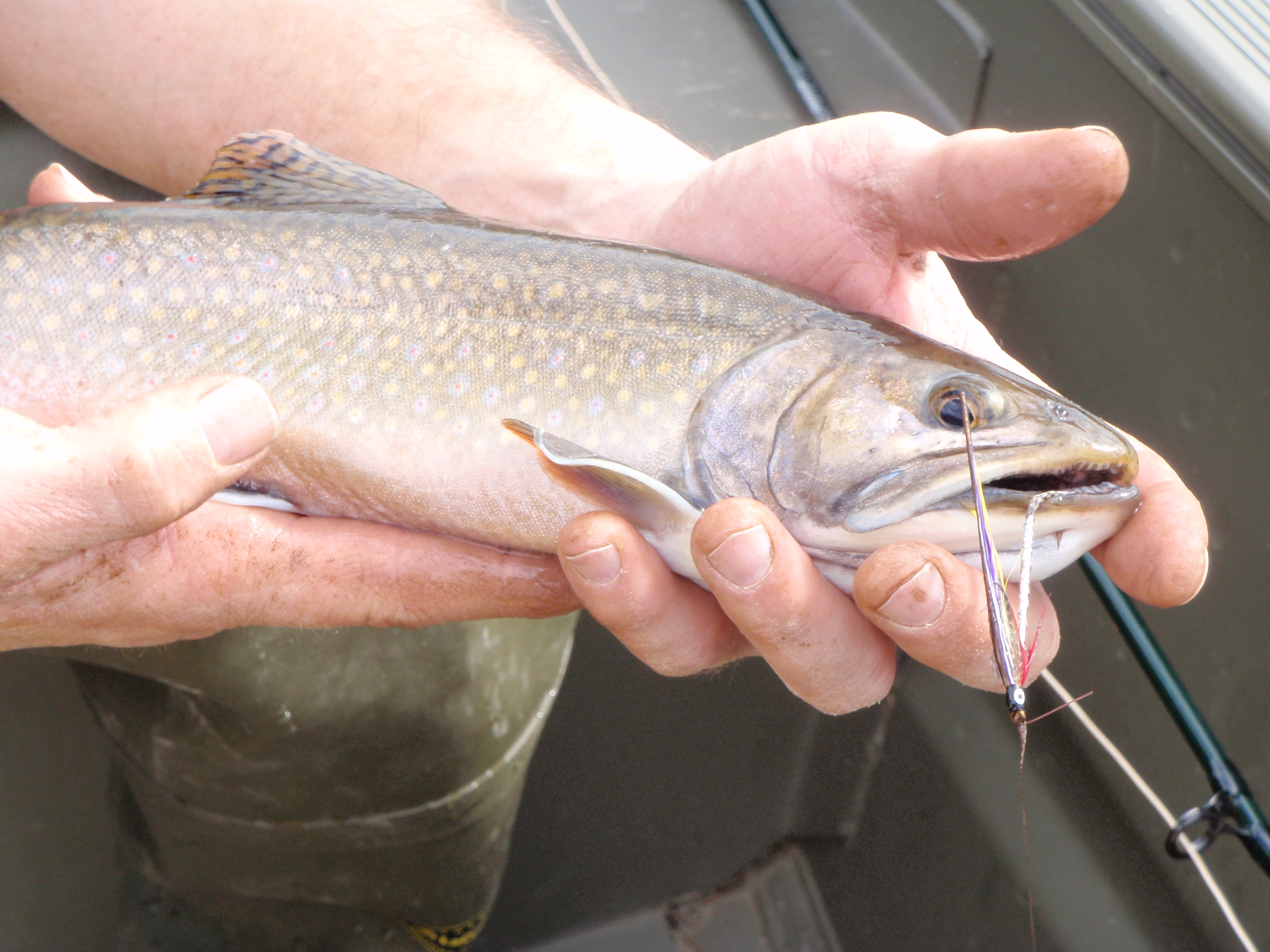
At least 30 years ago a half dozen of us flew west from Maine, clear across the country to fish world-renowned waterways in Montana. We stayed in Bozeman and visited the Madison, Yellowstone, Gallatin, Jefferson and Big Hole rivers as well as Hebgen Lake, enjoying drift boat casting, wading and float tube fishing. Our finned quarry included rainbow, brown and golden trout, and the fish size, fishing style and tackle set up were a vast change from home.
Among all the wonderful fishing adventures and breathtaking scenery I experienced, using a dropper rig on my fly line was a new, innovative and very productive technique I’d never seen on Aroostook waterways. Our guides tied a second, short length of leader onto our main leader near the midpoint, thus allowing two flies to be cast and fished at once. Presenting two different shapes, sizes, styles and colors of fly patterns truly increases the odds of a strike.
Any combo of dry fly, wet fly, streamer or nymph can be combined and the flies require some water current to yield a realistic motion. Casting from a drift boat moving downstream with the water flow yields a long, natural presentation; wading and float tube anglers get a much shorter fly drift and must use rod tip action and line retrieval to aid fly motion.
Upon arriving back in northern Maine, I tried the new technique on local streams and rivers with a modicum of success. It was lake trolling where the dual-fly offering truly made a spectacular difference to the normal one rod, one fly approach.
It took me dozens of outings over a couple of seasons to fine tune my gear. The leader to leader tie-in for casting a dropper fly just wasn’t efficient for trolling. The tandem or long, single-hook streamers wouldn’t run with a natural motion and the two leaders were prone to twisting or tangling with each other. Finally, through trial and error and the discovery and inclusion of a tiny, often unknown piece of tackle called a three-way swivel, the perfect two-fly trolling rig came together.
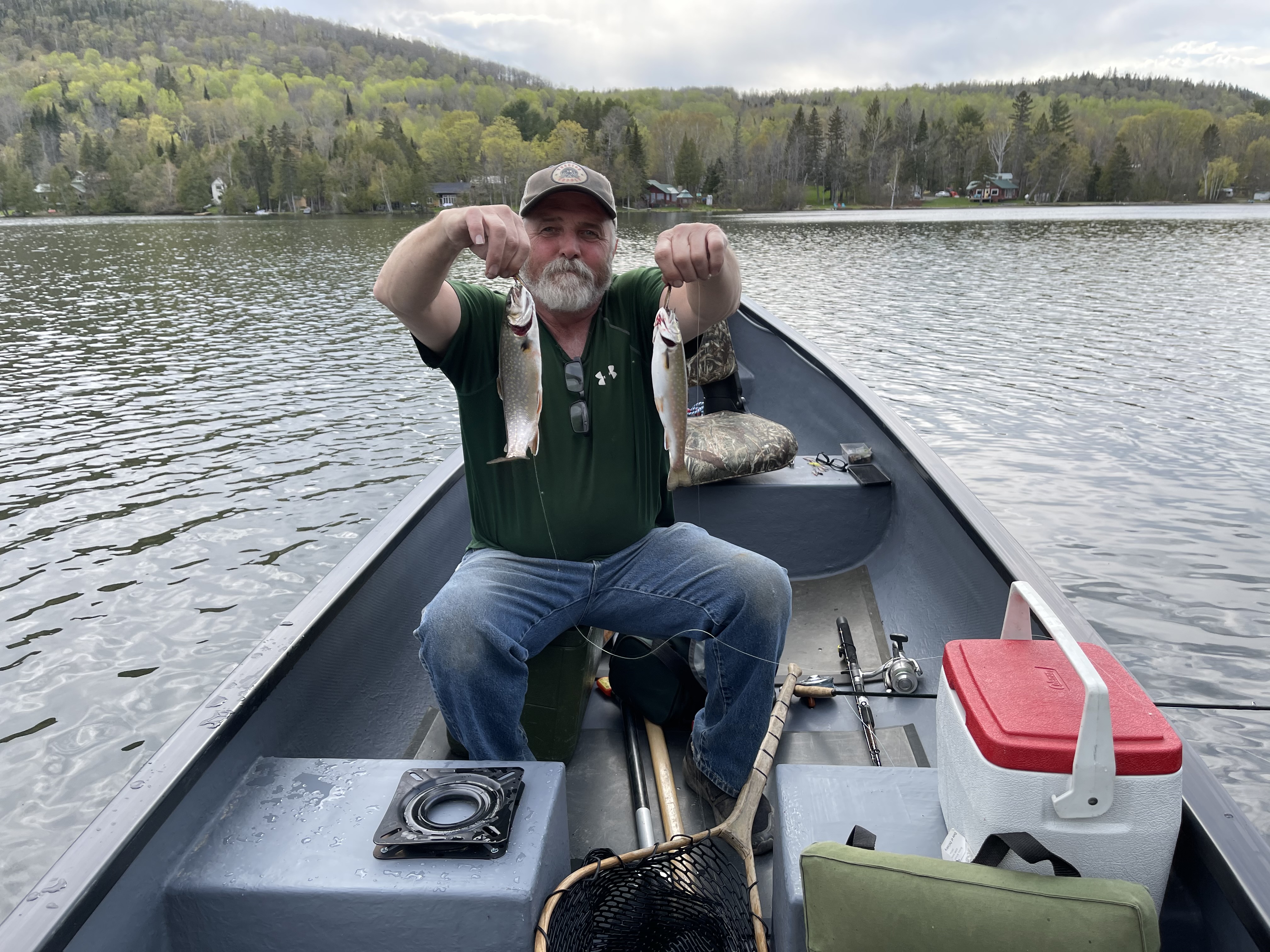
I attach my three-way swivel to my trolling line with a 4-foot length of 16-pound test leader material. To the second eye, I tie on a 10-foot length of 8-pound test fluorocarbon, a thin but very strong material almost invisible in water that I’ve found far superior to monofilament. A 5-foot section of fluorocarbon is attached to the third swivel eye and a non-toxic split shot sinker about the size of a pencil eraser is crimped midway on the shorter leader. The split shot’s bit of extra weight keeps the tandem streamer attached to the shorter leader running at least a foot deeper than the long leader fly, and yields a natural motion of both baits with little chance of tangling. Variance in depth and distance apart is an asset of dual streamers and always better than a single fly. VANISH fluorocarbon, manufactured by Berkeley, has proven its durability and invisibility for my needs over the years.
Streamer flies, tandem and long-shank, single-hook models tend to be either a bait fish imitation or a colorful attractor pattern. Furthermore, among hundreds of each style, there are feather-wing and hair-wing variations, and some even combine both materials. Which particular style and pattern will work daily is the big question and often a quandary that changes with each outing, but being able to offer two options per fly line ups your odds.
To begin each trolling trip, I fish a bright attractor fly on the long leader and a smelt imitation on the shorter dropper line. My theory is that a fish will spot the vibrantly colored pattern, especially if the water is dingy or strewn with debris, and move to investigate. Even if it refuses the bright fly, it might grab the baitfish imitation.
A gray ghost, governor and Colonel Bates are my feather-winged bait-fish imitators, while a magog smelt, little brook trout and black nose dace are dependable hair wing minnow mimics. My vividly hued feather-winged attractors include an ouananiche sunset, blue devil and parma belle, and the hair winged beauties consist of a red and white special, Mickey Finn and a Indian puddle.
A trio of great streamers with combined feather and fur wings that should be in every fly box comprise a rainbow ghost, counterfeiter and Casablanca. Several fishing buddies have begun utilizing my dual-fly setup after viewing its consistent success, and a few have even-gotten results with a slight change, trolling a tandem streamer and a size 7 Rapala as their second bait.
After an hour or two of trolling, on most outings, it will become apparent which style of streamer is working better that day, then the other flies can be changed to the pattern du jour.
Never a fan of dragging leadcore line or using heavy rods, dodgers and downriggers for deep dredging lakes during hot weather, I still use my fly rod and two-fly dropper setup with success. With the right strike-release mechanism on the deep running cannonball I’m able to use my lighter weight fly rod and line to better enjoy the tug of war and antics of a hefty fish. On a few occasions I’ve even had the thrill of hooking a fish on each fly at the same time; talk about a wild fight and lasting memory.
No matter if you troll rivers or lakes, spring, summer or fall, more flies in the water offer more variety. My two-streamer dropper rig has certainly produced more consistent fishing for me over the years; I’m sure it will for you as well. There’s plenty of time to still try this multi-fly tactic this season.