

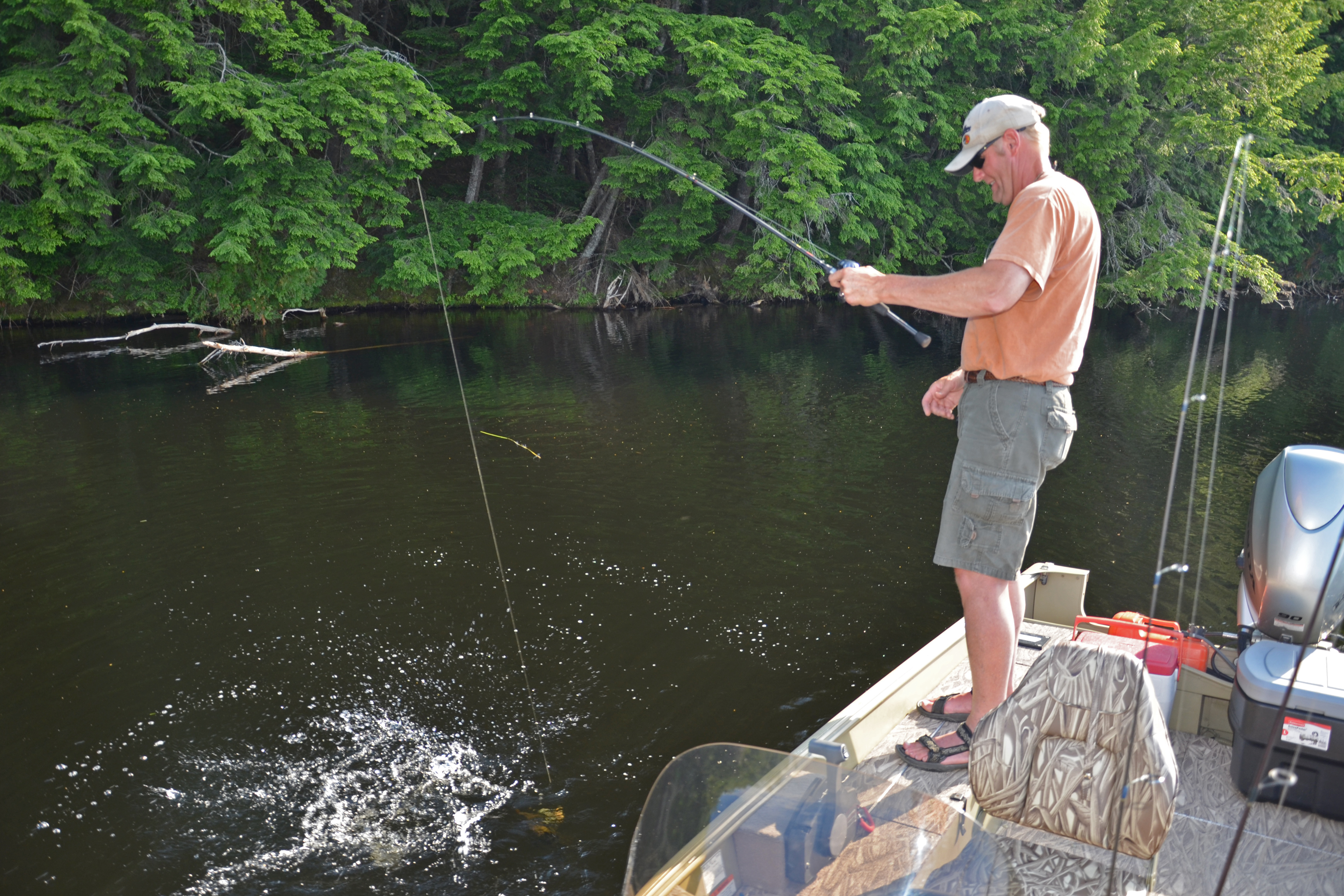
I was 30 years old the first time I ever went fishing for smallmouth bass, Little did I realize how that outing would alter my view of late-season fishing.
Other than the years I was away at college and then pharmacy school, I’ve happily been an Aroostookan and an avid brook trout fisher for almost seven decades. The creeks, streams and lakes I’ve missed visiting throughout the Crown of Maine with fly rod in hand are few and far between.
During the hot, humid dog days of August and beyond, however, water and oxygen levels decrease in regional brooks, and so does the interest of most game fish to strike a fly. Smallmouth bass, on the other hand, seem to become even more active, and are especially aggressive toward any imitation insect, amphibian or small animal struggling through the water. Nicknamed bronzebacks for their glistening metallic dorsal coloration, once hooked, their acrobatic antics yield a fight on a lightweight rod you won’t soon forget.
While most of Maine abounds with lakes and a few rivers thriving with healthy populations of small and largemouth bass, central Aroostook anglers need to travel well over an hour to go bass casting. Some of the better bass waters are in Washington and Penobscot counties. Trust me when I tell you the fast and furious smallie fishing is worth the time and travel.
Being an avid fly fisher for trout and salmon all those decades ago, I was ill prepared for that premier bass outing to Baskahegan Lake. My friend and mentor, Bill Norsworthy, assured me that one of my trout spinning rods and a handful of colorful, size 7 floating Rapalas used for spring trolling would work for smallmouths. Bill’s tackle included half a dozen rods and several boxes of lures, a veritable smorgasbord of soft and hard baits.
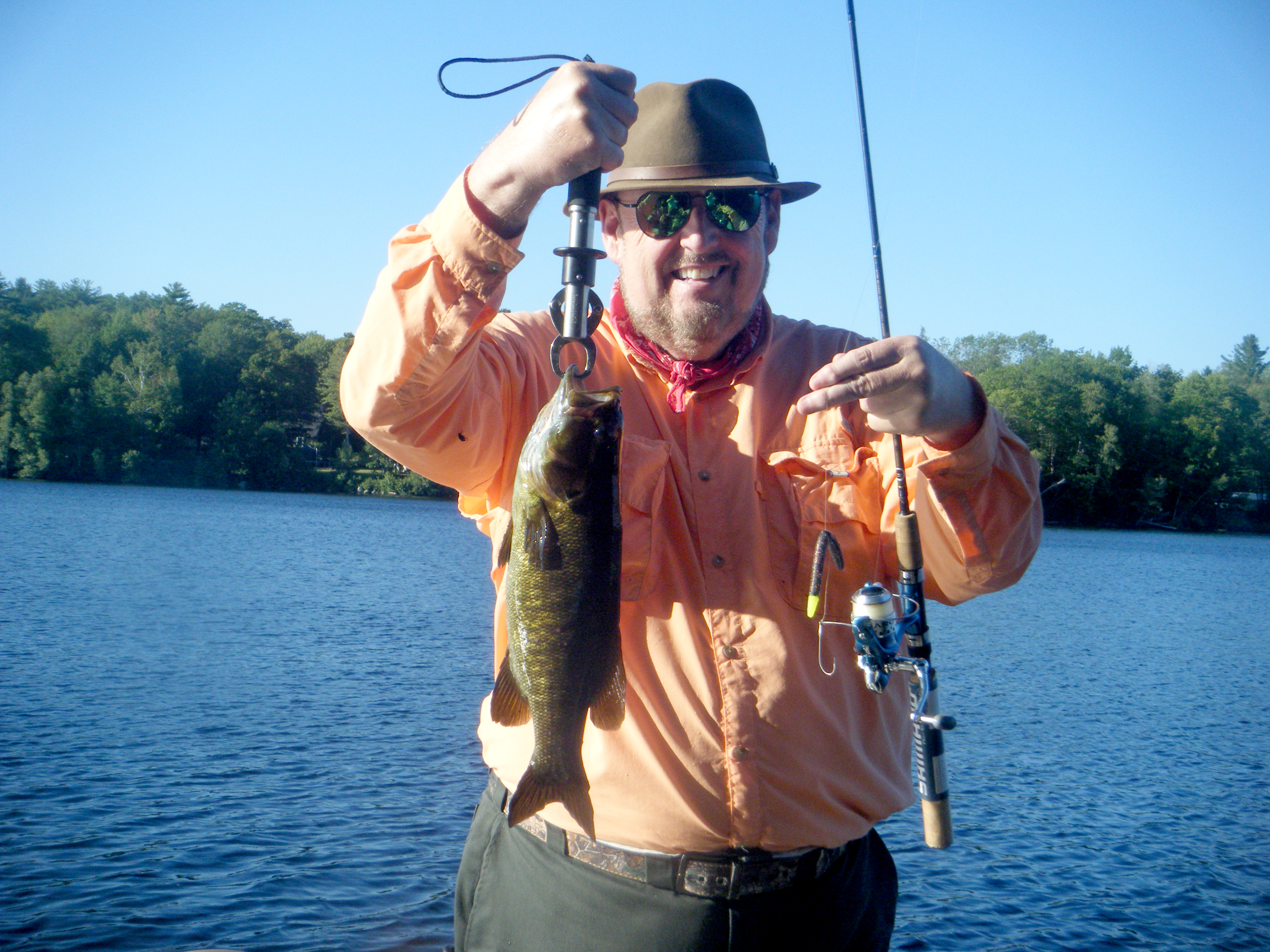
My meager arsenal of plugs actually worked surprisingly well, and my boat buddy lent me plastic worms and grubs, rubber crayfish and salamanders, as well as several noisy, splashing topwater hard baits to try. By the end of the outing, bass weren’t the only ones hooked on this new style of fishing.
Global warming exacerbates low, warm water conditions, producing tough late-summer trout fishing, but bass become more active in these environs and can be fished well into the fall on some waterways. During hundreds of outings on dozens of waterways, I’ve enjoyed late-season and autumn success with bass bugs on a fly rod, surface casting plugs and deep dredging lures.
Spin casting Texas- or Carolina-rigged soft baits of every size, shape and color became my favored tactic over the years and produced the most consistent results. Imagine my surprise when a visiting bass master from Michigan told me about, then demonstrated on a bass outing we shared, “the best rig since bass boats were invented.”
When he first mentioned fishing a “wacky rig,” I thought he was just pulling this ol’ County boy’s leg, maybe even both of them. Nope. I saw it, I tried it, and it’s now the number-one tool in my tackle box. As strange as the setup looks in and out of the water, for some reason it drives bass crazy with its odd movement.
Here’s exactly what you will need for tackle and how to concoct this wacky worm setup. Senko plastic worms, manufactured by Yamamoto bait company, come in five sizes from 3 to 7 inches long and are available in 150 color combinations. I favor the 5-inch in watermelon, black/red sparkle, chartreuse/pumpkin, Junebug and root beer with red and gold sparkles. A resealable packet of 10 costs around $7.
Gamakatsu or Mustad wide-gap worm hooks with a wire weed guard will let you cast and retrieve the bait even in heavy weeds or Lily pads without getting caught. Black, gold and red colored hooks are available; I’ve used them all and prefer the red in a size 2/0 for my 5-inch worms, but also stock 1/0 and 3/0 in my bass box. These large-gap hooks are similar to a circle hook in that their wide bend leads to solid penetration, usually in the lips or corner of the mouth, allowing easier release and less damage.
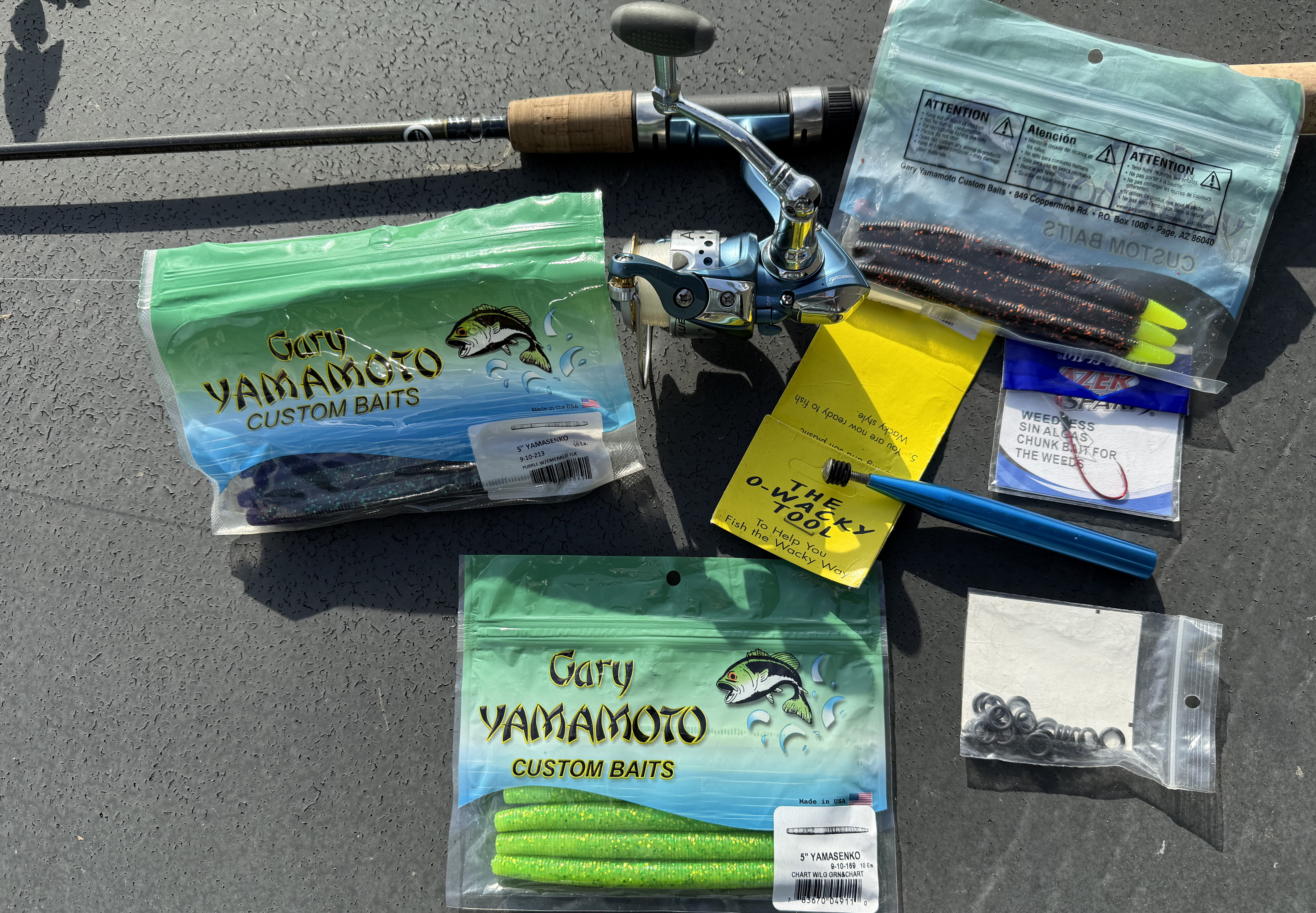
The linchpin of this terminal tackle combination is a 5-inch hollow tube, 1/2 inch in diameter, open at one end and narrowing to a point that holds several rubber rings at the opposite end. Called a wacky tool or O-ring tool, this device allows a worm to be inserted halfway inside, then one of the rings is rolled along the outside of the cylinder until it slips off around the center of the plastic bait.
A regular or weedless style hook is then inserted under the rubber ring, but not into the worm, so the bait hangs from its middle in an inverted U. Most plastic grubs, salamanders and worms are fished with the hook and sometimes a small weight at the nose. This offers a smooth, lifelike retrieve through the water. When wacky worms are allowed to sink slowly or reeled with a intermittent stop and go motion, the oddly rigged wacky worm produces a much more active and erratic motion.
It drives bass crazy, regardless of the time of year or water conditions. On a couple of occasions, just to prove a point and confirm the doubts of other fishing companions, I’ve performed an experiment. I fish a wacky worm while the other two boat buddies throw top water plugs, lure, flies or some other soft baits. Every time, the wacky rig produces at least two or three strikes to their one. More than a few times I’ve cast where they have just fished and hooked up a hefty smallmouth.
A great deal of concern has developed the last few years regarding the excessive amount of plastic baits being lost from hooks or improperly discarded by anglers. Once swallowed by fish, birds and mammals with an affinity for waterways, a lot of unnecessary illness and mortality of wildlife occurs. Using a wacky rig set up, far fewer soft baits are lost, and some fishermen even utilize two O-rings crossed over each other to more strongly secure the hook. Be conscientious for the sake of ecology, the animals and future fishing generations.
Don’t wait until next year to try wacky-rigged bass casting. You can enjoy some of the most comfortable weather, beautiful autumn scenery and consistent fishing this season. Even better, fishing pressure drops notably as many sportsmen shift to hunting mode for bow and gun seasons.
Take my word, once you try this crazy style of bass fishing, your action and enjoyment will explode, just like the big bass hitting your wacky rig.