

When Maine became a state in 1820, logging, potato farming and lobstering were the backbone of the economy. As decades passed, the Pine Tree State gained a growing popularity for outstanding hunting and fishing opportunities.
By the early 1900s outdoor enthusiasts and celebrities were visiting from all over the world to hire guides and outfitters to pursue big and small game, sea and puddle ducks, Atlantic salmon, and landlocked salmon and trout. When Canada geese and wild turkey came into the picture in the last few decades, popularity grew further for resident and visiting sportsmen and women.
My dad was an avid outdoorsman and introduced me to cast-and-blast sporting ventures at a very young age. I can remember having to stand on the old International truck’s passenger seat, leaning on the dashboard, to see through the window to help look for partridge as we drove woods roads. It was well before vehicles had seatbelts.
He was a wonderful mentor and I’m so thankful for the decades of outings we shared afield and afloat.

Unfortunately, there’s been a concerning nationwide decline in hunting sports and license sales over the last 20 years — notable even here in Maine. Our forefathers often depended on hunting birds and big game to fill the winter larder and feed the family year around.
I don’t think the family traditions and hunting heritage have altered, but need has perhaps declined. Industrialization, work parameters, declining population and size of families, as well as increased anti-hunting pressure, have all contributed. Along with many other hunters, I find it a cause for concern.
Thankfully, there are still local and state clubs and organizations promoting shooting sports, and family mentors still teach, guide, promote and nurture our hunting heritage.
And now, to buoy my spirits, I bring the story of the Cushman clan of Mars Hill and their astonishing big game season. It helped restore my faith in the next generation of Maine outdoorsmen and women.
Garrett Cushman and his three sons managed to tag 16 animals last year during turkey, bear and deer seasons. They also accounted for dozens of ducks, geese, partridge and rabbits to stock the freezer and feed the family. Imagine if one of them had been drawn for a moose permit.

Garrett and his wife, Amanda, owned and operated a Presque Isle embroidery, trophy and awards business in Presque Isle for years, along with their sons Carson, Ethan and Connor. Hours were long and grueling, but all five squeezed in some hunting whenever possible.
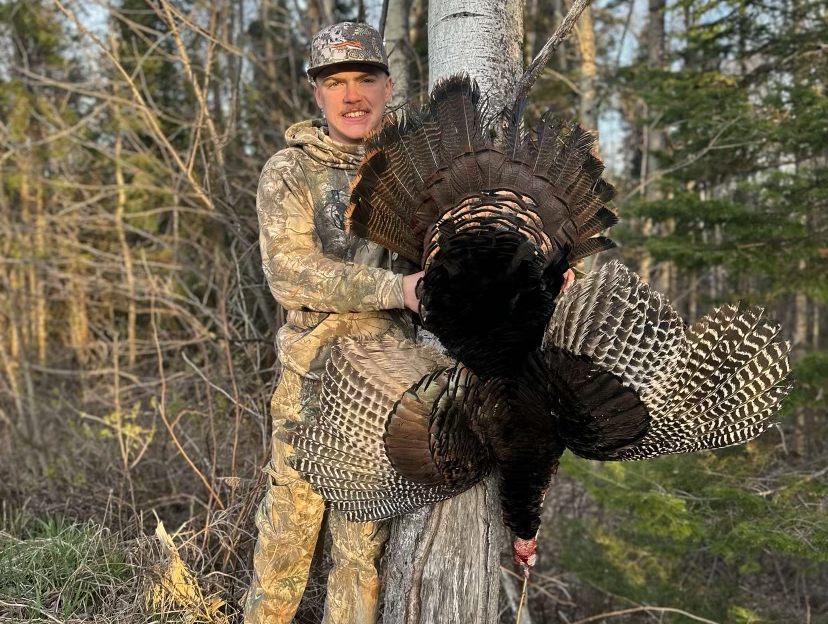
Connor, 13, is the youngest and needed to have his dad along for each of his outings, which would consist of mostly short, intense pre- and post-school hunts. After no luck on youth day of spring turkey season, Connor got the parade of success underway early opening day, Monday, May 5, bagging a 21-pound tom with a 9-inch beard and spurs just under an inch in length. On May 10, brother Ethan coaxed a couple of toms and tagged a 16-pound gobbler with a 7-inch beard.
It was finally Dad’s turn. He was determined to use a bow to up the challenge. A gobbler came to investigate his calling and decoys on two hunts, but kept outside archery range. He arrowed a 19-1/2-pound bird with a 10-inch beard and 1-inch spurs was finally arrowed on May 17.
Three days later, eldest brother Carson completed the family spring turkey slam with an 18-pound bird sporting an 8-1/2-inch beard and 7/8-inch spurs.
Black bear season opened in late August. Garrett and sons each tended their personal bait sites for a month before opening day.
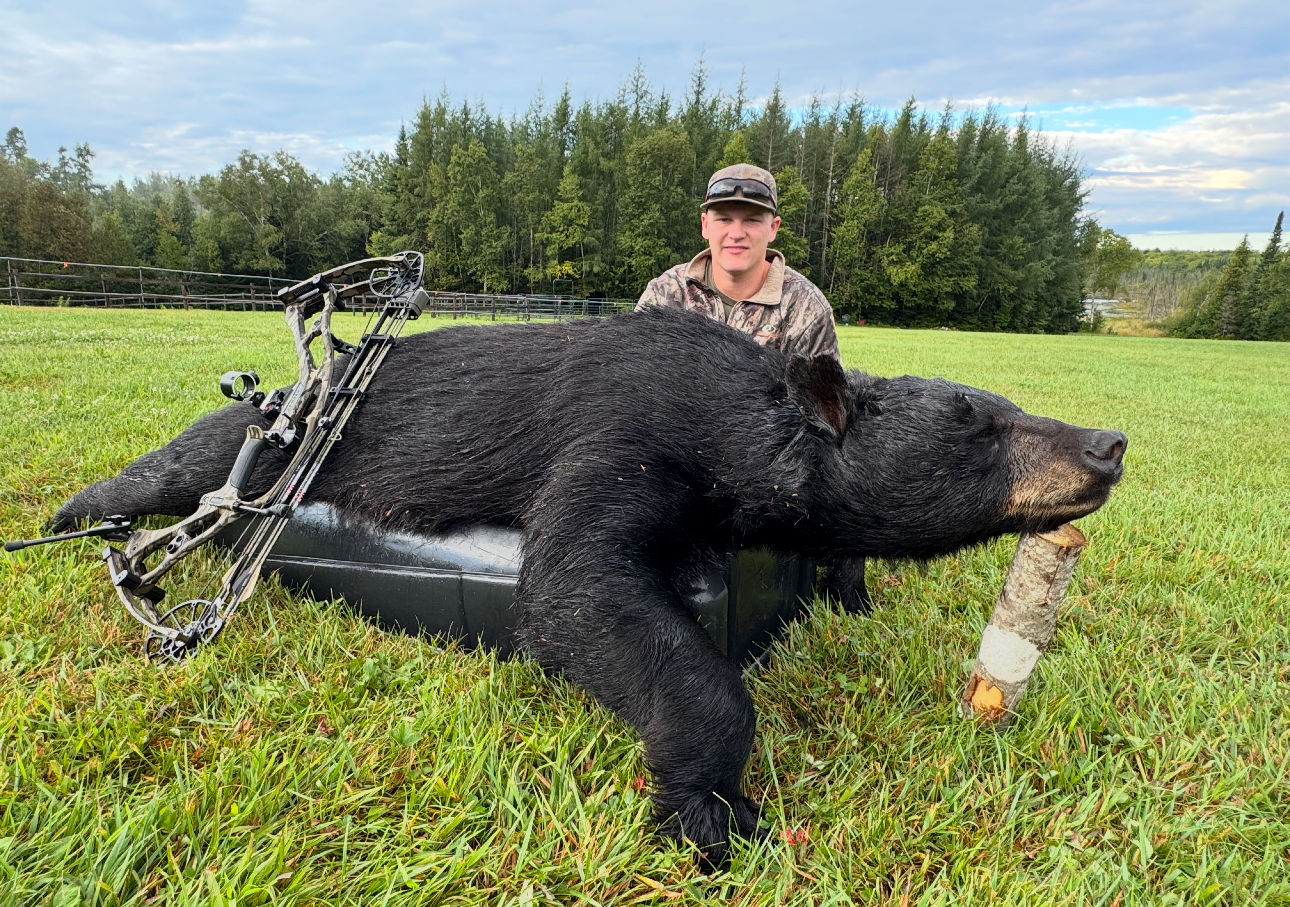
Having practiced all summer with his compound bow, Carson was determined to bag a bruin with it. On Aug. 26 he got in a good shot as dusk was closing in and sent a big bear running off into the woods. Family and friends were called in that night to aid the search.
Once the bear was located and the celebration ended, the work began. The bear was so large it had to be dressed out before they could transport it from the thick woods to where the ATV waited. It was past 2 a.m. when they hoisted the trophy on certified scales at a dressed weight of 376 pounds. The live weight was 450 pounds.
Late the next afternoon, Aug. 27, trying to stay awake in the tree stand after the long, exciting, previous night followed by a day at work, Garrett got a bow shot a bit before dusk. His black bear topped the scales with a live weight of 299 pounds.
Next on the agenda was to spend a few outings over a bait barrel with his youngest son, Connor, who succeeded with a well placed rifle shot and bagged a 165-pound bruin to add to the tally.
Aroostook’s zone six now features a 45-day fall turkey season intermingled with all the upland bird and waterfowl options. Among numerous successful grouse, duck and Canada goose hunts, all four Cushman men filled their fall turkey tags. The family total now stood at 11 animals. With no moose tags, it all came down to deer season.
Garrett was lucky enough to draw a doe tag and wasted little time, making a spectacular 80-yard shot with his compound bow. The doe dressed out at 135 pounds.
Connor tagged a doe on Oct. 25 of the youth weekend hunt. Elder brother Carson was next up on Nov. 12 with a big seven-pointer that dressed out at 191 pounds.
On Nov. 15, Garrett downed his second whitetail, a six-point buck with a heavy symmetrical rack. The final piece of the big game puzzle was placed by Ethan, when the middle brother tagged a five-pointer on Nov. 26.
In just over six months, the father and three sons tagged 16 big game animals, dozens of ducks, geese and grouse, several rabbits and a couple of coyote. Not a bit of meat went to waste as they gifted dozens of friends and family members with tasty steaks and roasts after filling their own freezer for the winter.
Maine’s hunting heritage lives on as well as true sporting spirit in the Cushman clan.
Such a season of 16 big game animals for one family, including three or four real trophies, may have happened before in Maine, but I’ve never heard of anything like it in my 70-some years. It certainly increases my faith in the hunting foundation being established for our next generation.