


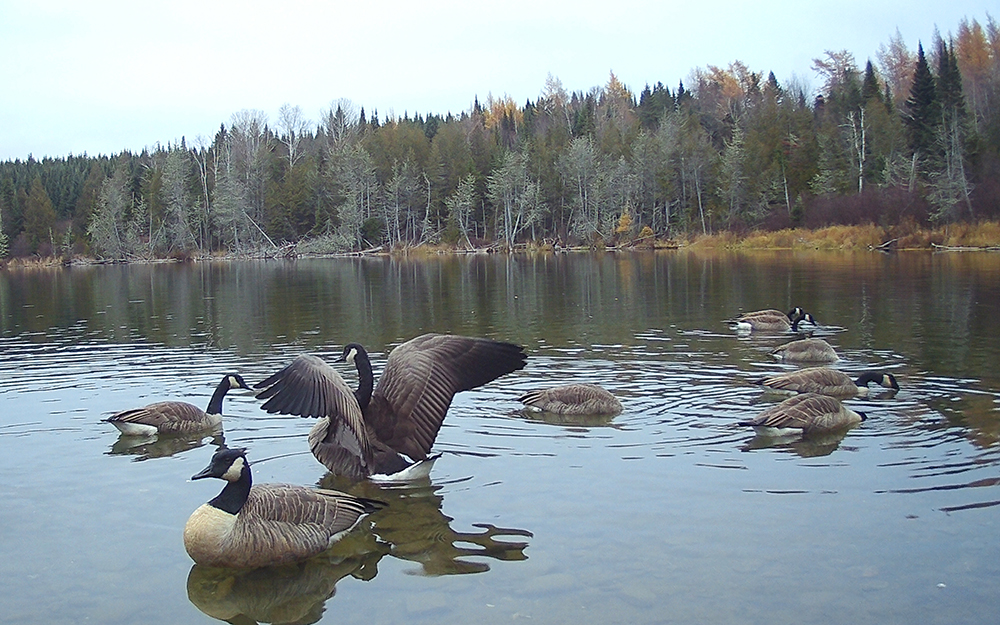
While black bear season has always been the preeminent September attraction for hunters, there’s another option that‘s garnering popularity with every passing year. More and more Crown of Maine sportsmen and women, and a steadily increasing number of southern Maine and out-of-state hunters, travel to Aroostook to take advantage of early season honker hunting.
Courtesy of Bill Graves)
Gunning for keen-eyed, wary Canada geese provides a true wingshooting challenge, and nearly four weeks of an early season adds variety to bear hunting and late season fishing.
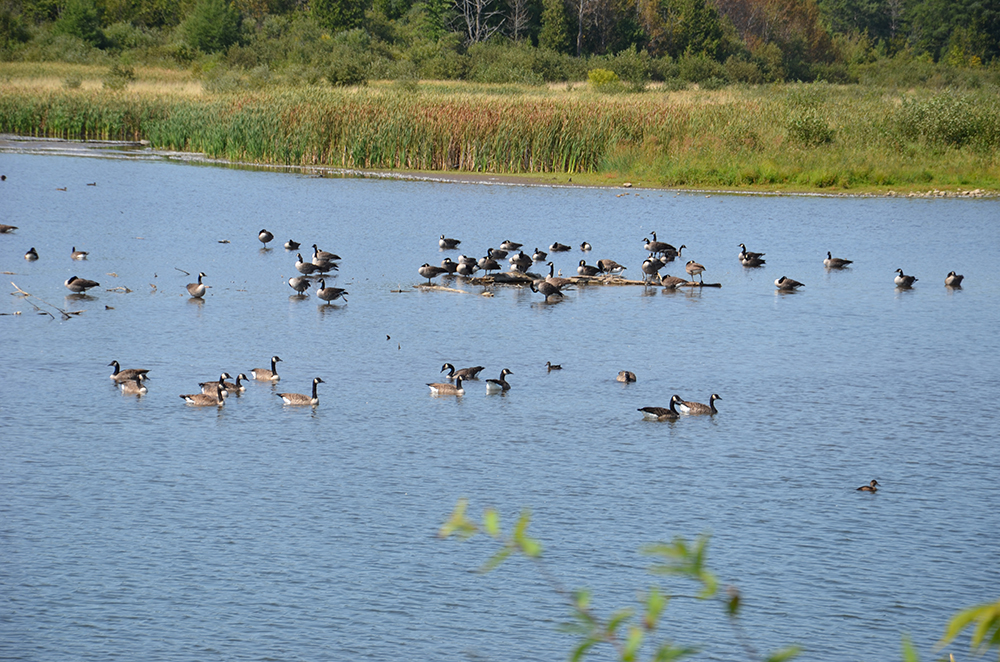
Up until the early 1960s, Aroostook waterfowlers seldom saw a goose, with puddle ducks being the main quarry. Then the Maine Department of Inland Fisheries and Wildlife began trapping, transporting and transplanting bunches of nuisance geese from other New England states. The small bunches grew and dispersed throughout The County with the rewarding result that this fall is the 30th anniversary of Maine’s native goose hunting season.
Along with the regular Canada goose season, local waterfowlers may hunt over three months, clear into December if the weather cooperates.
(Courtesy of Bill Graves)
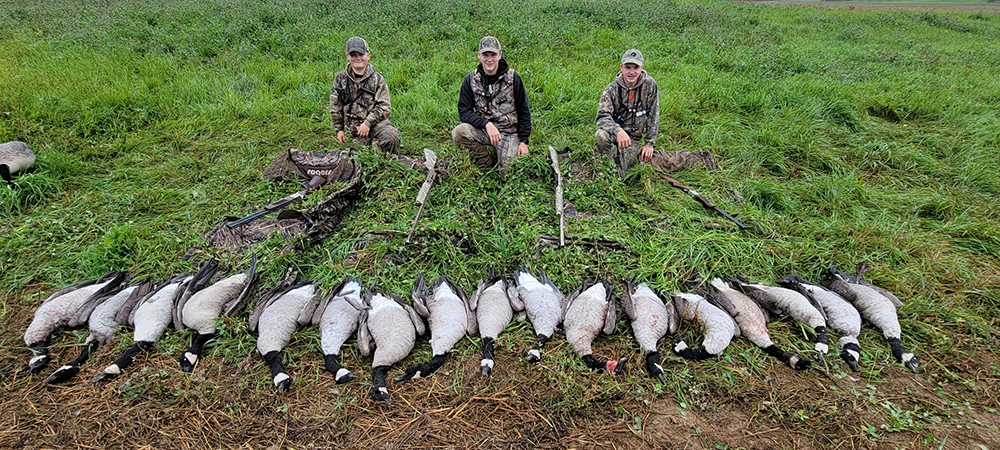
Most area hunters probably own much of the gear necessary to hunt geese, and novice waterfowlers will often experience better success with native birds than the October and November flyway honkers migrating through Maine that have been shot at all along their route. Add to this the fact that a lot of local geese are young birds born this year, more easily fooled with decoys and good calling, and the September season provides action and a learning experience for youth hunters and those new to the endeavor of honker hunting. The eight-bird daily limit exclusive to the native goose season is also a wonderful asset this month.
Obviously the primary requirement for any wingshooting is a shotgun; a lot of geese are killed by youngsters and small-framed women wielding a 3” chambered 20 gauge, but the most popular scattergun among goose hunters is a 12 gauge with a modified choke. A certain percentage opt for larger pellet loads and a bit more distance by shooting a 3 1/2-inch 12 gauge or the heavyweight 10 gauge, but although big guns weigh a bit more they still yield significant recoil so are not for the meek.
Selecting the most dependable shotgun shells is the next step, and federal law requires non-toxic shot for waterfowl, so the lethal lead pellets offering longer shot and deadly knock-down power are no long usable. Steel shot provides moderate range and isn’t too costly, but other nontoxic selections including bismuth and tungsten/iron combos often cost 20 bucks or more for a box of 10.
Whichever legal metal you settle on to shoot, I favor #2 size pellets for the big, heavily feathered honkers, while others lean toward the larger BB pellets, either should be effective for birds decoying inside 40 yards.
(Courtesy of Bill Graves)
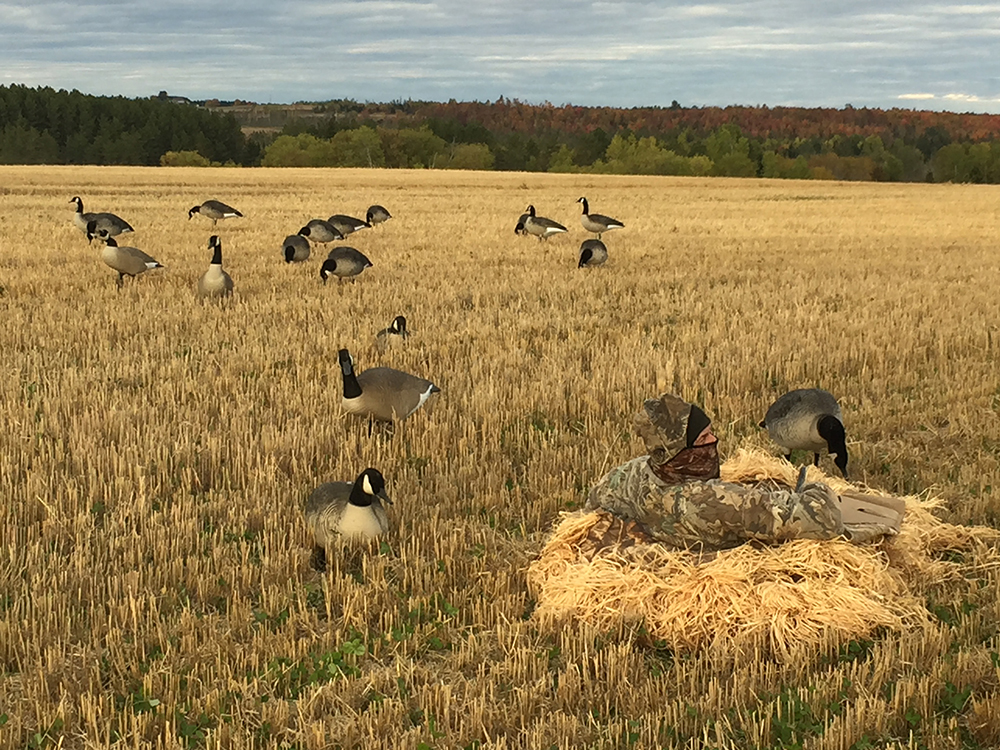
You will need some decoys. Unlike the late season migrating geese which are very wary and wily, native birds often succumb to as few as a dozen fake fowl. Windsock and silhouette-style decoys prove effective, easy to transport, and quick to set up and take down at minimal monetary output. Shell decoys and full-body forms provide a more realistic setup, but can cost at least $200 a dozen. Rookie discerning hunters can often find secondhand decoys online or in local swap books as other waterfowl gunners upgrade to newer gear.
While there are dozens of sizes, shapes and styles of commercially made blinds — such as layout, hay bale and ground blinds — it’s possible to hunt successfully in local farm fields without that expense. Dressing from head to toe in camo clothing, including a mesh face mask and gloves, shooters can easily blend into hedgerows, brush, rock piles and ditches. It’s also very effective to lie flat among the decoy spread covered with a body-length sheet of camouflage cloth that closely matches the color of the surrounding crop, vegetation or dirt.
The population of native Canada geese is appreciable, but nowhere near the numbers present during the fall migration period, so it requires a good deal of scouting and planning to assure success. Driving back roads and checking cut grain fields offers the most likely method of pinpointing where to hunt. You can also use a vehicle and binoculars to follow geese from their roost pond to a feeding location.
Since it’s likely the birds will return to that favored feed field later that day or the next morning, it’s just a matter of arriving first, setting out decoys and waiting hopefully. Your decoy spread might even draw in a few passing geese winging from one area to another. It’s always smart to have at least one backup location in mind, as large numbers of hunters this month might lead to several scouting the same field or waterway.
(Courtesy of Bill Graves)
A word about calling. Bad calling is much worse than no calling at all. Learn a simple hale call to start with and don’t overdo it.
Migratory waterfowl stamps are required to legally hunt Canada geese. State stamps may be purchased with your hunting license and federal stamps are available at any post office.
Northern Maine’s early goose season offers waterfowlers of all experience levels the opportunity to extend their wingshooting season. Goose hunting may become an addictive pastime, and while it’s not too expensive to get started, I have to be truthful and explain that the more you do it, the more gear seems to be acquired. A pickup load seems about right.
Most experienced gunners agree it’s worth every cent and every hour expended. Try it yourself this month.