


LIMESTONE, Maine — The Loring Air Museum is adding another piece of military history to its treasures.
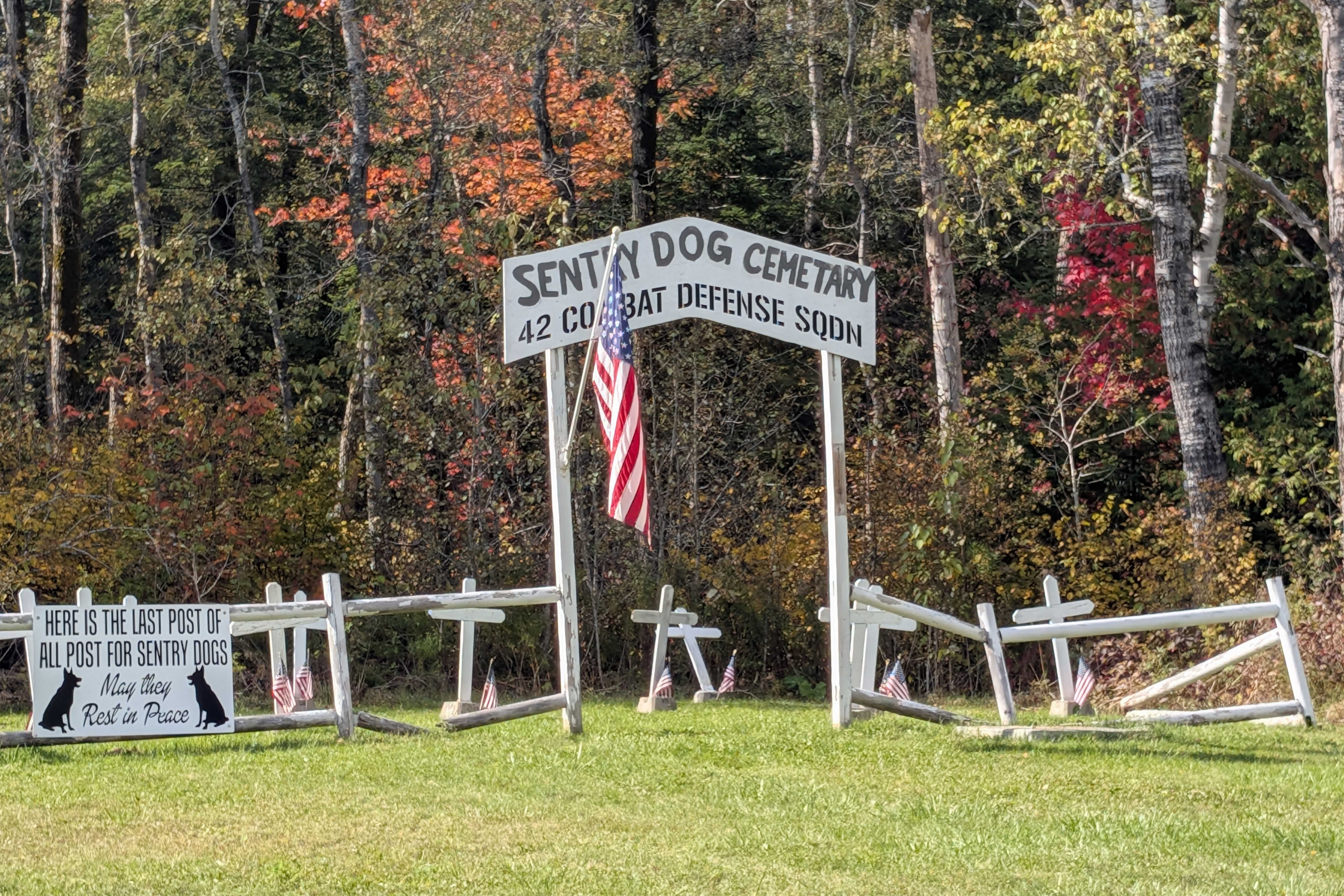
The museum and developer Green 4 Maine finalized a 99-year lease this week that grants the museum oversight of the Sentry Dog Cemetery.
Of nearly 100 dogs that guarded the former Loring Air Force Base with their handlers, about 14 died while stationed there and are buried in the small memorial plot. The site has seen periods of renewal and disrepair. The long-term lease puts the site into museum hands and guarantees that it, and the history of Loring’s guard dogs, will be restored and preserved.
“We are so happy to be able to restore and maintain the Sentry Dog Cemetery. It’s a very iconic place on the base,” Museum President Polly Chike said. “The Loring Air Museum volunteers are looking forward to beginning the restoration of the cemetery and ensuring these loyal service dogs are honored with the respect they deserve.”

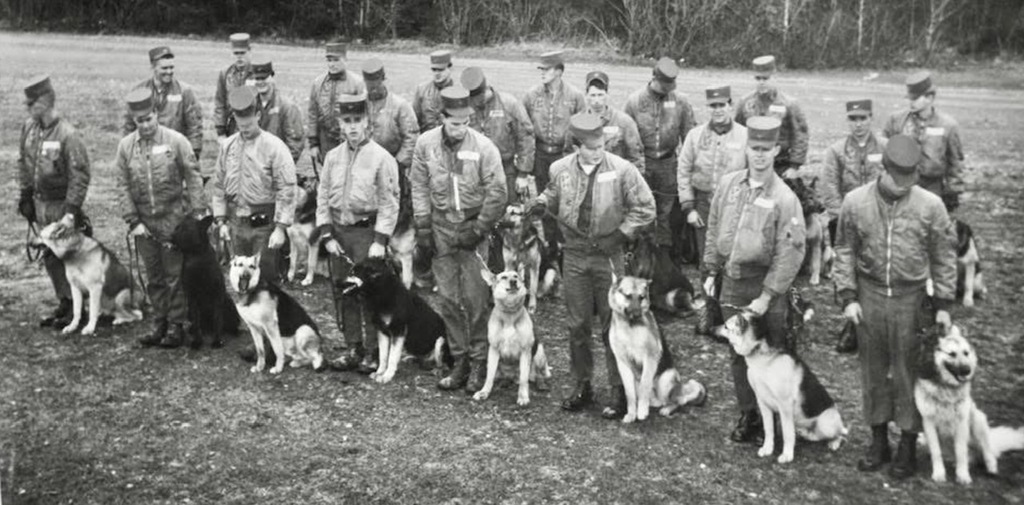
Loring employed both sentry and patrol dogs.
Sentry dogs were trained to detect and attack threats, said David Priest of Milford, a former sentry and patrol dog handler who served at Loring.
“A patrol dog is a refined sentry dog with an off/on switch. All sentry dogs knew was to attack; a patrol dog would attack but could also be called out on command,” he said. “Patrol dogs could be used for law enforcement duties while sentry dogs were used for security duties.”
Today, it’s common to see military dogs on television and in movies, accompanying forces on missions, Chike said. They weren’t as well-known back in the 1960s and 70s, when Loring first deployed canines, but were a vital part of base defense.
The dogs provided frontline security, walking the perimeter with their handlers and patrolling the airline ramps where bombers sat loaded, she said. They also guarded the North River Depot, located in the eastern part of Loring, which housed nuclear weapons storage and assembly.
Thirteen dogs are buried in the small cemetery, Chike said. Their handlers and others who worked with them shared a strong bond with the canines, so the cemetery has been a priority since the Loring Air Museum was founded 20 years ago.
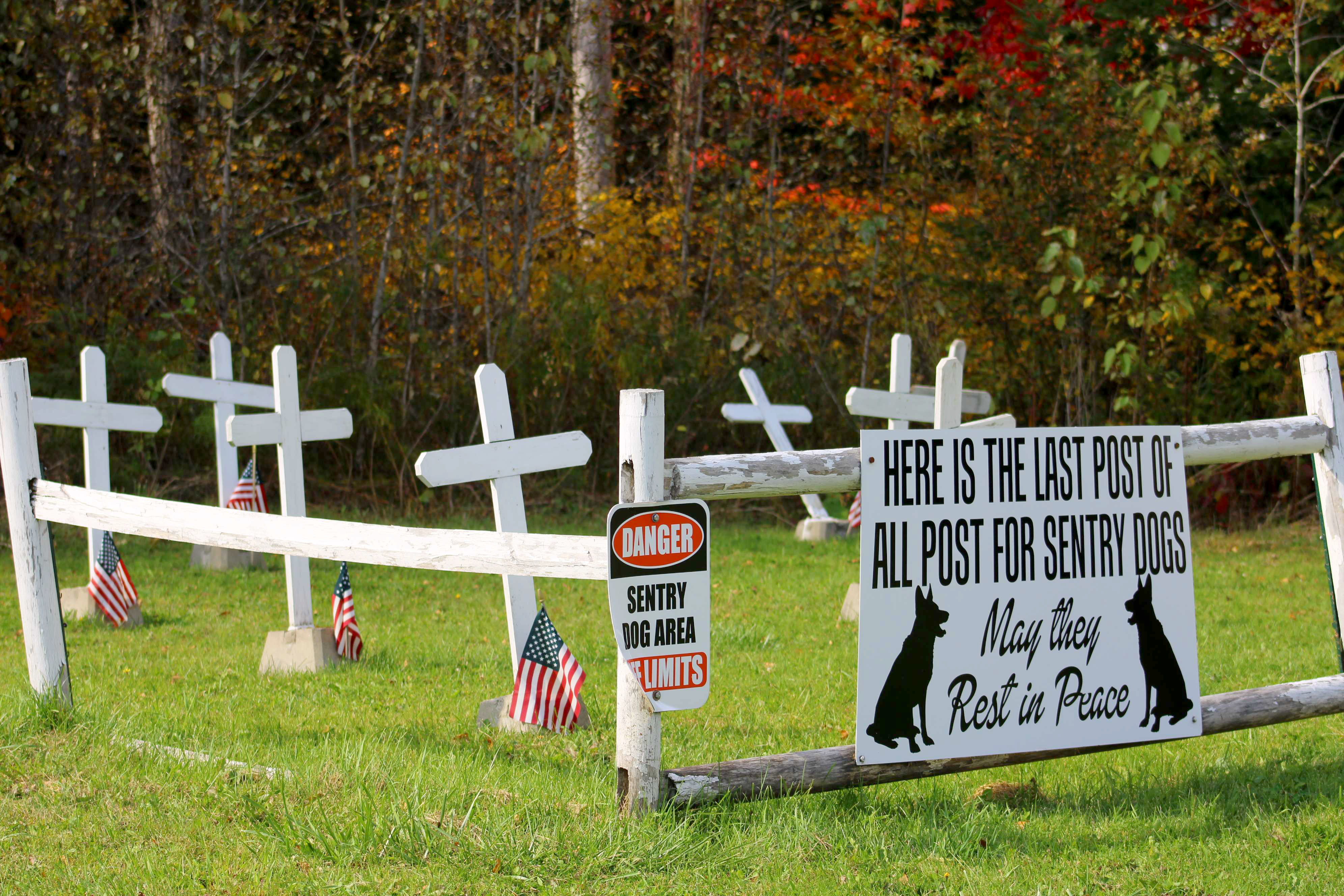
Members helped maintain the cemetery, then worked with a Boy Scout, who replaced the fence and fixed it up, she said.
That Scout was David Cyr of Presque Isle, who adopted the cemetery as his Eagle Scout service project in 2014, according to Maine Public. Cyr learned about the site from veterans who were dismayed to find the site neglected, and he restored the fencing and markers.
But the lumber that was used didn’t hold up well, and the site fell into disrepair once again, Chike said.
The museum had long had a verbal agreement with the LDA that granted it rights to the cemetery, and volunteers were raising funds to refurbish the site when Green 4 Maine came along and launched its Green 4 Maine Campus at Loring.
The developer bought roughly 450 of Loring’s 3,800 acres in 2023, which included parcels containing the museum and the dog memorial.
“We had a lease for the museum that carried over [with Green 4 Maine], but never had anything but a verbal agreement for the cemetery,” Chike said. “So we had the money to fix it up, but we didn’t own the land anymore.”
Volunteers started working with Green 4 Maine last year on a lease agreement, and now that it’s finalized they’re poised to start work on the memorial.
Credit for keeping the cemetery maintained and at the forefront of museum planning goes to numerous people, including Tonya Ossenfort, who has mowed the area for several years and pushed directors to prioritize the site, Chike said.
Under the lease’s terms, the museum pays nothing for the cemetery.
The agreement symbolizes a shared commitment to honor history while breathing new life into the Loring campus and the entire region, said Andrea Page, a broker with Keller Williams Realty in Portland who works with Green 4 Maine.
“We want to continue to honor what this property and its infrastructure did and honor everybody that’s been there, and still look to the future with excitement,” Page said. “The team wants to support our local people and continue to build on what we have there.”
The partnership strengthens the bond between the developer and the community, and the group is enthusiastic about working with the museum team to honor fallen heroes and help preserve the base’s history, she said.
Ossenfort and her grandson will be involved in the cemetery’s future, Page added.
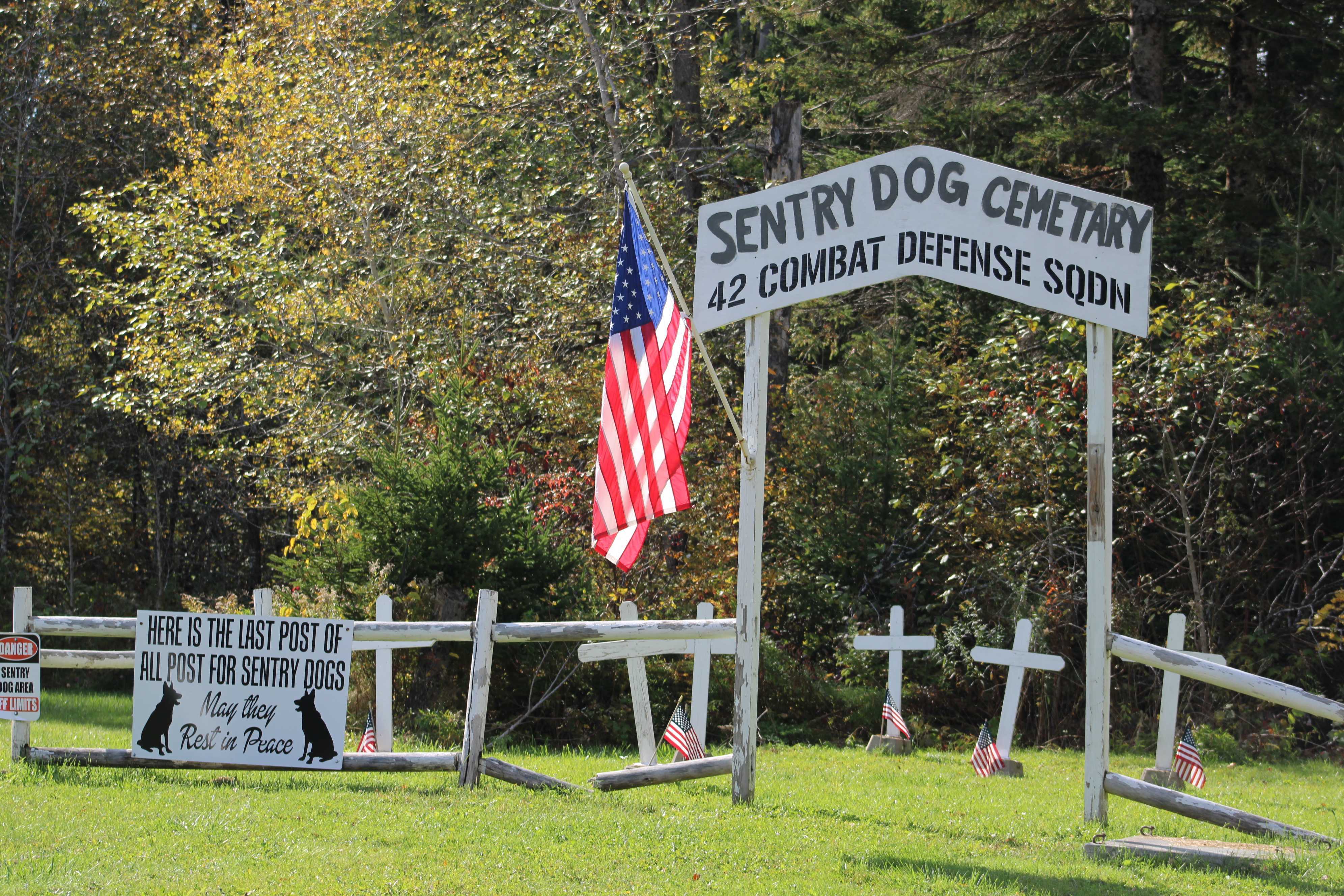
The Sentry Dog Cemetery is the second project this year to honor the canines of Loring. In nearby Washburn last month, a memorial was unveiled to honor all the dogs that either stood sentry or patrolled the base with their handlers.
As for what’s next at the Loring site, crews first have to clear trees and brush, which they plan to do this fall, Chike said. In the spring, they’ll work on new fencing and either restoring or building new crosses.
Fundraising will continue, because the group wants to add more elements, including a bench, to create a more dignified and respectful resting place for the dogs, she said.
Chike served in the Air Force for 25 years and was stationed at Loring twice. She recalled working with dogs at other bases and being amazed at the power and strength of the trained canines.
“A lot of the members of the museum have worked with them and have great respect for them,” she said. “They provided so much for the base and we’re just so thrilled to be able to restore the cemetery at Loring Air Force Base, where it belongs.”