

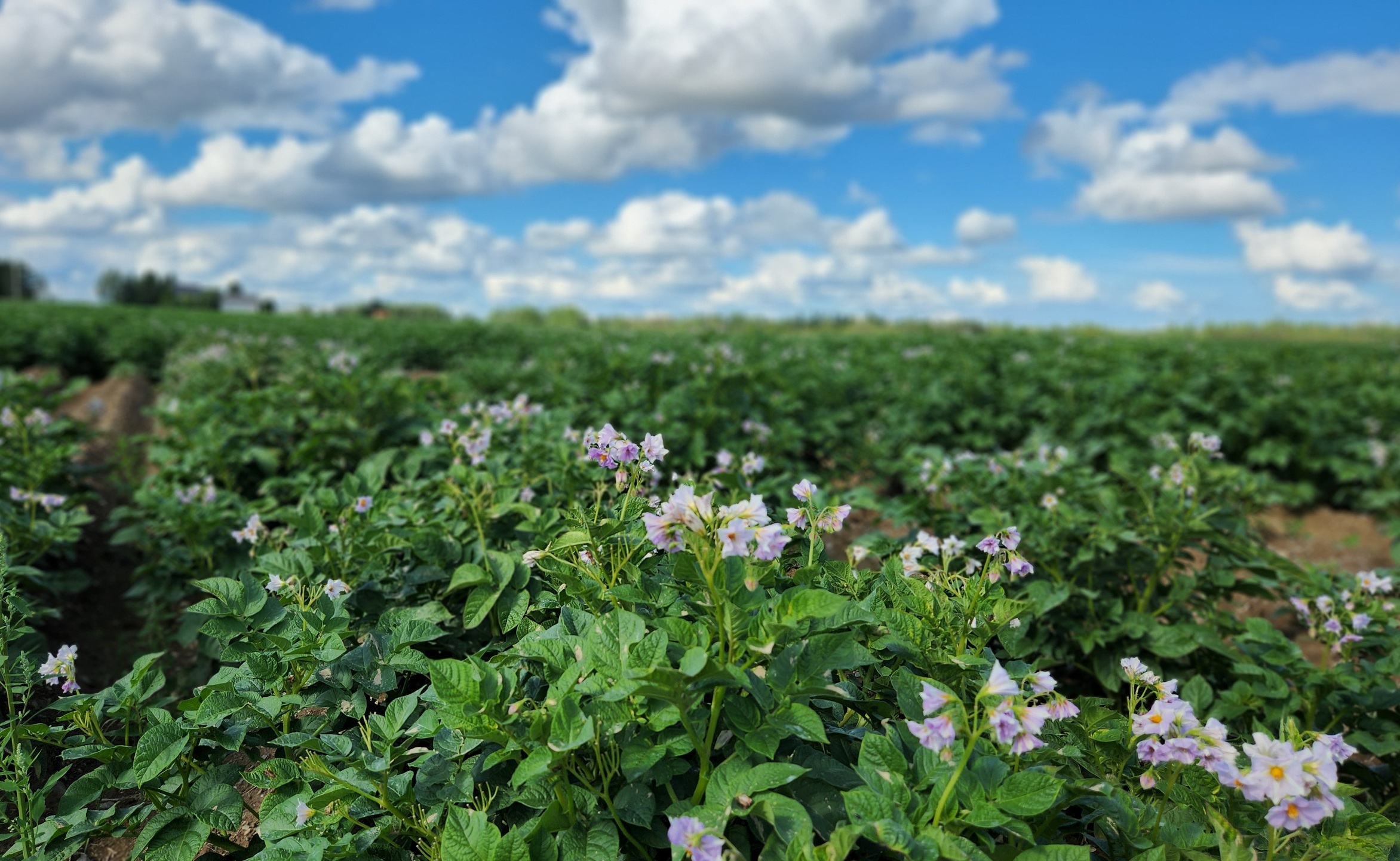
Late blight spores found last week in Aroostook County caused concern for the 2025 potato crop, but those spores had dropped as of Thursday, scientists said.
The fungal disease has not been detected anywhere in Maine, University of Maine Cooperative Extension crop specialists said in the July 3 Potato Pest Alert newsletter.
That’s good news, since early heat and humidity seemed to provide ideal conditions for blight development, according to last week’s pest reports. Late blight affects potatoes and tomatoes and can severely damage crops. Despite the latest findings, farmers should continue preventive spraying, specialists said.
“Late-blight spore counts dropped sharply over the past week and there are still no confirmed cases in Maine,” Extension scientists said in the pest report. “We are recommending growers stay on a five-day protectant spray for the time being.”
The Extension’s potato experts include Sean McAuley, technician; James Dill, pest management specialist; Alicyn Smart, plant pathologist; and Griffin Dill, integrated pest management technician. Their weekly pest report covers northern, central and southern Aroostook County as well as central Maine.
Late blight causes discolored spots on the leaves and stems of potato and tomato plants and in the actual fruit. Infection can come from cull potato piles, infected plants or seed, according to the Extension. The disease thrives in cool, moist conditions.
Though this growing season started out cool and wet, things have moderated a bit and potato plant growth appears to be strong, the scientists said.
As far as insects are concerned, some aphids have been found. Colorado potato beetles are more active in northern and central Aroostook.
Caleb Goossen of the Maine Organic Farmers and Gardeners Association issues pest reports each week or two. In his latest report on June 27, he also urged farmers to remain cautious for blight.
“As of now, we don’t have reason to think there are active infections on plants in the state, but this early spore detection is perhaps a beneficial shock to the system, reminding folks to keep on the lookout for disease symptoms,” Goossen said.