


MADAWASKA, Maine — The Maine Solar System Model just got two new additions for the first time since 2008.
The dwarf planets Makemake and Haumea were installed in the St. John Valley Saturday to coincide with Madawaska’s multi-day Acadian Festival celebration. With these additions, the world’s second-largest largest three-dimensional scale model of the solar system grew from 100 miles to nearly 160 miles.
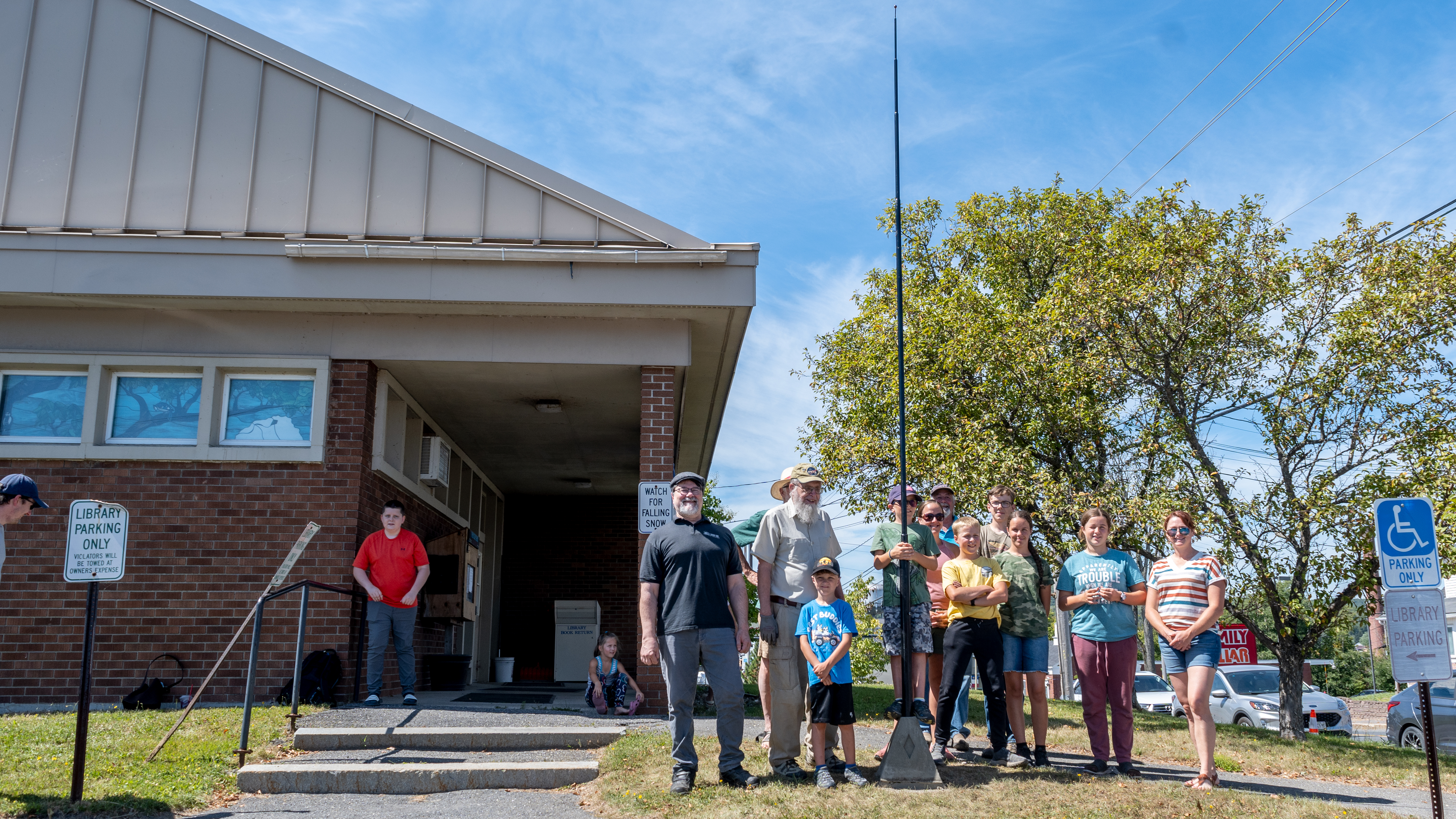
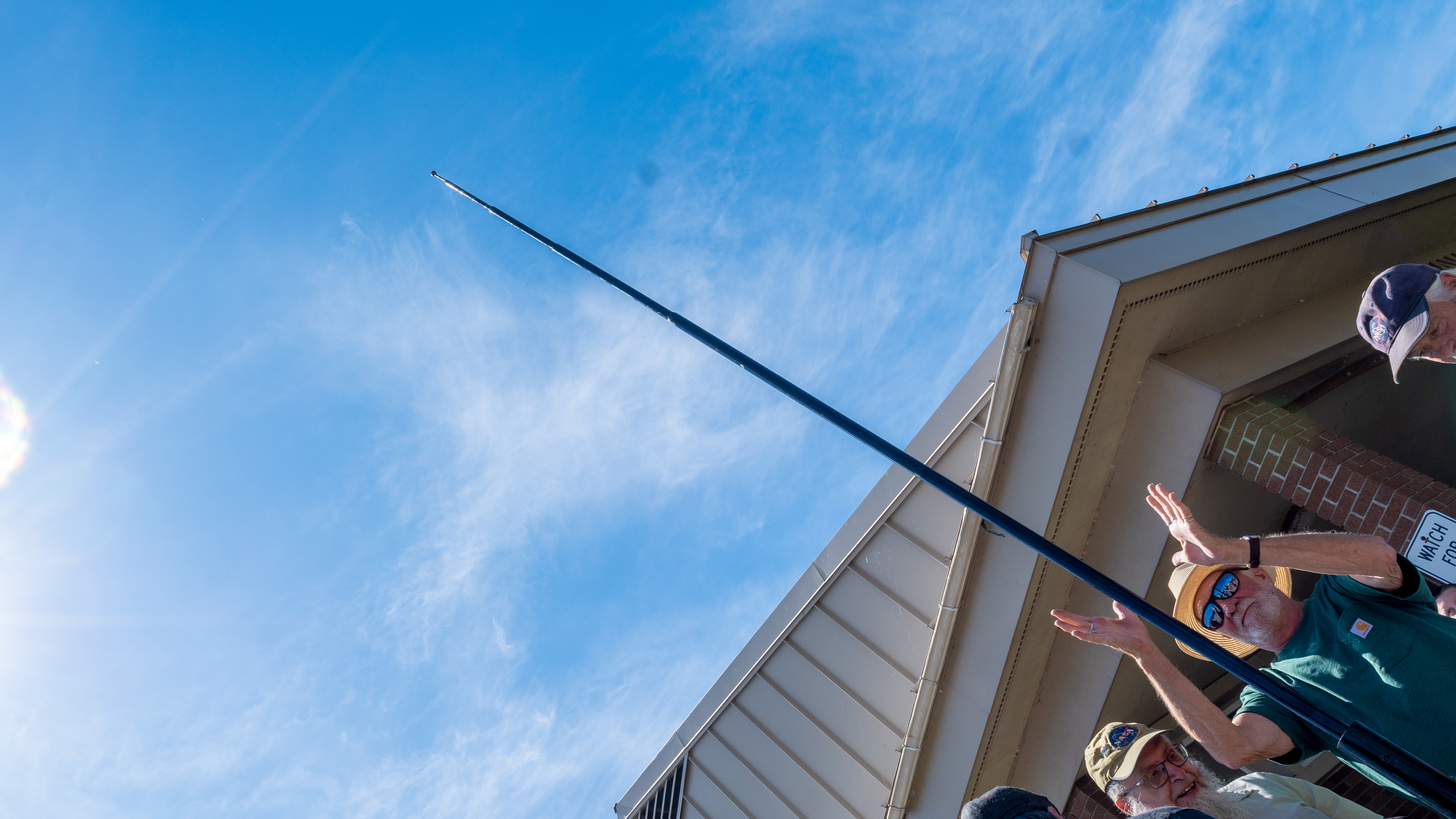
Makemake was installed at the Madawaska Public Library Saturday afternoon, after which Haumea was put in across from the Musee Culturel du Mont-Carmel in Lille.
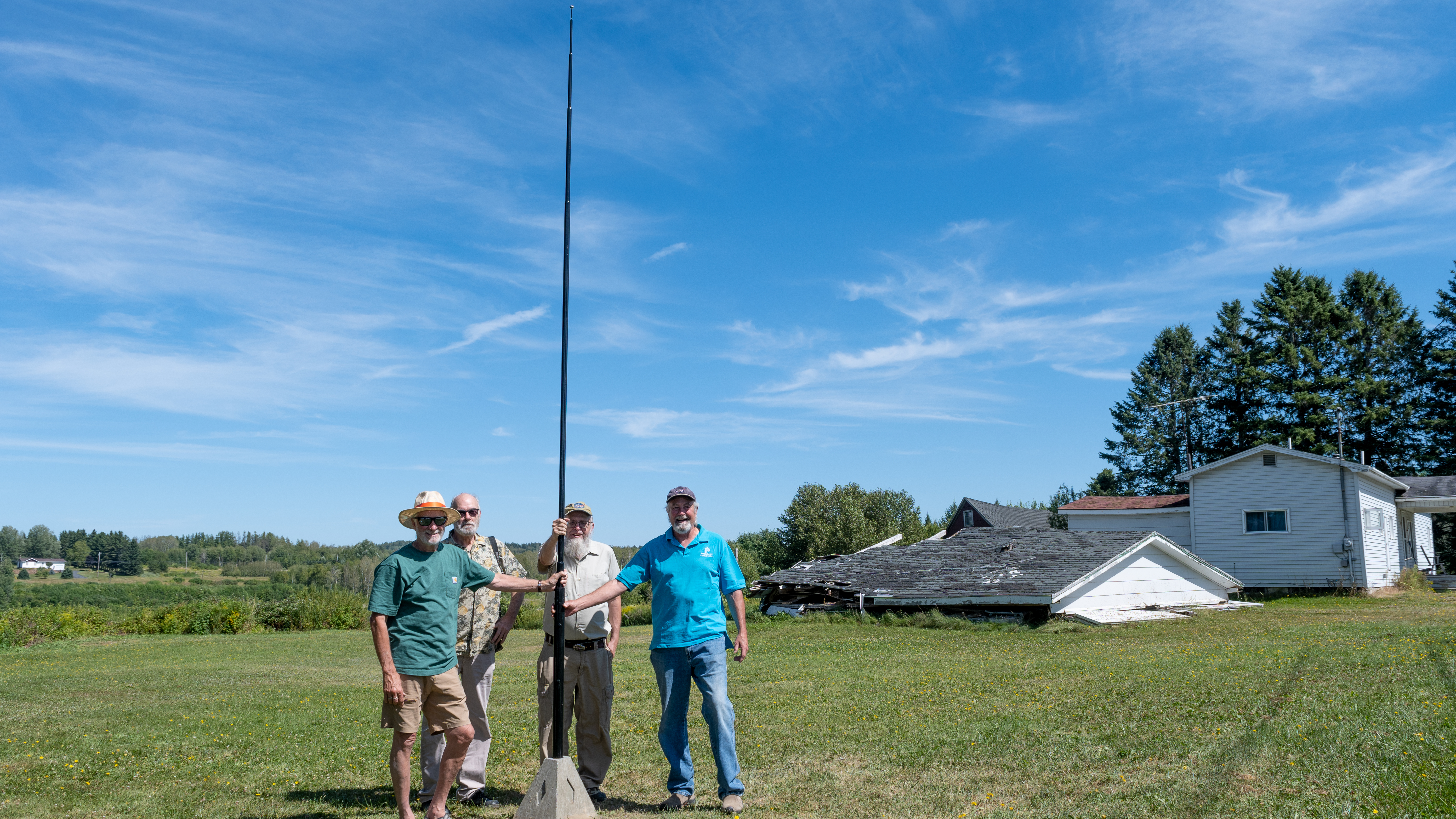
University of Maine at Presque Isle Emeritus Geology Professor Kevin McCartney worked on the project with the Upper St. John River Organization and Maine Potato Growers.
McCartney said he originally planned to install some dwarf planets in Canada and found someone willing to help with construction, but after waiting for eight years decided to reach out to Lynwood Winslow of Maine Potato Growers about construction.
Winslow was done within a month, and Bob DeFarges of the Upper St. John River Organization helped organize the installation ceremony and coordinated work with a group of Madawaska-area home school students who helped paint the models and pour concrete bases, he said.
“Makemake is painted red because it is coated with a layer of frozen methane, which looks red when you look at it through the telescope,” DeFarges said. “Haumea is actually coated with water, ice, and silica crystal. So it’s not red. It’s kind of silver.”
Heidi Belanger was among the students who worked on the project. Belanger said it was a fun experience.
“It was pretty simple, “Belanger said. “We just painted it.”
The model stretches from the sun, which is at the University of Maine at Presque Isle, to the dwarf planet Eris in Topsfield. It is 93 million times smaller than the actual solar system, with one mile equal to the distance between the earth and sun.
The model was formally unveiled in 2003. The project was led by McCartney and roughly 700 people, or one percent of The County’s population. McCartney says that number is now closer to 1,000.
At that time it was the world’s largest scale model of the solar system. The only model to beat Maine’s in terms of size is the Sweden Solar System display, which spans the entire country.
Former National Geographic photographer Bob Krist was passing through northern Maine for the first time and working on a freelance documentary about Route 1 when he learned about the installation.
“The solar system installation is a completely lucky coincidence,” he said. “I knew about the solar system model, but I didn’t know they were still putting up dwarf planets.”
McCartney said the work on the model is nearly complete, for now.
“We’re waiting,” he said. “The International Astronomical Union can officially recognize new dwarf planets any day.”