


Don’t let the title mislead you — outdoor endeavors always leave sportsmen with success and sorrow stories. In this case, however, I’m not referring to the thrill of winning or the agony of defeat, but more of a logistics standpoint (pun intended).
Are you still a staunch supporter of the bird’s-eye-view benefit of a tree stand or one of the increasing number of shooters trending to the down-to-earth comfort of a ground blind?
I’ve sat in a lot of tree stands in a lot of states during my pursuit of big game over the years: hanging, climbing and homemade models, some no larger than my chair in kindergarten, a whole lot higher and probably not as sturdy. At some point in my 40s, age spawned wisdom during an archery hunt for deer in South Carolina, after which I vowed that unless it was in a sturdy ladder stand, I’d not be suspended up a tree again.

Unlike Maine’s woodlands, South Carolina’s forests were much sparser and mostly brush-free at ground level. Limbs on big, thick trees were rare near the ground and it was like walking through a copse of telephone poles. When the guide leading me to my stand stopped and said, “Here we are,” I scanned the nearby trunks for steps or a ladder of some sort. Spotting no stand or stairs, I looked at him questioningly and he just grinned and pointed up — waaay up.
The steps were actually 8-inch spikes driven alternately into each side of the trunk, and the stand with a seat not much larger than a dinner plate was over 25 feet high. After a life-changing climb, I hoisted my bow and knapsack up to my perilous perch, dug out a length of one-inch nylon tow strap and snuggly wrapped it around my body and the tree trunk three times.
The wind picked up as the afternoon progressed and my tree swayed intermittently two to three feet from side to side. I’ve been on circus rides with less motion, and despite bagging a hefty crotch horn it was a harrowing outing. Clamoring down in the dusk was no joy either and I considered kissing the ground, but instead put on a brave face and mentally vowed that only ladder stands would be in my elevated hunting future.
I currently own four ladder tree stands. Two are singles and two accommodate a pair of hunters, and they range from 12 to 15 feet in height. I and several friends have shot a number of deer, moose and bear from these elevated hideaways and consider them an often overlooked asset to hunting big game.

Most large animals don’t expect an attack from above, so they concentrate on danger from ground level; therefore, an elevated shooting platform favors the hunter. Being a moderate height above the bushes, brush, limbs and tree trunks also offers the major advantage of spotting any approaching game at a greater distance than from ground level. This early warning allows a hunter to secure and position a bow or firearm before acute eyes and ears are too close.
Another important benefit of “manning the high ground,” as the military always teaches recruits, is scent control. No product will totally eliminate all human scent, but being several yards high tends to disperse human odor and a light wind generally lifts the smell up and away rather than downward. Finally, hunting from above decreases the chance of noise. Feet moving on sticks or leaves, arm or body motion scraping tree bark or rustling bushes are far less likely to occur in a tree stand.
My preference toward ladder stands isn’t just height based. Most just tend to be more sturdy, roomy and comfortable than other styles for long periods of sitting quietly. Along with a trio of strong ratchet straps that secure the seat portion to a tree trunk, there are two security straps that attach the ladder tautly to the tree. There’s also an adjustable stabilizer bar that extends from midpoint of the ladder to the tree trunk to prevent the ladder from flexing inward.
Large metal mesh floors, armrests and an adjustable-height shooting rail around the front keep the hunters safely enclosed. Most of the ladders also have hand rails so that three body points are in solid contact during the ascent and descent. A molded, comfortable seat and backrest prevent fatigue and unnecessary movement during long outings, and there are hooks on each side of the frame to hang gear bags, drink bottles and weapons — just like a “deluxe apartment in the sky.”
Turning to the “lows” of hunting accommodations, portable ground blinds are growing rapidly in popularity throughout New England over the last several years. Their notable attractions include multiple sizes, allowing spacious room for two to four occupants — shooters, photographers or game watchers — in individual chairs with space for tripods, shooting sticks and gear bags. The enclosure keeps folks dry when it’s raining or snowing, shields from chilly winds or sweltering, blinding sun and provides an effective barrier from irritating insects.
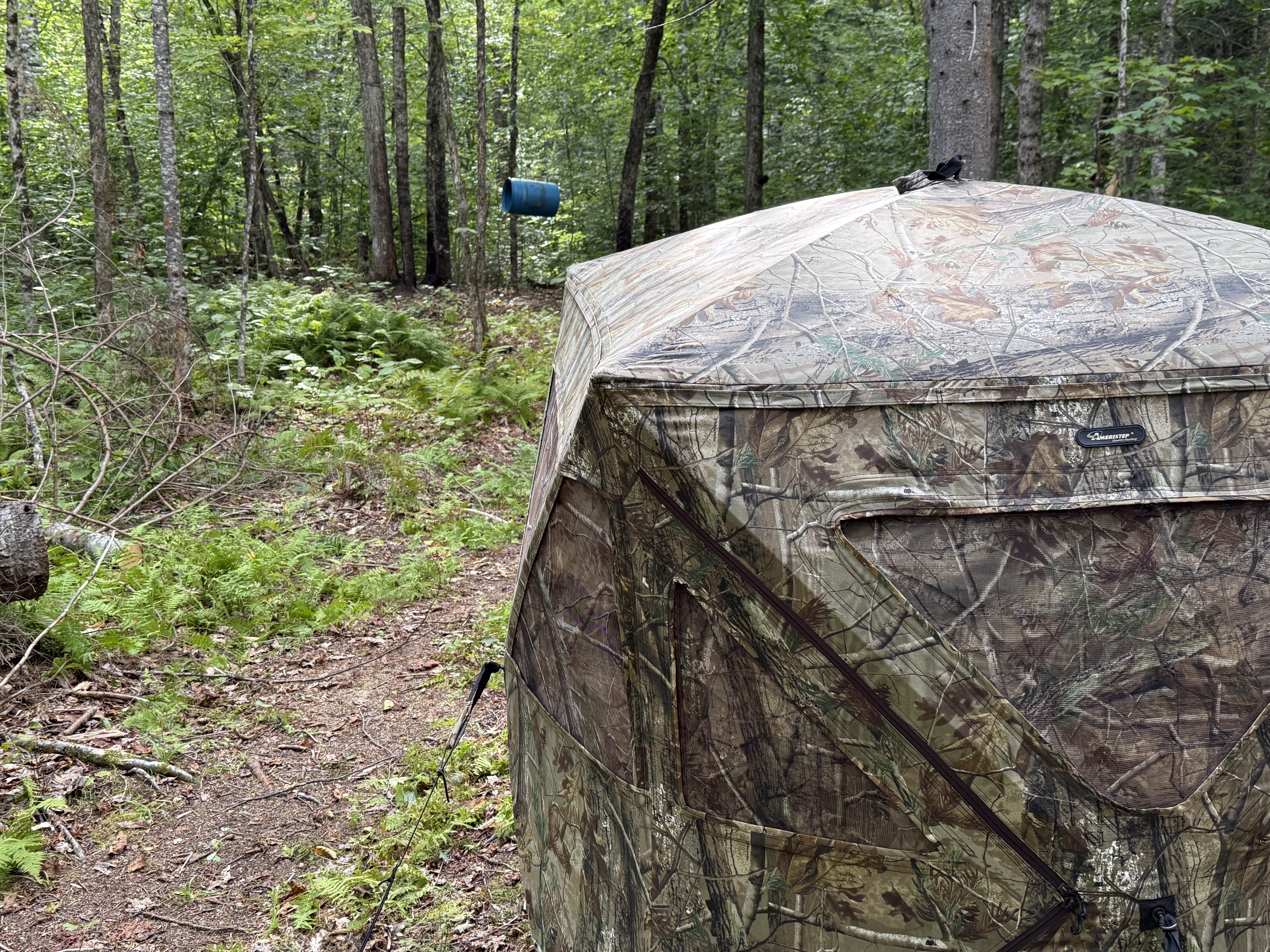
Ground blinds also help contain human scent fairly well, and hide movement of the occupants, true assets when you’re after sharp-eyed big game animals with their acute ability to smell strange aromas.
With one-way viewing and camouflage windows on all sides, the 360-degree view and shooting options are a great asset if the hunter uses a swivel seat. Quick to set up and easily blending into most surrounding foliage, the opaque material makes it nearly impossible to see movement by people inside. One downside is that approaching game in thick brush and trees won’t be spotted until fairly close, unlike the elevated stands that offer a far better overview.
On the plus side, if you fall, it will probably be out of a chair and not from dozens of feet in the air. Far fewer serious injuries and deaths occur with ground blinds. They are also a bit easier to transport, set up and relocate than tree stands.
The costs of a tree stand and a multi-person portable blind are very similar, but for many guides and outfitters the tipping point is longevity. Unless a heavy wind storm knocks down a tree with a stand attached, it will last decades. A curious or aggressive bear or unobservant traveling moose can turn a $300 ground blind to tatters, bent poles and broken tie-downs in seconds, and it can and has happened multiple times a season to a few unlucky hunters.
So there you have a few pros and cons to help rookies and veterans alike decide on using high or low lookout locations for this hunting season. For younger sportsmen and sportswomen, strength and agility will play a big part in the choice. But a reasonable guideline for hunters considering a normal 20-foot high tree stand might be that for every 10 years older you are over 35, you should be 5 feet closer to the ground.
Safe choices lead to many more enjoyable hunting seasons.