

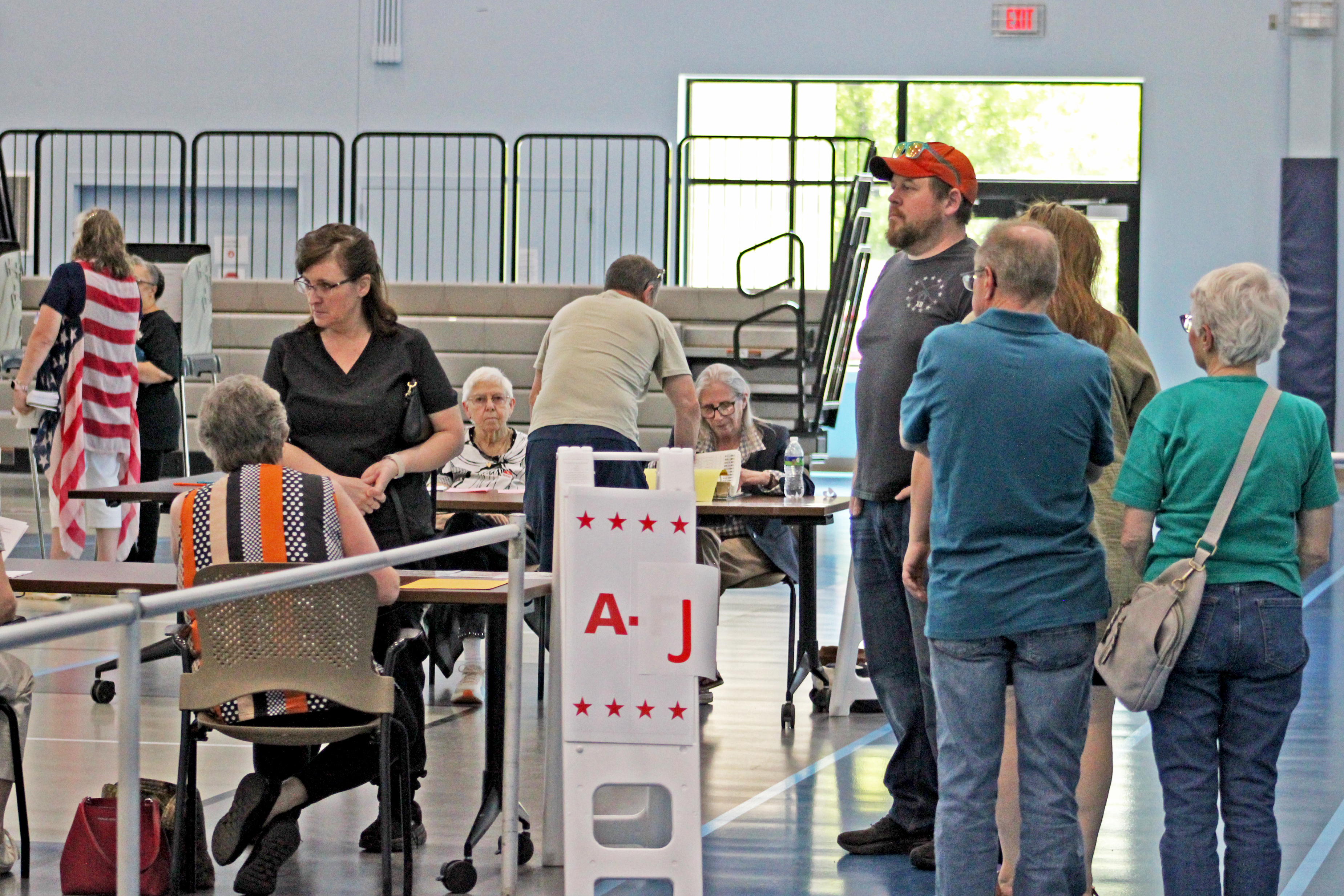
As northern Maine voters headed out to the polls on Tuesday, many were still contemplating who they would vote for in the contentious U.S. Senate primary and the packed race for governor.
The County’s primary election is often a low-key, lower turnout event, but this year’s highly publicized primary has garnered national attention. The presumptive Democratic U.S. Senate nominee, Graham Platner, a Sullivan oysterman, quickly rose to the top, outpacing Gov. Janet Mills in the race to unseat Republican Sen. Susan Collins.
The region’s three largest cities saw modest turnout by midday. Just before noon, 525 of the approximately 4,700 registered voters in Caribou — Collins’ hometown — had gone to the polls. Around 2 p.m. in Presque Isle and Houlton, 500 and 378 voters had turned out, respectively. Presque Isle received 300 absentee ballots, City Clerk Kim Finnemore said.
In the Senate race, months of controversies that have peppered Platner’s campaign, including allegations about past behavior with women and old social media comments, don’t appear to have slowed his momentum throughout the state and in The County.
“I think people will be looking for what he wants to bring to our state,” Brenda Griffin, 70, of Houlton said. A Democrat, Griffin said she thinks the issues that have plagued Platner are between the candidate and his wife.

In Caribou, 58-year-old truck driver Bobby Taylor said he is “a lot like Graham,” himself. Taylor, an unenrolled voter, said the scandals that have plagued Platner’s campaign do not bother him because he either “relates to them,” or thinks “they’re BS.”
“They’re campaigning so hard against him because he is a normal person,” Romane Taylor, 62, said.
Nina Lipscombe, 39, of Houlton said she voted for Platner because he understands what people in rural Maine are actually living through.
“I think that a lot of people across parties are tired of polished politicians who say the right things but don’t seem to change much,” she said. “Character is not about having the cleanest resume or perfect image. Character is about honesty, accountability and where someone has done the work to become better.”
Roberta Fitzgerald Hathaway, 74, of Presque Isle said Gov. Janet Mills — who suspended her campaign last month but did not withdraw — was her first choice, but despite reservations she chose Platner second because of his economic views and the fact that he’s backed by Independent U.S. Sen. Bernie Sanders of Vermont.
“I wasn’t going to choose him at first because he made comments about women, but he also said he’d help the economy,” Hathaway said. “Bernie [Sanders] is backing him. Bernie is a force to be reckoned with and I trust him.”
Presque Isle voter Jason Barnes, 71, chose incumbent Republican Sen. Susan Collins even though he’s been disappointed in some of her votes.
“The alternative is not reasonable to me,” he said.
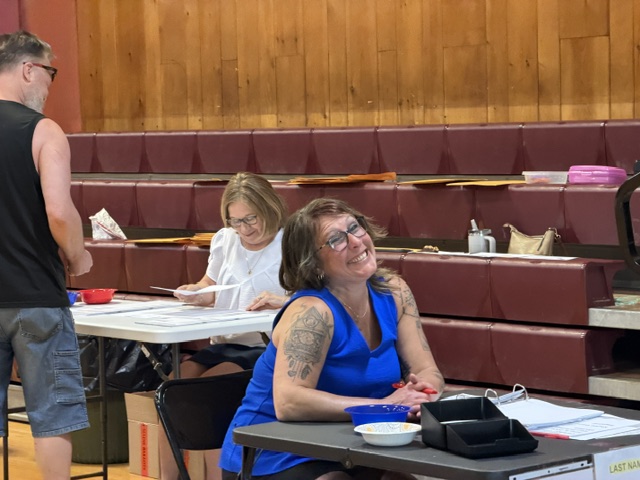
In the wide-open gubernatorial primaries, eight Republicans and five Democrats hope to garner the nomination for the November election.
Lipscombe voted for Maine Senate President Troy Jackson, a Democrat from Allagash.
Both Platner and Jackson are progressive voices who speak to the real problems Mainers are living with every day, she said.
“They especially speak to the real problems of working class and rural Mainers who too often feel ignored,” Lipscombe said.
Frederick Sullivan, 65, a retired toolmaker from Caribou, said he voted for Republican frontrunner Bobby Charles. Sullivan said he believed Charles most aligned with his stances on major issues, including affordability and fraud.
“[We need] someone who is going to attack the fraud, clean up the fraud, prosecute the fraud, because it never seems to get prosecuted,” Sullivan said.
Democrat Christina Carroll, 41, who works at Houlton Regional Hospital, said that while she is a registered Democrat, she is an independent. Carroll believes in what Platner wants to do and that he could be good for Maine.
“I think he would be good for Maine and there is something appealing about him being a working class Mainer, ” she said. “Janet Mills is a politician.”
Independent Craig Harriman, 47, a retired Marine, wondered why Platner’s fellow service members haven’t come forward to say he is a strong leader. “That’s a red flag for me.”
Voters in the Houlton school district are also voting on a referendum question to authorize RSU 29 to issue bonds up to $2 million through the state’s zero interest rate Loan Forgiveness School Revolving Renovation Fund to address hazardous materials in Houlton Middle High School and Houlton Elementary School and improve insulation at Houlton Southside School.
In Presque Isle, voters face two local questions: to approve a $33 million budget for MSAD 1, which serves the city and the surrounding towns of Castle Hill, Chapman, Mapleton and Westfield, and to approve the closure of Zippel Elementary School.
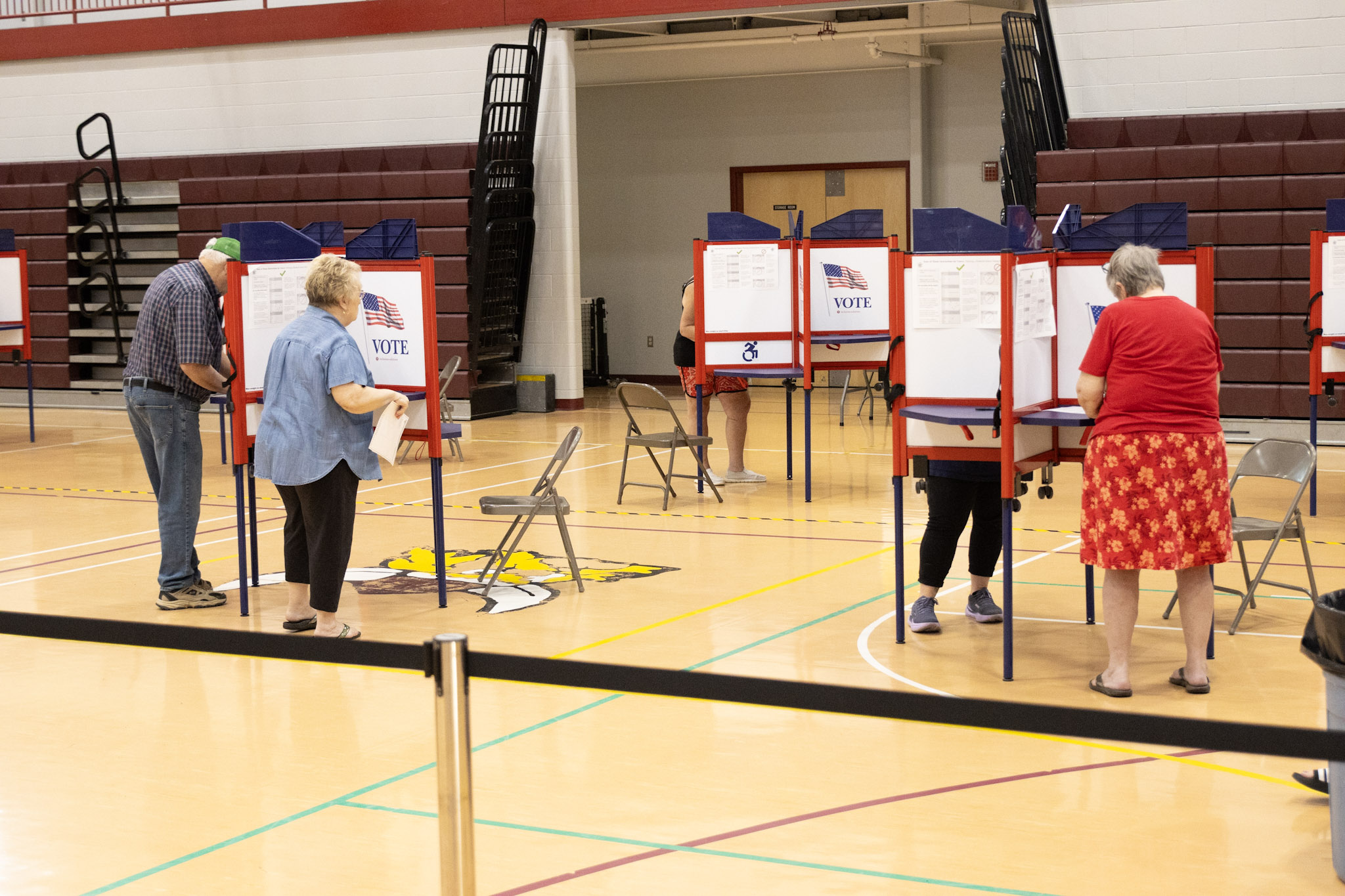
The school budget for the two-town RSU 39 is also on the ballot in Caribou, where the district is hoping to avoid a repeat of 2025, when its budget was rejected at referendum twice by voters, the first two times it had ever happened.
St. John Valley voters also will also decide the fate of school budgets: $16.6 million in Fort-Kent-based MSAD 27, which also includes Allagash, Eagle Lake, New Canada, St. Francis and Wallagrass; $10.1 million for the Madawaska School Department; and $7.8 million for Frenchville and St. Agatha. Voters struck down last year’s Madawaska and Fort Kent budgets at referendum.
Littleton voters must choose whether to allow alcohol sales in the historically dry town. Polls there had been busy all day.
“It’s more like a regular election,” Town Manager Lorrie Schools said at about 1:20 p.m.