
Maine’s habitat of heavy forest, especially throughout Aroostook County, has dictated the most productive styles of deer hunting since the early 1900s. Our fathers and grandfathers put much-needed venison in the icebox using walk and stalk tactics.
The techniques of “still hunting” — slowly and quietly wandering the woods along obvious deer trails or finding and following a fresh set of tracks — still works more than a hundred years later.
Decades of heavy lumbering and the creation of thousands of new agriculture fields all over the Crown of Maine have opened the door to other successful styles to bag a buck. Fifty years ago, sitting on a stump overlooking a fresh cut became popular. More recently, however, erecting a tree stand or setting up a portable ground blind along the edge of often-used game trails or near feed fields, wild apple orchards, beech ridges and fresh scrapes or rubs are more popular and effective.

The one characteristic all of these options require is silence. Hunters need to be hidden, motionless, scent free, patient and, above all, quiet.
Well, guess what? There’s a new game in the Pine Tree State, imported from out west, and it actually uses noise to bring deer to the hunter rather than the silent, sit-and-wait option. More and more whitetail enthusiasts are enjoying success by rattling antlers to coax deer closer.
There are tactics to actually bring the deer to the hunter. Some of these techniques use attractant scents, but several other proven methods are based on sounding like a deer to coax real deer to investigate.
Rattling antlers was the first such practice I was exposed to more than 30 years ago. The trick originated in Texas. A set of horns is bashed and clashed together and on nearby brush to imitate a fight between two bucks, I had doubts it would work in Maine.
Back in the 90s, Donnie Embleton of Presque Isle helped me keep the Aroostook chapter of Ducks Unlimited on track during my 15-year tenure as chairman. We began waterfowl hunting together, and when conversations turned to whitetail tactics and I learned of his use of rattling, I just had to see for myself.
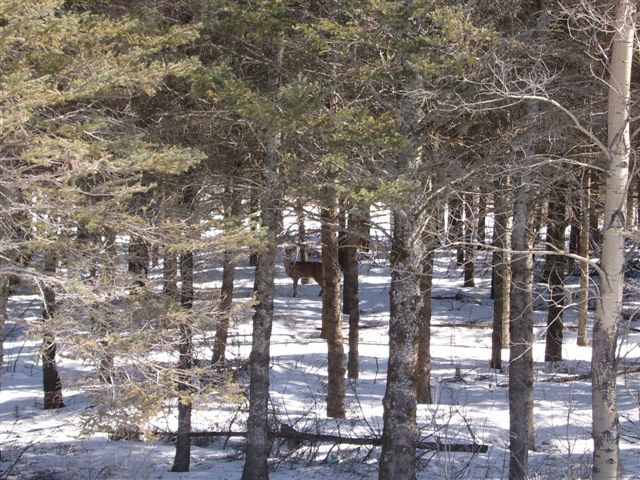
Donnie took me out during archery season and eliminated my doubts the first morning. He banged the horns together, pawed the ground with them and rattled and shook the bushes with the horns on and off for 30 minutes. A fat four-pointer appeared soon after, well within rifle range but out of bow range. The deer watched and circled nervously while my partner intermittently kept rattling the antlers, but fear that a dominant buck was making the noise kept the younger buck out of arrow range. He finally scented us and bounded off, but during firearm season there would have been venison on the table.
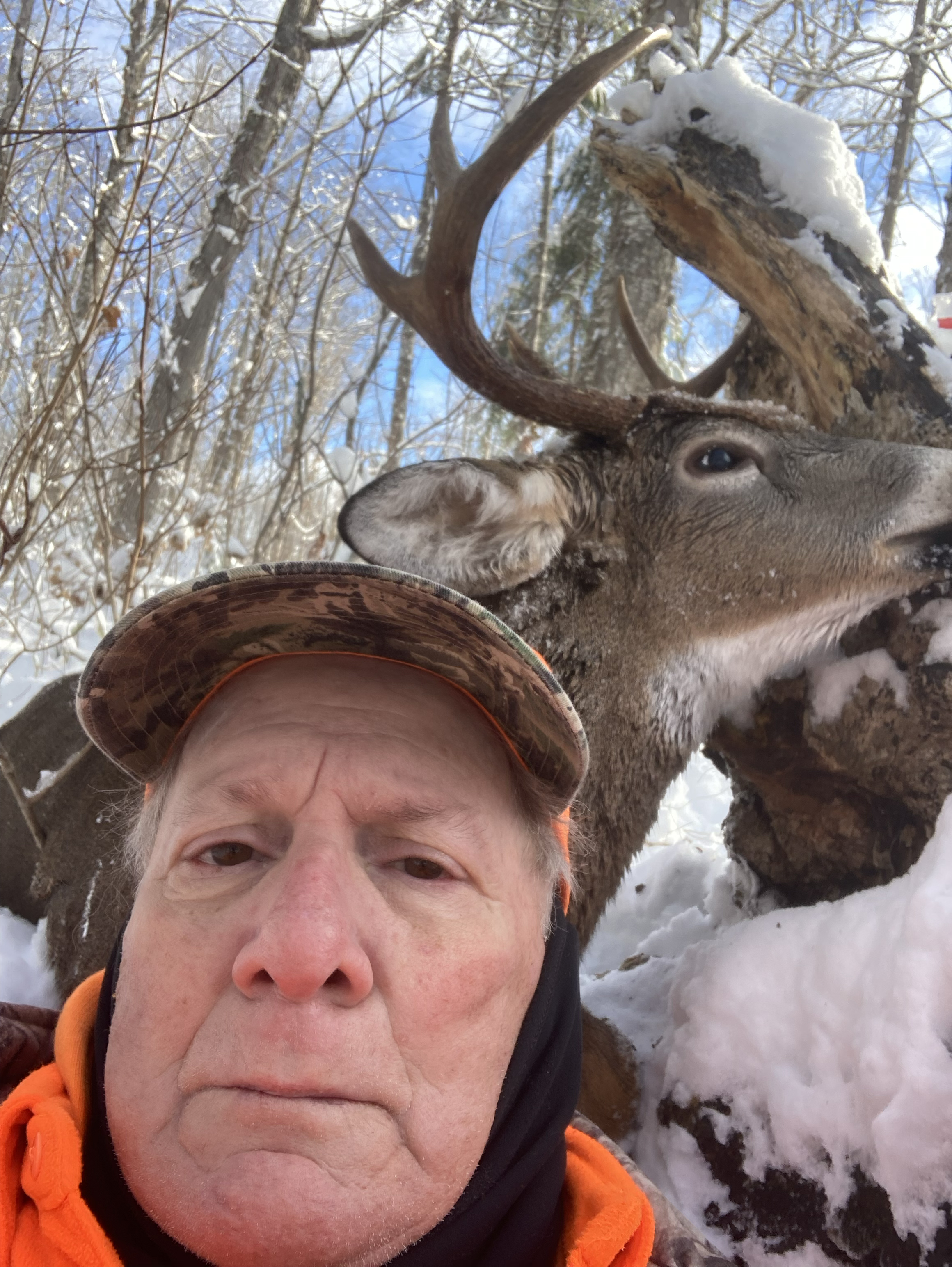
Just before the first week of deer season the next fall, my cousin Steve Hitchcock of Mars Hill called to talk tactics and techniques. Another avid outdoorsman, Steve lives for November’s whitetail season and puts a lot of time, effort and study into outsmarting big bucks. He asked what I thought about rattling as a productive method for Aroostook hunting, and I related several stories related to Donnie’s experiences and information I’d read and personally experienced.
The very next week Steve shot his buck after only 45 minutes in his tree stand, and only 30 minutes after he tried rattling for the first time.
Donnie will tell you right up front that a lot of other factors need to line up to yield annual antlers in his scope: lots of scouting, close attention to weather conditions. He is very conscious of barometric pressure and trails and travel patterns that allow more deer to hear the rattling and calls.
From his days in the Marines long ago, Donnie’s marksmanship remains superb. He avoids any questionable shot and has only used a single shot T/C rifle for years. While not all were fooled by rattling and calling, many of the 50-plus deer Donnie has tagged fell because of noise, not silence.
During the rut, bucks become lovesick and somewhat less cautious, which sometimes works in the hunter’s favor. Seeking out a doe in heat keeps male whitetails on the move steadily, and it becomes possible for hunters to stake out a rub, scrape or well-traveled trail to intercept amorous traveling bucks. Make a fake scrape or a drip site with one of the many effective doe estrous solutions, and with a bit of a breeze, the males will come to you.
Add the sound effects that a couple of other bucks are in the area fighting over a hot doe and any other nearby buck within hearing range will likely investigate.
Antler rattling imitates sparring bucks and has been used successfully for years out west with consistent results. Over the last few decades many Maine hunters have begun utilizing the tactic during late November and been rewarded with some trophy deer.
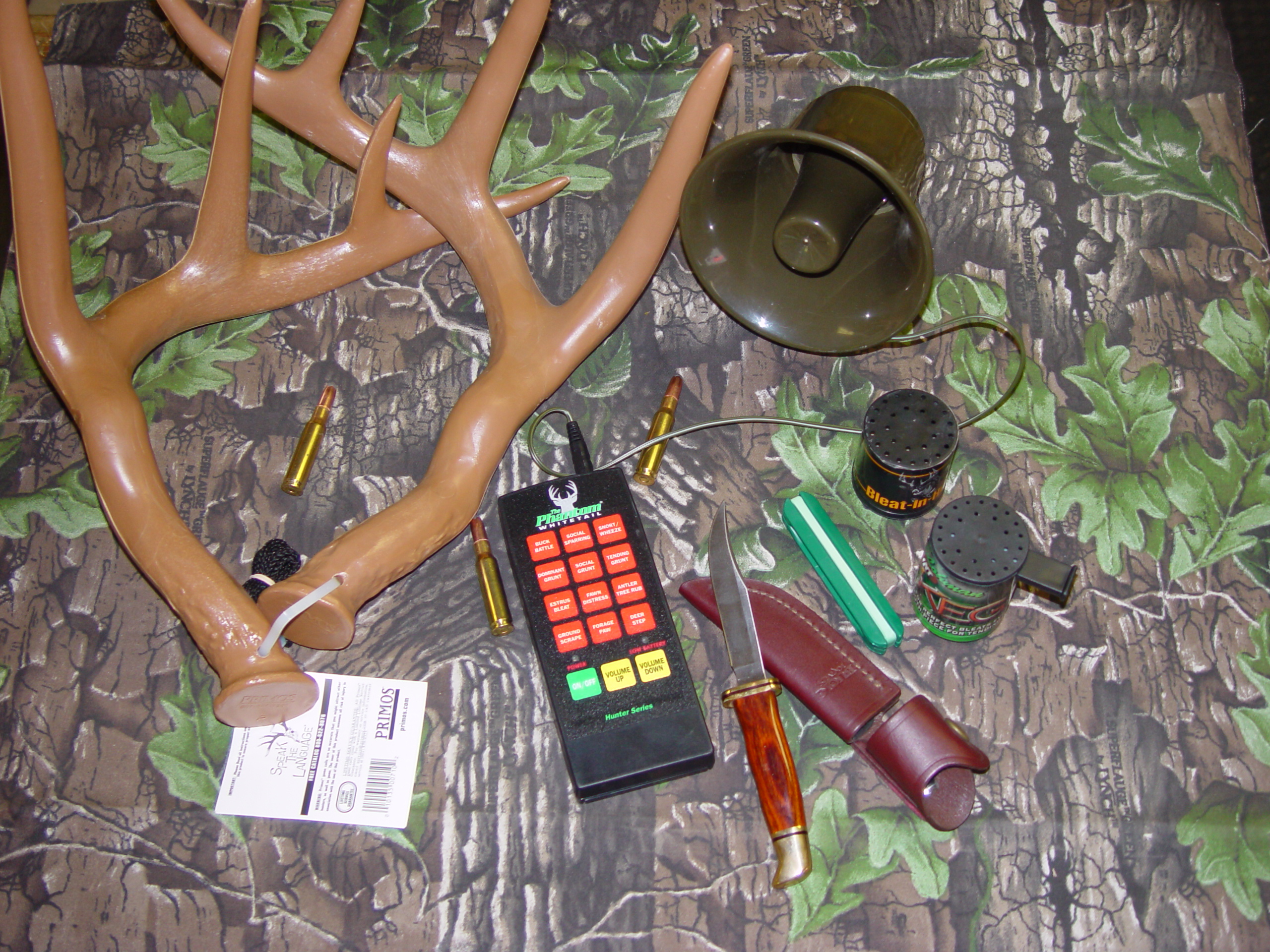
It’s a fairly simple technique. Cut off a set of real antlers at the base, join them together with a rawhide thong for ease of transport and to prevent loss, and carry them to a tree stand or ground blind in good whitetail cover.
Once you’re in place, grab the antlers by the bases, clash and smash the tines together loudly at intermittent periods, and rake the nearby limbs and bushes for about five minutes. Wait a few minutes and repeat the fake antler “duel.” Watch and listen.
One warning: wear gloves and pay attention to the antler position as you rattle. Many a hunter has scraped or gored their own hand when being overzealous. Also, have your rifle ready and near. A buck will frequently come running into sight ready to join the battle rather than sneaking around.
There are fake, lightweight with even better sound quality than the real things for sale from several companies.
Also effective and simple to use, even one-handed, are a couple of mechanical devices which imitate antlers rattling when shaken; check out Bang Bag, Rattle Bag and Battle Bones, to name a few. They are inexpensive and effective.
The height of the rut is a perfect time to attempt rattling up a buck, but this tactic will really work anytime during the season and might even be worth a try in the upcoming muzzle loader season as well.
With just a few weeks left to bag a buck, it might be time to take some “sound” advice; make some noise.
Since you can’t sound like a favorite food, the next best thing is to sound like another deer. Sounding like a buck ready to spar can be very productive. Silence isn’t always golden while deer hunting.