
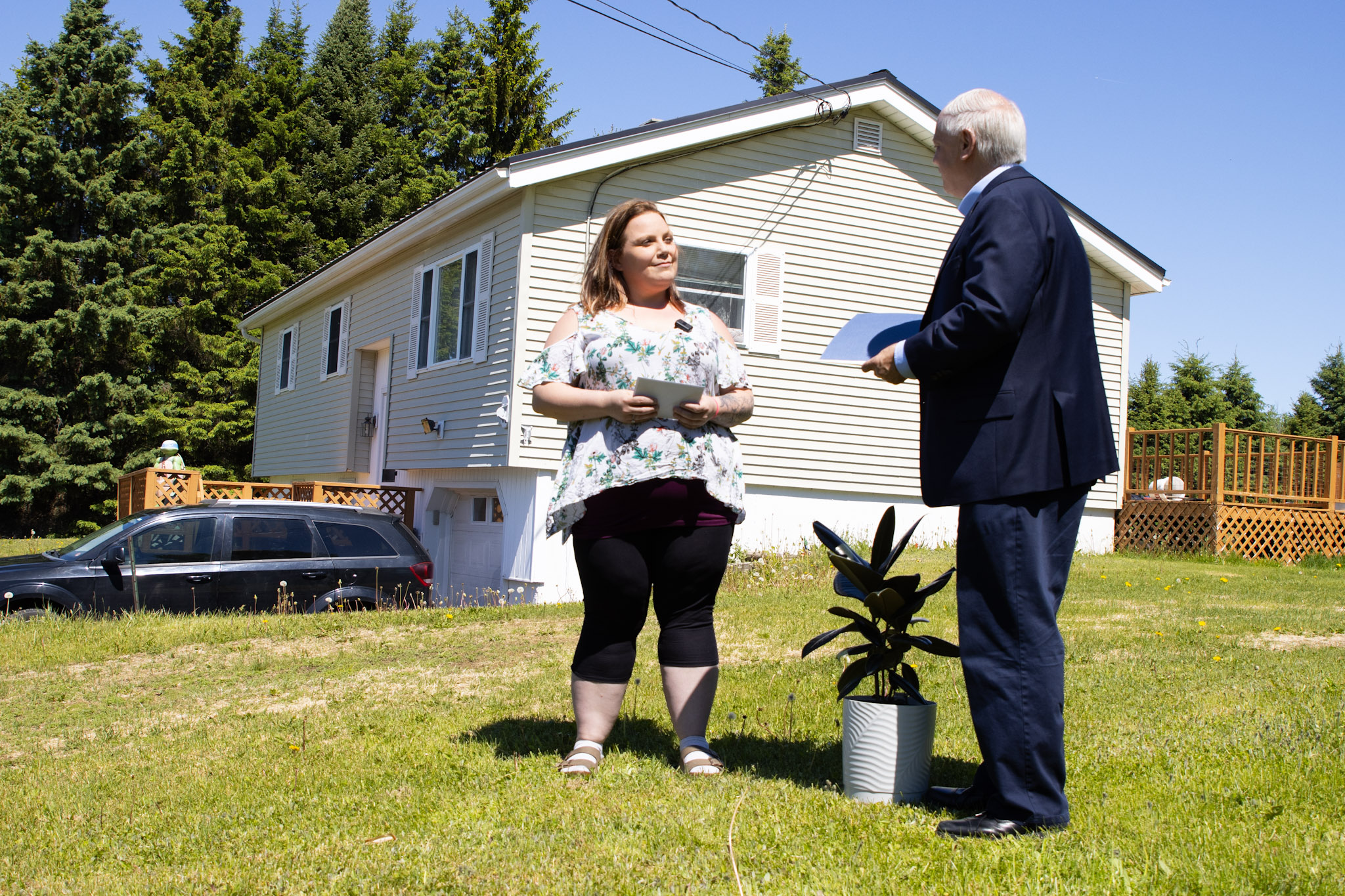
Standing on the front lawn of her split-level ranch house in Woodland, Monday, Samantha Drost told a story of overcoming the odds.
Drost, a 35-year-old single mother of four, recently moved into the house along Route 1 after years of renting through the federal Section 8 rental assistance program. She was able to purchase the home, she said, because of another federal program — Section 502 — which provides direct loans to help low- and very-low-income applicants in rural areas become homeowners.
“My mortgage is cheaper than my rent,” Drost said. “My oldest, he’s almost 18. Since he was just a little boy, the goal was always to have my own home, and I’ve worked very hard to be where I am.”
Her path to owning her “forever home” is one of the stories the U.S. Department of Agriculture is highlighting in Maine to promote its federal financial aid programs in June, which is National Homeownership Month. USDA representatives traveled to Woodland Monday to celebrate with Drost, who obtained her home through a program with a questionable recent past.
“Homeownership is a powerful pathway to prosperity and stability,” John Butera, USDA Rural Development Maine state director, said. “Home ownership is a challenge, and even renting is a challenge these days. But if we can help bridge the barrier, close the gap and get people like Samantha into a home … we hope all of her four kids grow up and become homeowners.”

But the Section 502 program has faced scrutiny in the past year after a Bangor Daily News and ProPublica investigation found it had been poorly supervised for years, pushing some Mainers into hundreds of thousands of dollars of debt when the federal government delayed foreclosures by a decade or more.
Section 502 loans, which are also referred to as Single Family Housing Direct Home Loans, have been a tool for the lowest income Americans in rural areas to afford homes since 1949.
The USDA has filed 84 foreclosures against properties purchased with Section 502 loans since the beginning of 2025, according to federal court records. The borrowers had been in default for years. Only 19 of those cases have been closed.
In making the foreclosures, the department acknowledged that the they “should have happened years ago,” admitting to a delay that a senior lawyer with the National Consumer Law Center told the BDN was “wasting money.”
“The administration is moving as fast as it can. It’s a long process and there are third parties involved, and a lot of times when that happens, it really is out of our hands,” Butera said Wednesday.
Butera, an appointee of President Donald Trump and former state Cabinet official under Gov. Paul LePage, put the blame for the delays on state regulations and third-party contract lawyers who file the foreclosures on the USDA’s behalf. The agency had previously blamed the former Biden administration in response to questions from the BDN earlier this year.
“We just don’t get a lot of information from the third party when the foreclosure process starts,” Butera said. “And we have started them. It just takes a long time.”
Butera said he did not know how much the delayed foreclosures cost the USDA or whether more foreclosures are imminent.
Butera said the USDA has invested more than $130 million in home ownership and home repair assistance programs since Trump took office, benefiting more than 650 households. He did not know how many Mainers are currently using the Section 502 loan program. The Trump administration had initially sought to eliminate the program this fiscal year, while bolstering funding for direct loans for multifamily housing.
“When you think about how to build communities, we have infrastructure, we have water, we have sewer, we have all those things — the fire station, a police station — you need people living in stable, comfortable homes to raise their families,” he said. Homeownership is one of the cornerstones of building strong, safe, affordable communities.”
In Woodland, Drost described how her children love running around her property’s large backyard, and how great it is to be able to live in the town where their grandfather grew up. A home healthcare provider who works two jobs and attends the University of Maine at Presque Isle full time, she said she hopes her experience with the loan program is an example to others that owning a home is possible if you “put your mind to it.”
“It was definitely emotional,” Drost said of the day she got the keys to the house. “It was well worth every amount of stress along the way.”
Bangor Daily News investigative reporter Sawyer Loftus contributed to this report.