


Years in the making, the long-anticipated Aroostook County Adult Treatment and Recovery Court admitted the first participant into the program this month.
In collaboration with partnering state departments and agencies, the Maine Judicial Branch launched the specialty court this week, expanding access to treatment and recovery services in northern Maine.
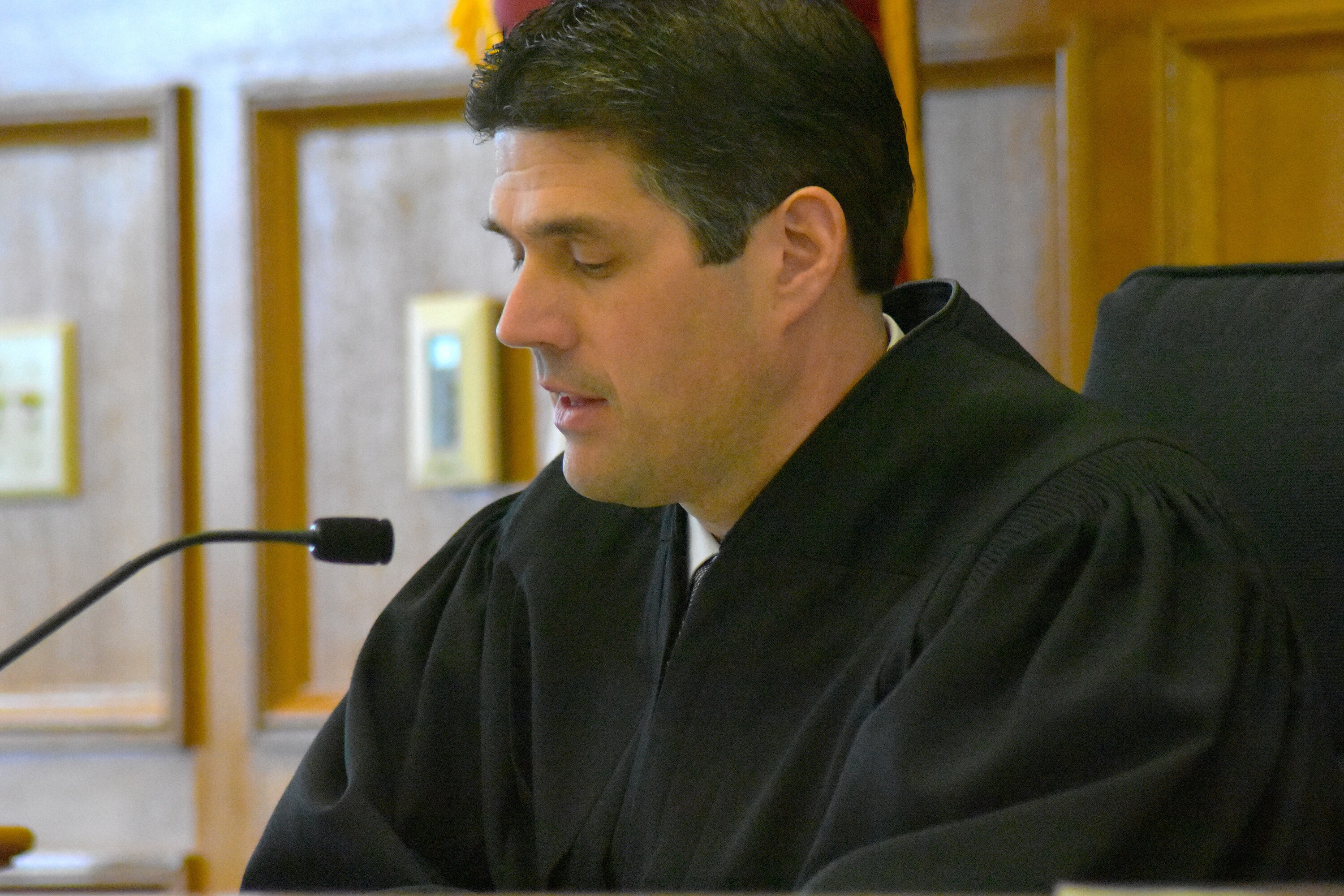
“This is an exciting day for Aroostook County,” Superior Court Justice Stephen Nelson said in a statement. “I am delighted that we have an interagency team trained and excited to implement this program and that we have accepted our first participant. The TRC is an important resource for the Aroostook community.”
Until this week’s announcement, recovery behind bars was the only option for people in northern Maine. And despite the highly touted success of drug treatment courts in other Maine locations, Aroostook was the last remaining judicial jurisdiction without one.
The inaugural session, led by Nelson at the Aroostook County Superior Courthouse in Caribou on July 9, offers an alternative to prison for the first person admitted into the program.
“Although several applications are currently under review, only one applicant was ready for admission that day,” said Barbara Cardone, director of legal affairs and public relations for Maine courts. “The court continues to receive and review applications.”
This move is the culmination of more than two years of legislative action, statewide planning, interagency collaboration and training to establish the court, she said.
Attorneys, probation officers, law enforcement, treatment providers, family members and others may submit referrals for people with cases pending in any court within Aroostook County, regardless of the specific courthouse location. Applicants must go through a screening process and plead guilty to their alleged crimes.
Treatment and recovery courts, known in Maine as specialty dockets, combine intensive judicial supervision, substance use disorder treatment, frequent drug testing, case management, and coordinated support from a multidisciplinary team.
Participants whose criminal behavior relates to substance use disorders are held accountable through regular court appearances, while receiving evidence-based treatment and services designed to reduce recidivism and support long-term recovery.
The team currently meets every other week for a confidential staffing session to review participant progress, coordinate services and discuss new applications. A public Treatment and Recovery Court status session is held immediately afterward, according to Cardone.
Getting to this point has not been easy.
In 2021, Gov. Janet Mills’ opioid action plan recommended adding treatment and recovery courts on the midcoast and in Aroostook County. The midcoast court, serving Knox, Waldo, Lincoln and Sagadahoc counties, was created through a U.S. Department of Justice grant.
In 2022, the Maine Judicial Branch received $1.1 million from the Department of Justice to establish and run adult treatment and recovery courts in Judicial Region 3, Oxford and Franklin counties, and Region 6, Lincoln, Knox, Waldo and Sagadahoc counties.
These grant funds allowed the Maine Judicial Branch to operate adult drug treatment courts in 15 of the 16 counties in Maine, according to a 2022 release.
Former Maine Senate President Troy Jackson, D-Allagash, who is now seeking the Democratic nomination for U.S. Senate, proposed legislation in 2023 to establish an adult drug treatment court in The County.
“For too long, Aroostook County was the only county in the state without a drug treatment court,” Jackson said earlier this year.
Aroostook County District Attorney Todd Collins said that while the initial bill got things started, the people involved needed to gather more information before proceeding, especially because there are 6,671 square miles in The County.
A development committee made up of law enforcement, prosecutors, defense attorneys, probation, court officials and treatment professionals met in 2023 and 2024 to map out the Aroostook court’s requirements.
Maine’s Legislative Judiciary Committee voted in 2024 to support addiction treatment programs throughout the state and to make them available in rural communities.
The committee’s unanimous vote on an amended version of LD 1596, An Act to Facilitate the Creation of an Aroostook County Drug Treatment Court, was approved by the House and Senate and Gov. Janet Mills signed the bill on March 6, 2024, but it was not funded along with several other bills during that legislative session.
In 2025, LD 779 allocated funds to the behavioral health office in the Maine Department of Health and Human Services to allow it to contract with an organization to provide pre-trial services at the Aroostook County Treatment and Recovery Court. It also funded a new assistant district attorney position and the provision of public defense services at the court.
The funding became available this month.
Once admitted into treatment court, participants are required to meet with the presiding judge regularly, maintain weekly case manager and probation contact, stay employed, pay fines, remain sober and submit to random drug testing, according to guidelines.
“From the beginning, this effort has been about helping folks from The County involved in the criminal justice system with substance use disorder access the treatment and recovery programs necessary to restore and rebuild their lives,” Jackson said. “I’m so grateful to everyone who helped make the Aroostook County Treatment Court a reality.”
Referrals to the Aroostook County Adult Drug Treatment and Recovery Court may be submitted to the court clerk starting June 1. The Treatment Court Referral Form (CR-234) is available on the Forms page of the Judicial Branch website.