


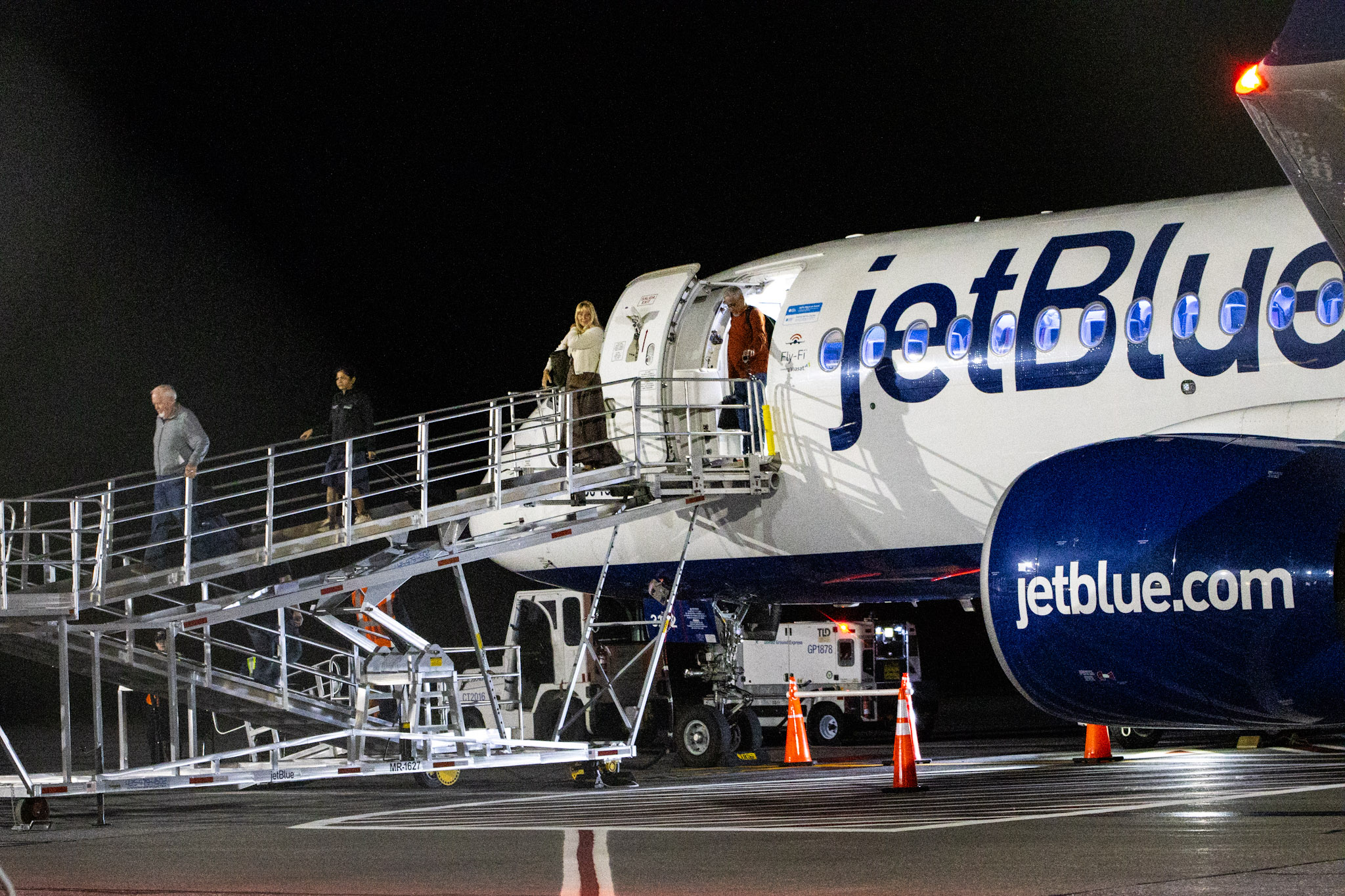
JetBlue has dramatically reduced its bid to be the passenger air carrier serving Presque Isle’s airport, seemingly at the request of the U.S. Department of Transportation.
In a May memo made public earlier this month, the New York-based airline cut roughly $3 million from the annual subsidy it is requesting from the Department of Transportation to continue being the Essential Air Service provider to Presque Isle International Airport.
JetBlue — which currently flies a once-daily roundtrip flight to Boston from the city — is now requesting $8.7 million per year over a two-year contract. It had initially asked for an average of $11.75 million for two years or $11.53 million over a four-year period.
The unexpected shift brings JetBlue’s bid much closer to that of American Airlines, the other airline vying for Presque Isle’s next Essential Air Service contract. In March, American proposed an average annual subsidy of $8.25 million for two years.
The federal Essential Air Service program maintains flights to certain rural communities by subsidizing costs to make the routes profitable for airlines. Presque Isle is the most subsidized Essential Air Service community in the U.S. by a margin just shy of $2 million.
JetBlue’s revised proposal almost guarantees that will no longer be the case once the airline’s current contract expires in September. The existing proposals from both bidding airlines are below subsidies paid by the Department of Transportation to air carriers serving airports in Merced, California, and Ogdensburg, New York.
It’s unclear if the Department of Transportation formally requested that the two airlines revise or resubmit their bids, which it has the discretion to do under the terms of its request for proposals. The department did not respond to questions about whether it did so. But correspondence from American Airlines refers to an email and phone call with Michael Martin, the department’s aviation industry analyst overseeing the contract.
“American does not intend to revise or resubmit its proposal,” Brent Alex, the company’s director of regulatory affairs, wrote in a late May email to Martin that was made public last week.
American, the country’s largest airline, has proposed 12 weekly roundtrip flights from Presque Isle with destinations split between Boston and Philadelphia on a 65-seat jet. JetBlue’s new proposal maintains its seven weekly flights to Boston on the 140-seat Airbus aircraft, which requires a waiver approved by both Presque Isle’s Council and the Department of Transportation because it is less than the minimum 12 weekly flights mandated under the Essential Air Service program.
“Please know we are disappointed that other bids are being considered,” Alex wrote. “American continues to believe that its proposal — submitted in full compliance with the timing requirements established in the RFP — is superior to the only other proposal received within the prescribed deadline.”
Neither Alex nor the airline’s corporate communications team responded to requests for comment.
In its revised proposal, JetBlue reduced its projected expenses for the route by approximately $1 million and increased its projected revenue by about $1.5 million annually, despite a surge in jet fuel prices that has caused airlines globally to raise fares and rethink their financial outlooks.
JetBlue did not respond to questions about how it was able to sharply change its projected economics of the route while not impacting service.
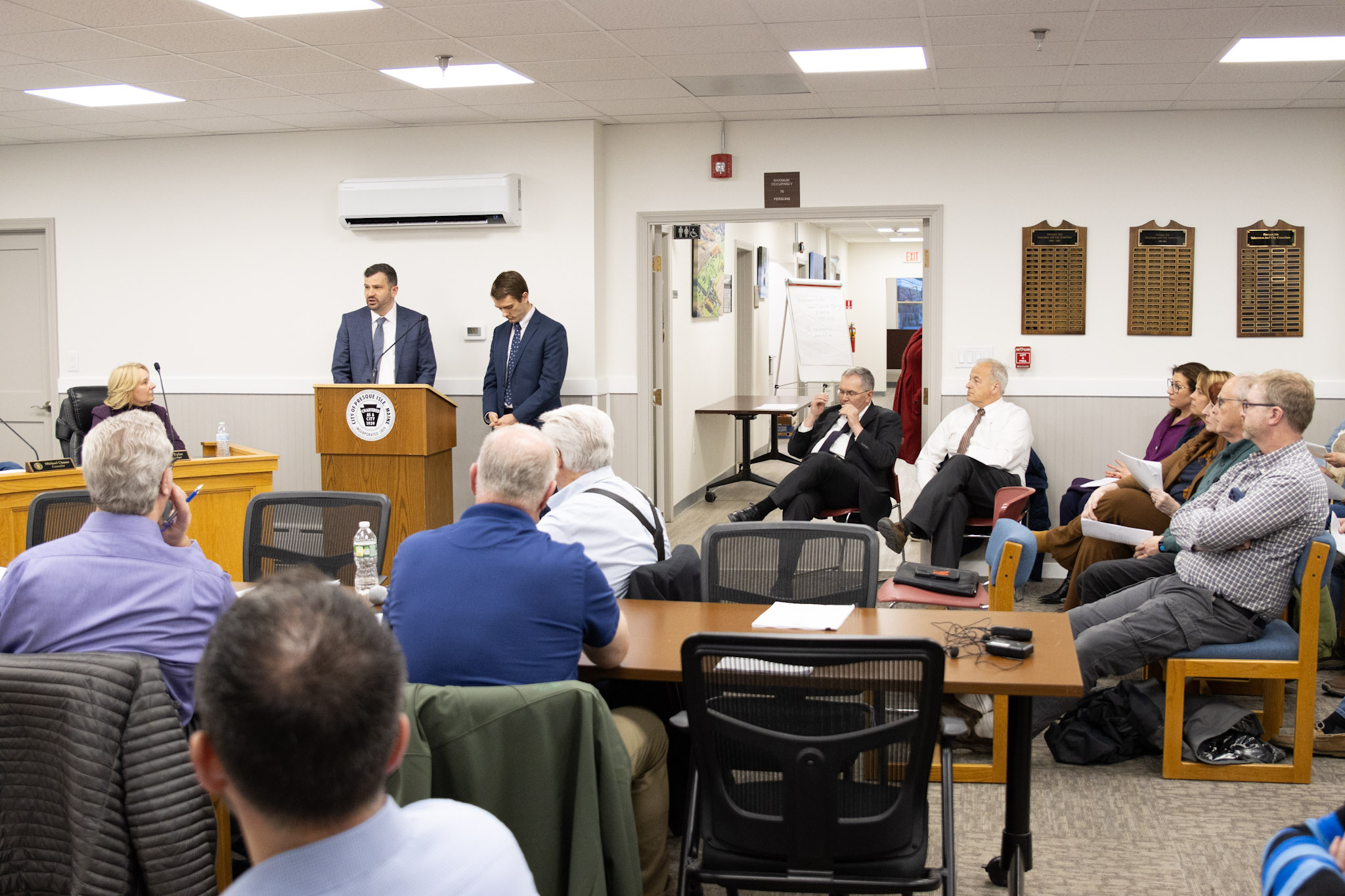
The company’s high subsidy became a frequent topic as both JetBlue and American presented their proposals to the Presque Isle City Council in March. But the airline argued that the higher cost was necessary to keep fares down for consumers.
“Our competitor mentions their lower subsidy. The people who have been subsidizing the route would be the customers in Presque Isle,” said Matt Masi-Phelps, a JetBlue financial planning and analysis manager.
The City Council recommended its airport continue to be served by JetBlue during that meeting, but the Department of Transportation has yet to make a decision, drawing out the process longer than it has in previous contract cycles.
Presque Isle Airport Director Scott Wardwell declined to comment on the current status of the bids.
“This process belongs to USDOT at this point,” he said.