

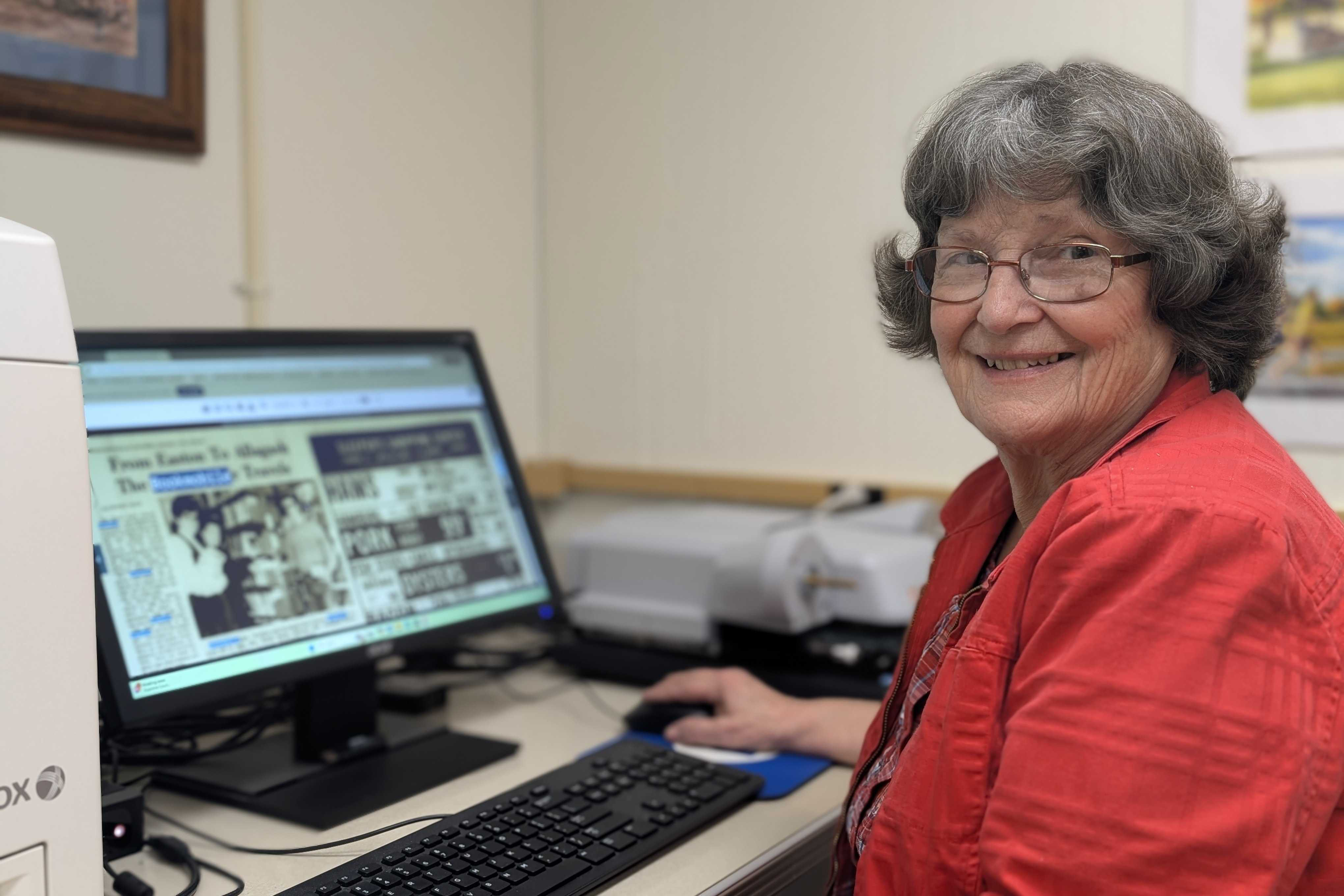
Wendy Bossie is clearly at home in the Caribou Public Library’s special collections area.
The interconnected basement rooms hold past city records, newspapers, photographs, family tomes, microfilm — if it’s about Caribou’s history and it’s there, Bossie can find it.
In fact, the retired librarian and volunteer archivist recently collected some snippets of her own history. She and her late husband, Roger, manned Aroostook County’s first bookmobile more than 60 years ago.
The Maine State Library operated that truck, but ironically, it never actually served the people of Caribou, she said. Earlier this year, decades after that service ended, the Caribou library rolled out its own shiny new bookmobile — and Bossie was overjoyed to see the return of the old idea with some modern twists.
“This new bookmobile is the first that’s really for Caribou,” she said. “Those first services served other places in The County, places that had no direct access to a public library in town.”
The Maine State Library started its first bookmobile in Augusta in 1931, according to a scrapbook in its archives. The Northern Aroostook vehicle started in 1958. Other bookmobiles were in the Houlton, Livermore Falls, Washington County and Dexter areas.
The northern truck’s route schedules, determined by the state, were published in the weekly Aroostook Republican & News, Bossie said.
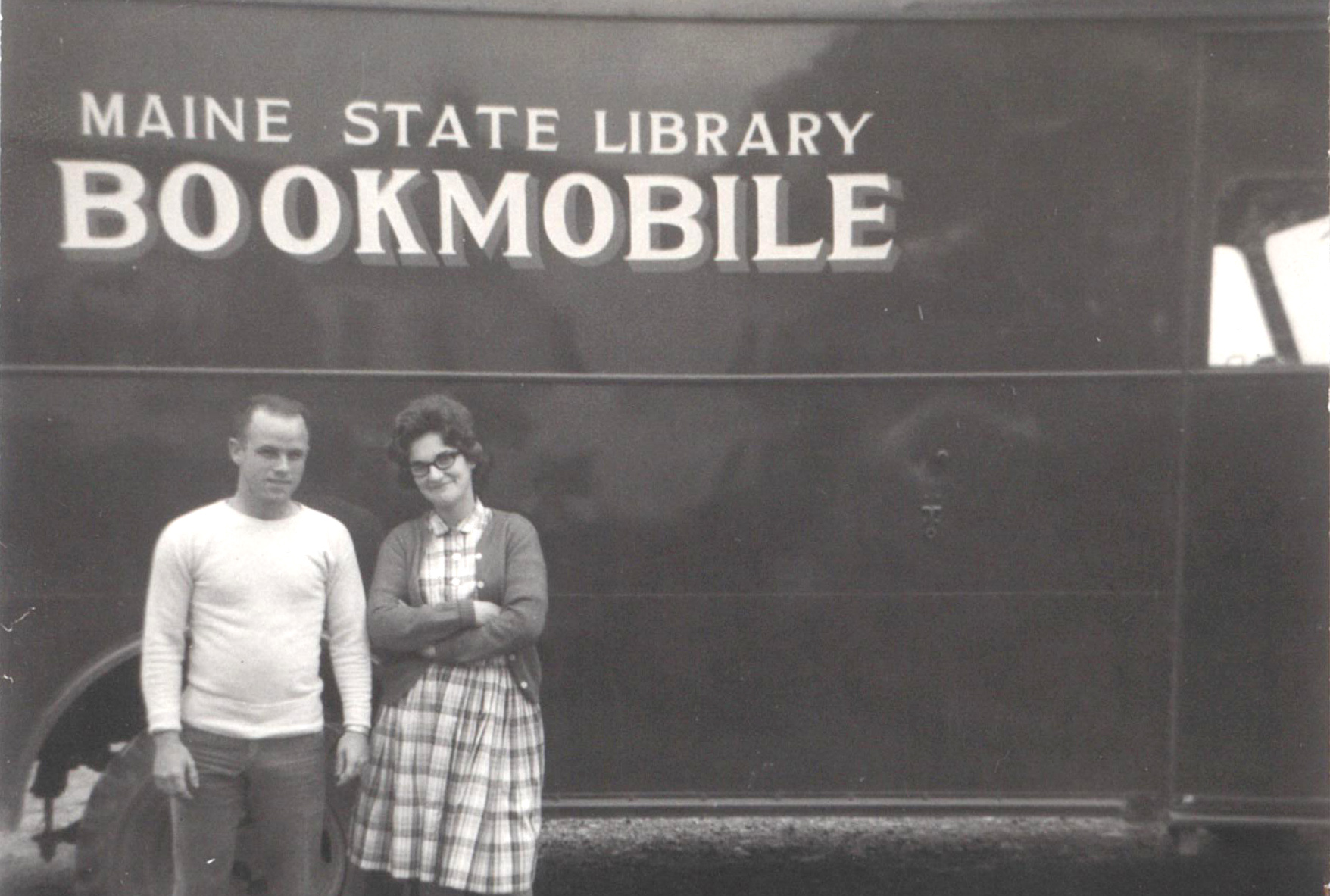
Bossie, 83, joined the service in 1964. She had graduated from Aroostook State Teachers College in Presque Isle and was working in Northeast Harbor when a friend noticed an advertisement.
“She said, ‘Hey, that would be a good job for you — a bookmobile,’” Bossie said.
She applied, got the job and moved back home. She met driver Roger Bossie, who later became her husband. He drove while she handled the books. They traveled from Oxbow, through central Aroostook and through the St. John Valley to Allagash to bring books to towns and schools.
The vehicle was first based out of Caribou, then at a vacant school in Stockholm, Bossie said. Its shelves held about 1,500 books, but office space in Caribou housed 15,000 more.
She loved the job, because people were happy to see the truck roll into town. In some places, someone would announce its arrival town-crier style, and both kids and adults would throng to the truck.
“What you had were kids that really wanted books,” she said. “It was a joy to be there and you got joy from the patrons, too. People were almost jumping up and down to see you coming.”
There were no drive-thrus or delis then, so the couple packed their lunch and would take their break along the way. Being an avid fisherman, her husband often sought out places where he could drop a line for a few minutes, while she read.
One day, they swerved as Roger attempted to avoid an oncoming logging truck, spilling hundreds of books into a pile on the floor.
Then there was the time a Maine State Library official thought they were taking too much time to drive their route, and vowed to streamline their schedule. It was winter. The woman drove north in a Karmann Ghia — a small sportscar unsuited for snowy, icy roads — to ride along with the couple.
The folks in Augusta didn’t quite comprehend the County’s size and how far apart towns are, Bossie said, adding that was one of their longest days.
After driving throughout The County and up to Allagash, the next stop was Eagle Lake, which the official thought should only be a hop away. But those 120 or so miles weren’t quite as quick as she expected, and the team was on the road until around 7 p.m.
The official got in her car to drive back to her hotel, but she took a wrong turn, at which point Roger Bossie jumped in the bookmobile to redirect her, Bossie said. Two days later, the woman called from Augusta and said they could keep doing their own schedules.
In those days, the bookmobile operated under strict state library guidelines. People had to sign out every book, and fines were levied if they didn’t return them. Bossie remembered a few occasions when law enforcement was dispatched to get the books back.
The Bossies were part of the bookmobile effort until 1969.
The local vehicle went offline in the 1970s, and the state library replaced it with a books-by-mail service called ‘Caribook,’ the Aroostook Republican & News reported in 1978. In 1981, the state’s six bookmobile centers were phased out, according to the Bangor Daily News on Sept. 31, 1981.
It’s unclear when the Caribook service ended, but it was last noted in the Aroostook Republican in 1981. The Maine State Library lists no records of it.
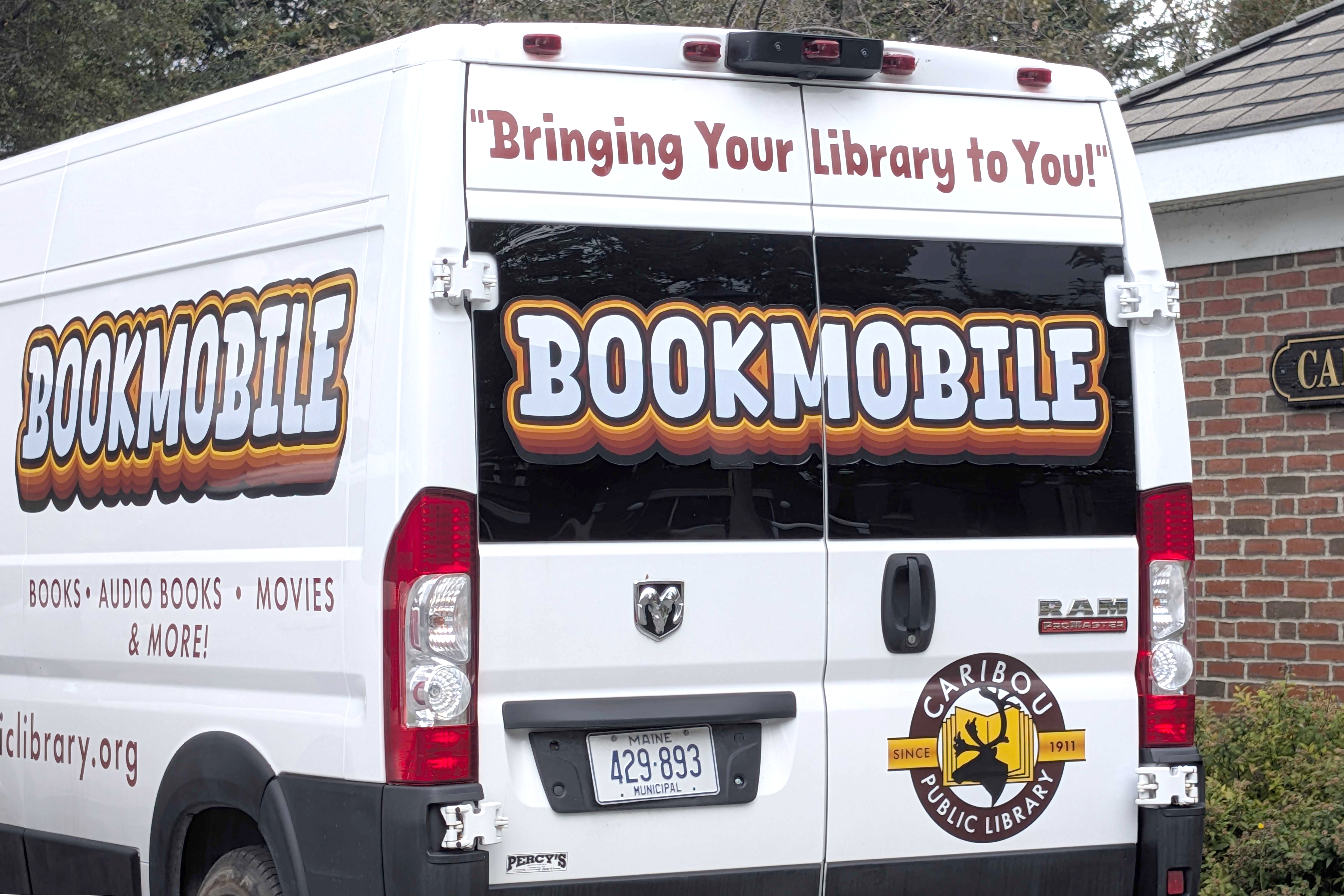
Fast-forward to 2021, when Peter Baldwin became library director. He mentioned starting a bookmobile, but Bossie wasn’t sure people would support it. Then he netted a grant that paid the entire cost, and the van launched in March.
Here’s the biggest twist: Nobody signs out any of the books. They just take them.
The bookmobile has gone to schools, homes, care facilities and city events — and people are clamoring to get inside, Bossie said.
The new operation is far less stringent. The books are all donated. Readers can return them if they choose, but there are no penalties if they don’t.
Though she finds it sad that fewer people read printed books with the advent of digital readers, Bossie said the free rolling library is continuing the very first bookmobile’s mission: bringing more books to more people.
“It’s so heartwarming to think that people can go on it and just take books with them. They’re freely given,” she said. “This is really an extension of the Caribou Public Library to the Caribou people.”