

At a town hall in Gorham last month, Troy Jackson prefaced one line of his introduction with a joking concession.
“I think everyone probably now has heard that I’m a fifth generation logger.” Jackson, the Democratic U.S. Senate candidate, drew laughter.
If you know anything about Jackson, it’s probably that. It’s the second sentence on his campaign website and the centerpiece of many of his ads. He wants Maine voters to know that he has rural, working-class bonafides. His opponent, five-term Republican incumbent Sen. Susan Collins, wants voters to know that she does, too.
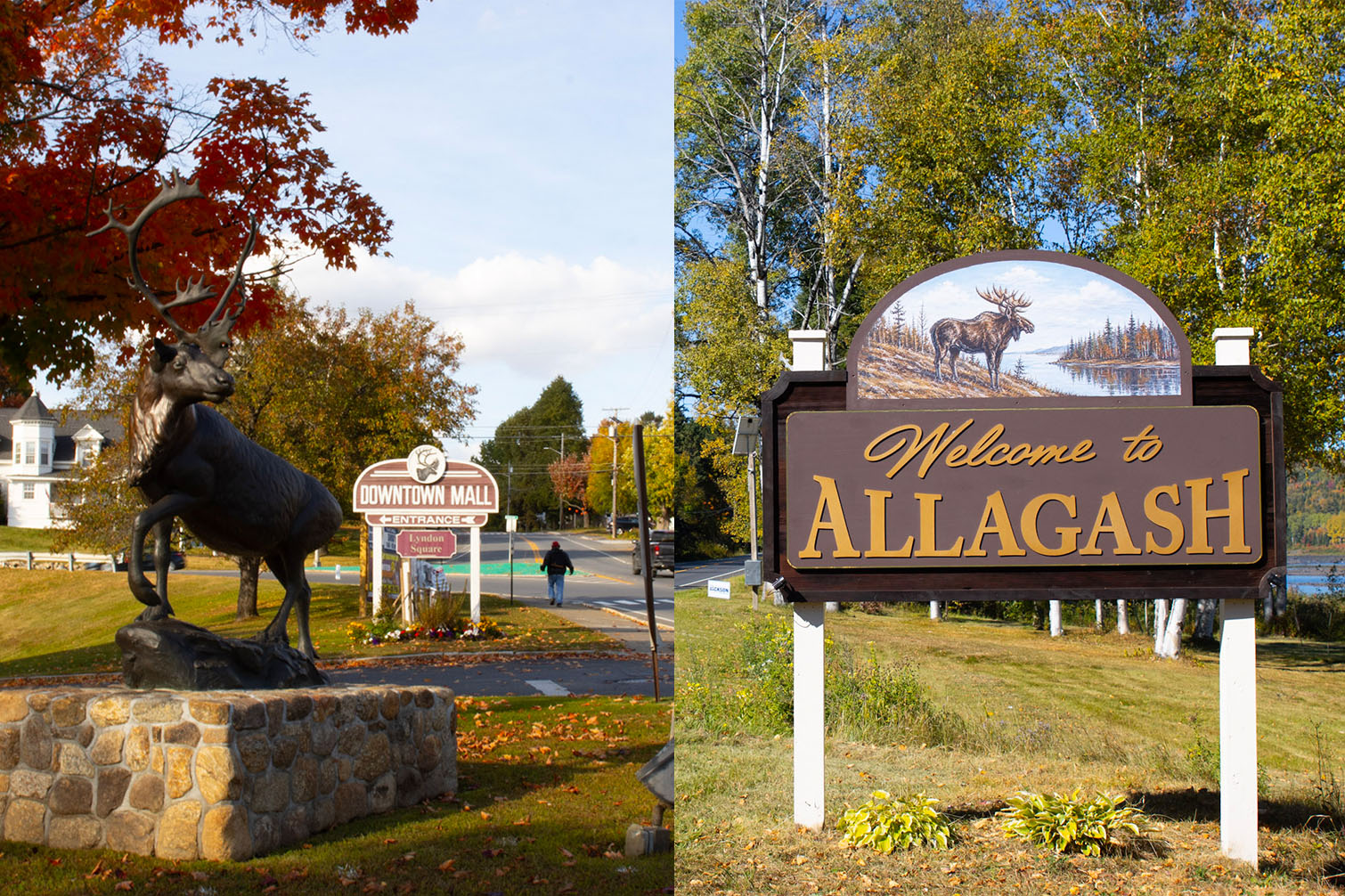
It’s a nod to Aroostook County, Maine’s northernmost and largest county, from which both Jackson and Collins hail. Larger than three U.S. states, Aroostook also has an outsized role in the runup to November’s midterm elections. In no race in the state’s modern memory have the candidates so heavily wielded their roots to lure voters.
“I am a County girl,” Collins says while sitting on a pile of potatoes in an ad released last week.
“I don’t remember anything quite like this before in terms of a son and daughter of The County squaring off against each other in a high-level race,” Mark Brewer, chair of the political science department at the University of Maine, said.
‘You don’t bring back the guy who beats the dog’
European settlers first came to Northern Maine for its timber and fertile land. The logging industry literally shaped the region. Competing British and American claims to timberland initiated the bloodless Aroostook War, which ended with the establishment of the Maine-New Brunswick border along the St. John River in 1842.
More than 180 years later, the industry has declined in the region, but it molded the families at the forefront of this U.S. Senate race.
In 1844, two years after the signing of the Webster-Ashburton Treaty that ended the war, Samuel Wilson Collins and a business partner built a sawmill on the banks of the Caribou Stream. The Collinses became one of Caribou’s founding families, and still wield influence in the city of 7,400.
Samuel Wilson Collins’ mill eventually became S.W. Collins Co., a retail lumberyard and hardware business that now has five stores in northern Maine. The business established the family’s prominence, which it parlayed into politics.
Before Susan Collins first ran for office, her family already had a regional political pedigree. Both her parents served as Caribou’s mayor, which is essentially the chair of the City Council. Her father, Donald Collins, served five terms in the Maine Legislature. Her uncle was elected to the Maine Senate and sat on the state’s Supreme Judicial Court.
Numerous other family members have served on local boards and committees.
That level of involvement is not unheard of for prominent families in rural Maine communities, but the Collinses’ entanglement with city affairs has at times driven frustration.
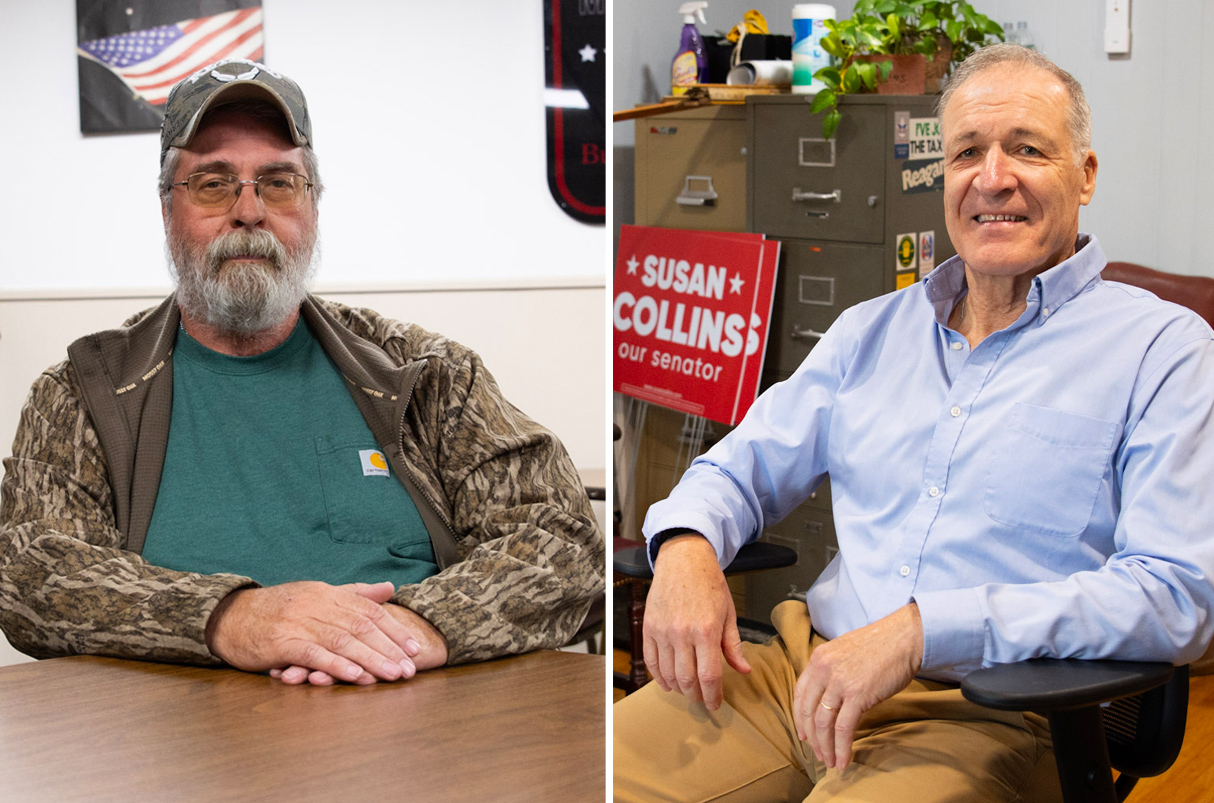
Amid a tumultuous year for Caribou’s school budget last summer, Sam Collins, the senator’s brother, moderated an open meeting that helped determine whether the budget advanced to a ballot.
Collins had filled the role in prior years at the superintendent’s request. But the district’s increasing budget had reached a tipping point for some. One woman, speaking to a reporter after the meeting, tied Collins to a conspiracy to steer the budget through.
Collins laughed at the assertion that he can exert political influence in Caribou, saying that he’s always going to try to “make our community better.”
“When you see Sam Collins standing up, moderating like this, that or something, you can say, ‘Well he did it because he’s a Collins,’ or ‘He got that opportunity because he’s a Collins,” Paul Watson, a Caribou city councilor, said. “Probably. But for him to continually come back, there has to be enough respect in him as a person to have lived up to something that people thought was worthwhile. You don’t bring back the guy who beats the dog.”
Susan Collins, who has lived in Bangor for decades, often cites her family’s business and public service to underscore her connection to the working class.
“I grew up in a small business family in Caribou,” she said last month while campaigning in Naples. “I know what pride there is in multigenerational family businesses.”
Two Aroostooks
For Jackson, his opponent’s family business is an opportunity to tie Collins to an “out of touch” wealthy upper class that scarcely exists in Aroostook County, one of the poorest counties in the state. Collins and her husband personally have assets worth between $4.2 million and $10.1 million, according to the senator’s most recent financial disclosure. Jackson has not yet filed his disclosure, according to a federal database.
“We are both from Aroostook County, but the similarities end there,” Jackson, the former Maine senate president, said at a September town hall in Jay. “I am working class and she’s management. She always has been.”
That notion doesn’t land with Sam Collins, who is the president of S.W. Collins.
“Aroostook County as a whole is not a real prosperous county,” Sam Collins said. “I’m still working every day. I just stopped working Saturdays about four or five years ago … [Are] Susan and our family different in that perspective? No. I think anybody in The County works hard.”
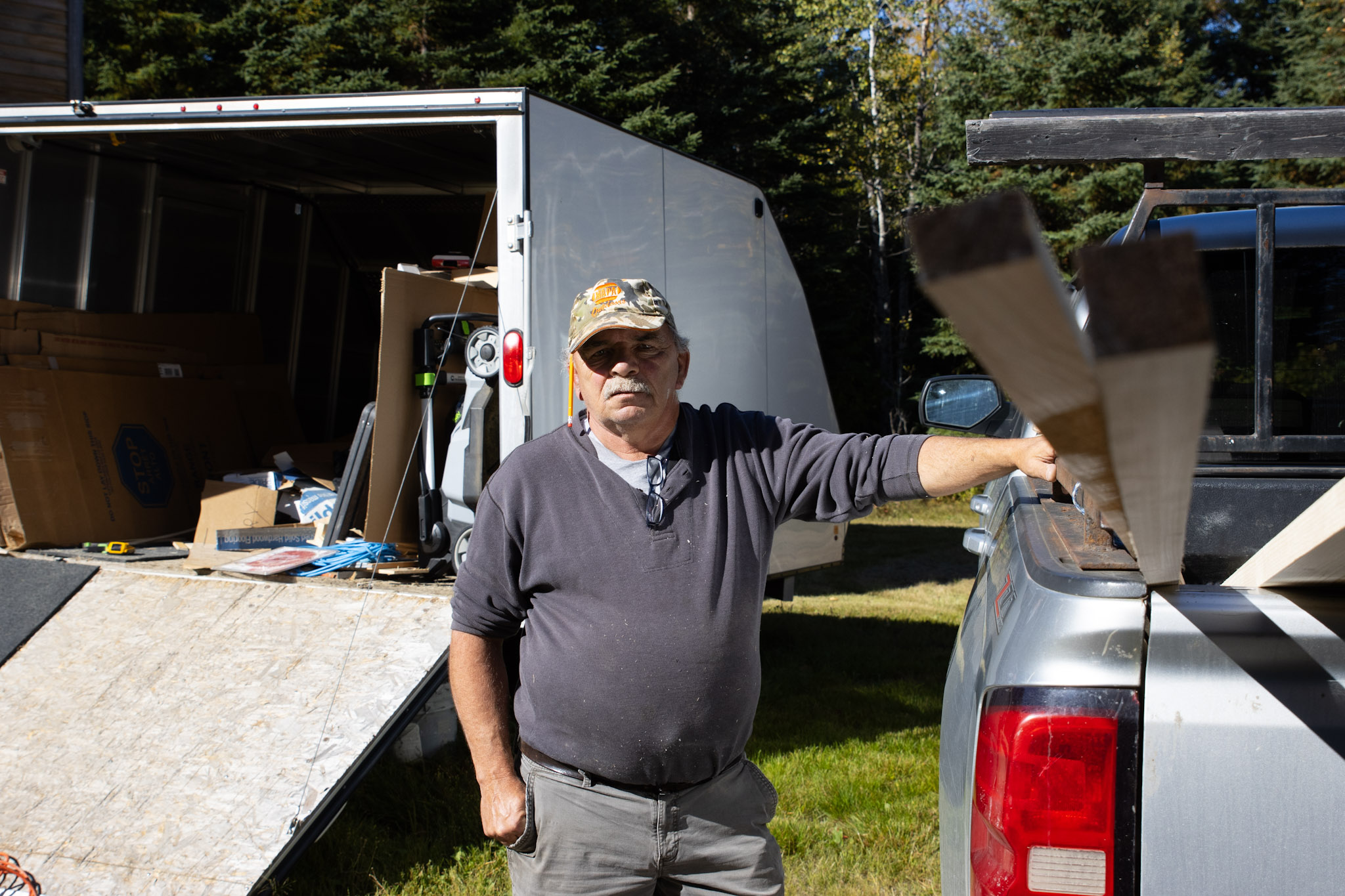
On a jobsite in Allagash, Jackson’s hometown on the edge of the North Maine Woods, Hilton Hafford veered in the opposite direction when asked about The County’s class dynamics. Hafford is one of the loggers who blockaded the Canadian border with Jackson in 1998 in a protest against Canadian logging companies undercutting the wages of American workers.
“If people don’t understand that there’s two Aroostooks, then they just don’t understand,” Hilton Hafford said. “Forget about Aroostook, think of any small town anywhere. I think Troy understands small towns, and he understands people that are struggling … Susan Collins has been in her position for 30 years.”
A new kind of challenger
Susan Collins has never faced a challenger like Troy Jackson before.
In her 2020 election victory over Democrat Sara Gideon, Collins attacked Gideon’s out-of-state heritage — a race that defied polling.
Secretary of State Shenna Bellows, whom Collins defeated in 2014, often referenced her working-class upbringing in Hancock to strengthen her populist credentials. Collins still rolled to a 37-point win, which came in a poor midterm environment for Democrats.
The 2026 midterms present a polar opposite climate. Republicans are bracing for midterm losses amid President Donald Trump’s historically low approval rating. And Jackson, unlike any other Collins adversary, is from The County.
“The fact that Collins could paint Gideon as from away with her Rhode Island roots and all that was a big part of why she was able to hold on,” Brewer said. “But even if you’re accepted as a Mainer, it seems to me, as someone who’s not a Mainer, [that] it’s different to be from The County. It’s almost like that’s as Maine as you can get.”
Jackson is the first Democratic Senate nominee from Aroostook County in 60 years. He won State Senate elections in the region even as Allagash and the St. John Valley swung toward Trump and the GOP. However, he lost a race for an Allagash Select Board seat in 2023.
The deeply rural town of 237, where Jackson still lives, appears split on his candidacy. Political signs on the edges of its few main roads may outnumber residents.
“I think he’s totally sincere. He feels these things personally, and he wants to change things and make things better for people around him and people in the state of Maine,” novelist Cathie Pelletier, who is related to Jackson, said. “He did that for Aroostook County.”
Jackson is being put under the national microscope like few County people before him. His opponent is among the select handful who can relate.
“Jackson is definitely benefiting from his County lineage, Collins has been able to benefit from that for years,” Brewer said. “On the flip side, he’s not always the smoothest campaigner … he sometimes sticks his foot in his mouth.”
“The question is: are the positives going to outweigh the minuses enough and among the right groups of voters to push Jackson over the top?”