

In the summer of 2023, the city of Caribou erected a large sign amid the brush that covered a long-abandoned lot along Route 1.
“The future home of the Caribou Police Department,” it read. “Coming soon.”
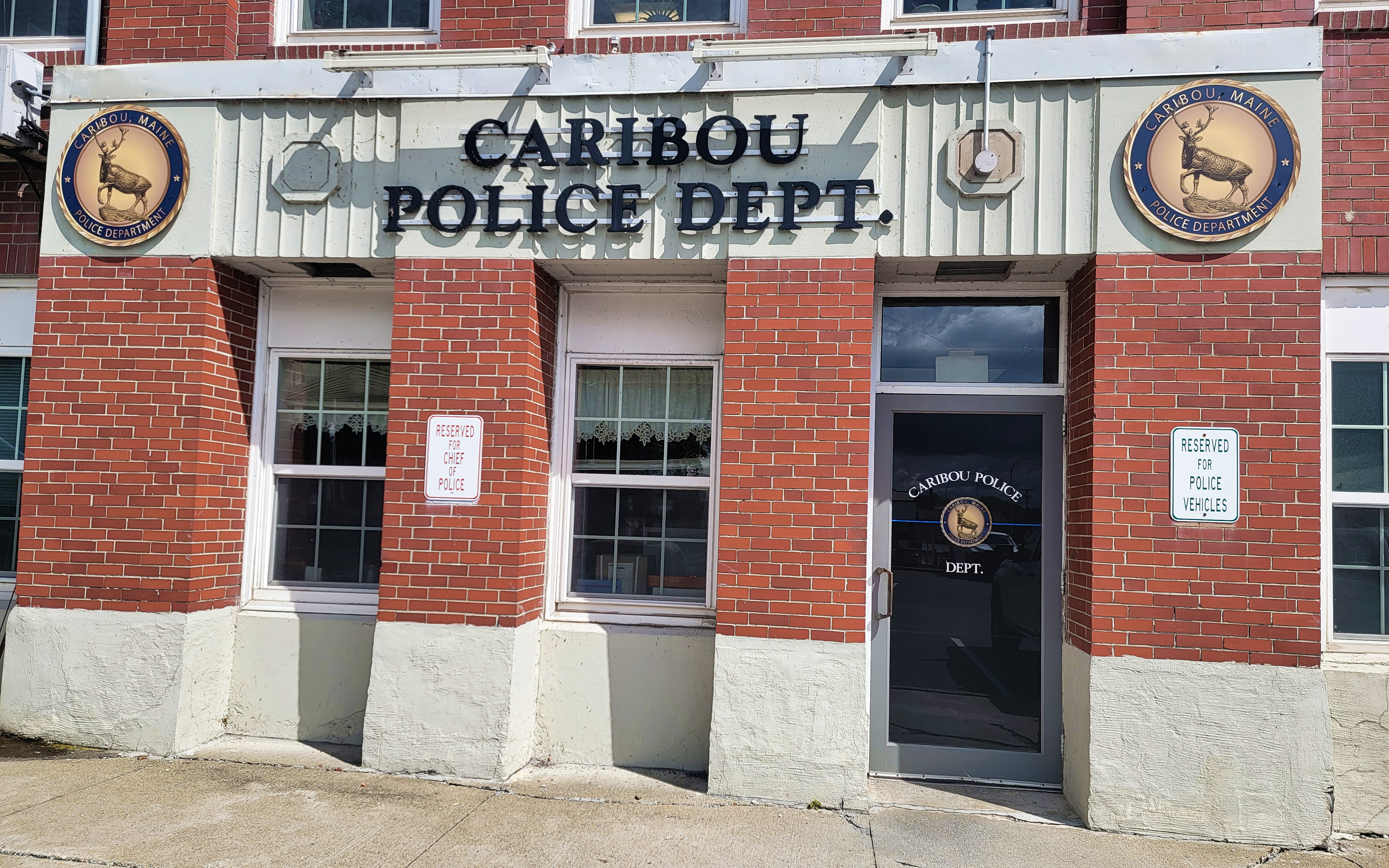
It was a firm declaration of the future for a department that has long operated out of the old, cramped basement of City Hall: a 3,000-square-foot space built around the start of World War II and last renovated when disco was cool.
Officers process narcotics in a storage closet. Mold grows in the department’s garage and leaking rainwater stains its breakroom. Lacking space, most sensitive case files have to be kept off site in another city-owned location.
A new station had been in the works since 2017. The city poured half a million into the design process. Finally, it seemed, the department was set to modernize.
In late September, the sign came down. Not because construction on the station is beginning, but because it will not be built at all.
The reason was the cost. The City Council voted on Sept. 15 to reject all bids for the project — each significantly over budget — and look at renovating existing buildings instead.
The prospect of the station has for years stirred controversy in the community, both for the building’s proposed size and the more than $10 million price tag it would carry.
The September vote marked the end of the tumultuous eight-year effort to construct the building, a facility originally designed to house both the city’s police and fire stations, and set a course for a revised solution to solve the city’s dated public safety infrastructure.
‘We are stuck’
From the moment bids to construct the police station were finalized on June 18, project officials knew they had a problem.
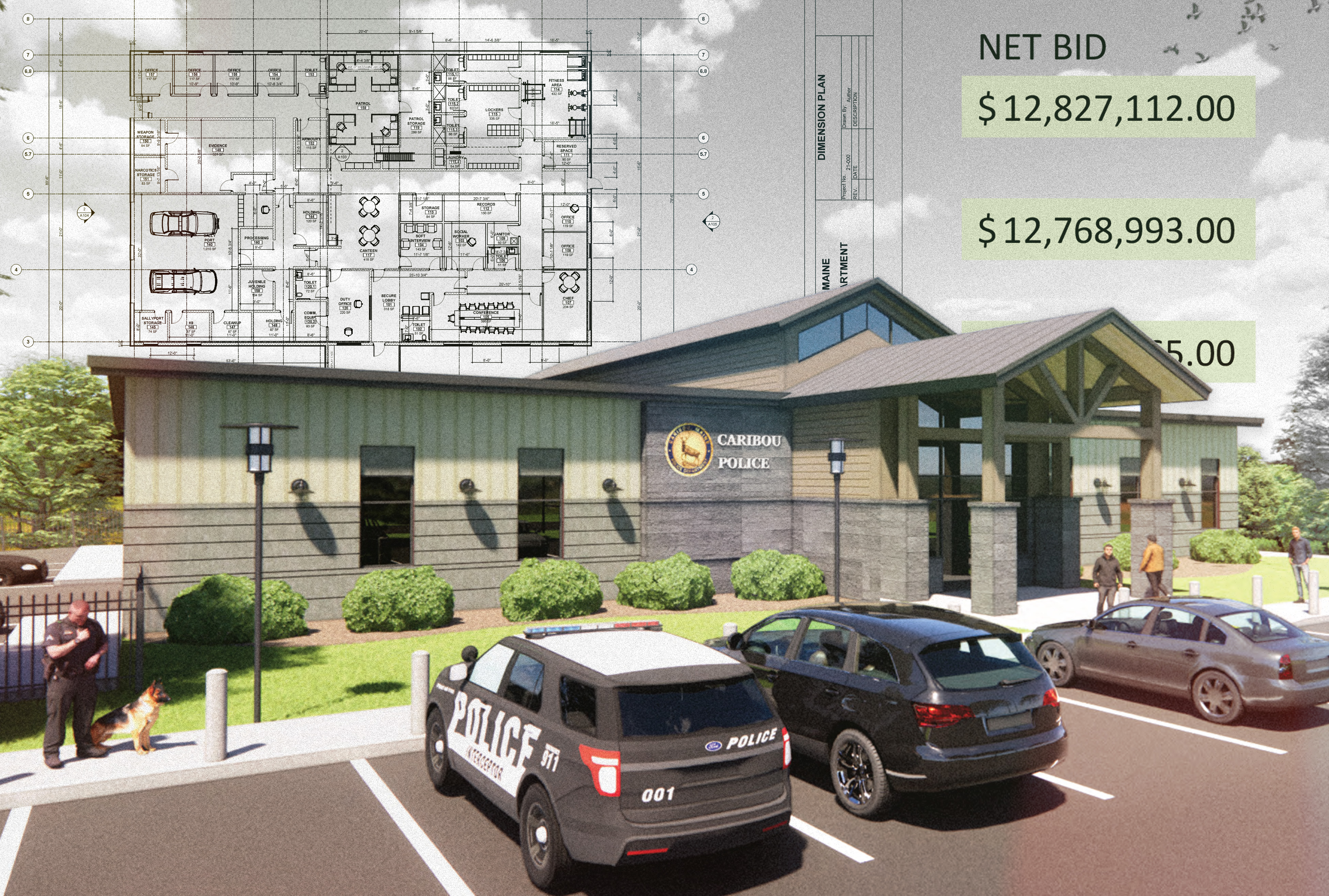
The project’s budget was estimated at $10.3 million. Every bid came in above $13 million. Even after cost reductions, Augusta-based Blaine Casey contractors — the lowest bidder — was still at $12.7 million, nearly $2.5 million over budget.
“We are stuck,” lead architect Ellen Angel wrote in an email to the three lowest bidders that evening. “The numbers are higher than the funds the City has available for this project.”
Emails made publicly available by the city and reviewed by the Bangor Daily News show a growing unease at the project’s viability among city officials, contractors and those at Artifex, the architecture firm leading the project, in the days after the bid process ended.
At the request of the city, Angel asked the three low bidders if they would participate in value engineering — finding the lowest possible cost for a project that still provides its necessary functions. Two contractors agreed. Angel said she would work at no fee through the process. The fate of the station appeared to rely on its outcome — and everyone involved seemed to know it.
“We should try to figure out if this is a divide that can be crossed,” city manager Penny Thompson wrote in an email to Angel on June 19.
“I have spent 8 years of my life (on and off) on this project,” Angel replied. “I want to see it built.”
By mid-July, Blane Casey and the Augusta-based Ganneston Construction had each submitted value engineering proposals. They suggested dozens of changes to decrease cost, including replacing a proposed metal roof with synthetic rubber and reducing the level of bullet-resistent glass installed in the station.
The city wanted the construction cost cut to $9 million. “They WILL NOT spend more than that for building construction,” Angel wrote in an email to Ganneston’s senior estimator. “They do not want to give up, but there are apparently no other funds.”
The new price tag was around $11.2 million in each proposal, still well over budget.
The city’s Public Safety Building Committee, which is composed of three city councilors, Thompson and Caribou Police Chief Corey Saucier, met on Sept. 4 with Artifex and Manns Woodward Studios, another architecture firm that worked on the project, to discuss potential reductions, then again as a committee on Sept. 9, when they finalized their recommendation.
The size of the proposed station — 11,100 square feet in the latest floorplan — had long been a sticking point for councilors and community members who questioned the cost. It compared with new stations built in Waterville (12,000 square feet) and Gorham (10,000 square feet) in the last 15 years. But Caribou’s population is well below half of those two central and southern Maine cities, according to U.S. Census data.
Caribou’s police chief has stood by the spacious building, saying that it would bring the department into the modern world of policing. But as hope for the project faded in late July, Ganneston’s senior estimator asked Angel if reducing the square footage was a possibility.
“Can we talk them into an 8,000 SF program?” he asked. “It would get them
their budget.”
The city discussed that possibility, but decided against it in an effort to save money, Thompson said.
“If the building size and placement changed, the engineers would also need to look at the elevations and site grading, etc.,” Thompson told the BDN. “Changing the scope of the project significantly would basically mean starting over to a large degree.”
Now, after the decision to nix new construction in favor of renovating, that’s exactly what’s happening.
What comes next?
During that Sept. 15 meeting, the City Council officially terminated its contract with Artifex. On Oct. 3, it published a request for qualifications and fee proposal for a new engineering, design and architectural firm to help select a feasible site for renovations.
The city is primarily evaluating buildings that were unavailable when it initially considered renovation as an option at the beginning of the project. Those include, but are not limited to, the former F.W. Webb and TD Bank buildings and Gilman Electrical Supply, formerly Aroostook County Electrical Supply, all locations suggested by councilors and Thompson.
What those involved in the project have learned about police station design will help them evaluate prospective sites, Thompson said
“They have essentially had a course in police station design, department programming, regulations for construction, best practices, adjacencies needed within the building, needs vs. wants, and more,” Thompson said.
Proposals must be submitted by Nov. 5, and will come before the City Council for approval on Nov. 17. A separate request for proposals will be published for a firm to assist with renovations of the building selected.
The $2.5 million in federal funding appropriated for the project in the 2023 U.S. Housing and Urban Development appropriations bill can be used to renovate an existing building, Thompson said the Boston HUD office told her.
The city has spent $576,607 in designing and planning for the new station, which Thompson said will be included in the project’s budget as the effort switches gears.
If the city had gone forward with the proposed 11,110-square-foot station, construction was set to start in spring 2026 and be completed in spring 2027.
There is no current estimate for the renovations, but Thompson said she hopes to keep it “under the $10 million budget,” and have them complete by 2027.