


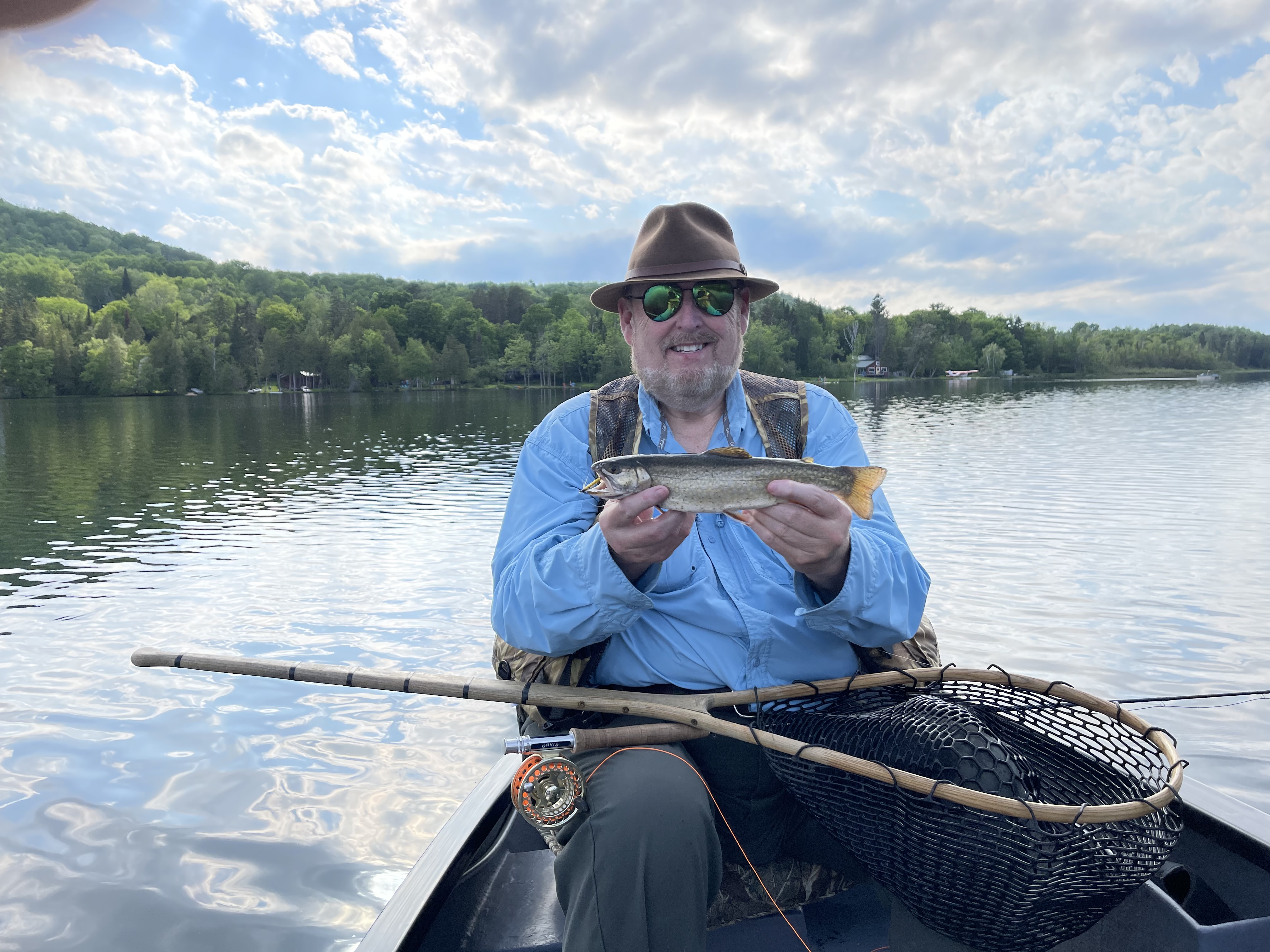
Chances are pretty good that baby boomers will remember “What’s My Line,” a popular game show from 1950 to 1967. Three celebrity panelists asked questions to determine the occupation of a contestant. During the second half of the show they were blindfolded and allowed to interrogate a celebrity mystery guest in hope of identifying that person. Success depended on intuition, perception and smart decisions.
Like fishing sometimes.
For my purposes and this story, the game should be “What’s Your Line?” The participants would be spring ice-out anglers with the goal of determining exactly which fly or casting line is best suited to their specific rod and the early season conditions.
It’s not just spring casting and trolling that may require a specific type and weight of line. Stream and lake levels, temperatures and clarity can all affect fishing results. The correct line and even the correct leader weight, length, color and density can turn a bust outing into a boon day.
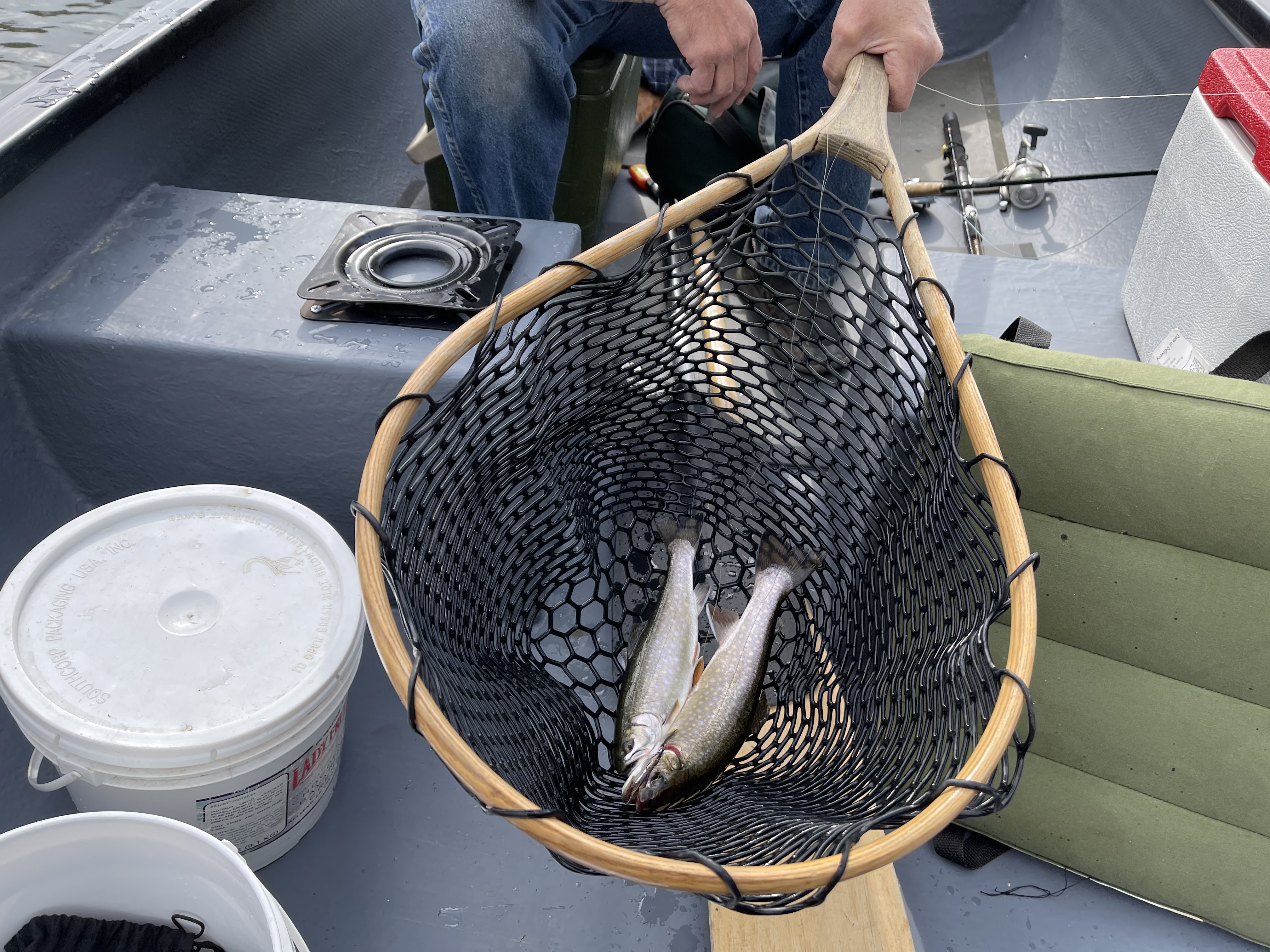
Let me cite an example from a trolling trip this spring that will help sway the doubters. There are over a dozen small lakes and ponds within a 30-minute drive of Presque Isle, and most clear of ice a week to two weeks before the larger regional lakes. A friend and I were trolling size eight single streamer flies from my 21” Maine Freighter canoe in late April and I caught and released seven trout in about 12 minutes.
Motoring away from the dock, I cast about 25 feet of line into the boat’s wake. Within 30 seconds a trout struck. Putting the motor in neutral, I played and released a lively, flashy 10-inch brookie. Putting my boat in motion, I cast again into the wake and hooked another fish within 30 seconds. In the next 10 minutes, I caught and released seven trout, measuring from 8 to 13 inches. My boat buddy had only one strike and no hook-up during that time – and he was using an almost identical fly.
I was pretty sure what the problem was, so I coaxed him into switching rods. Just a few minutes later he hooked and boated a fat and feisty 12-inch brookie. Five minutes later he caught another fish. Our outfits were pretty much identical, except my reel was loaded with a sinking tip fly line that was causing my streamer to run three to five feet deeper than his floating line, depending on trolling speed.
This same situation has occurred so often over the years that I now bring a second rod and reel with a sinking tip line on spring outings.
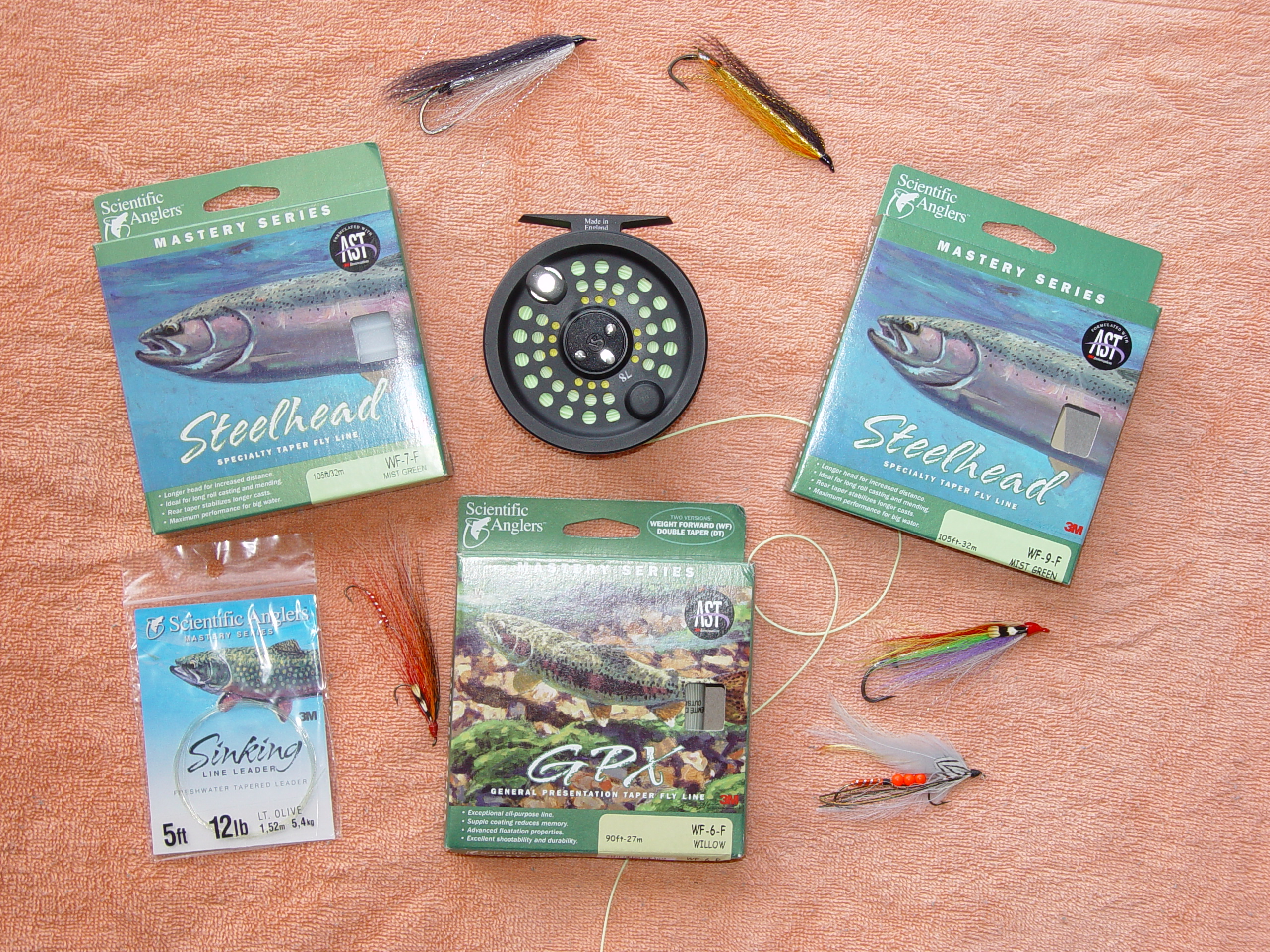
On larger lakes I’ve often used a full sinking line for the first week or so after ice out. It works well before the lake water “turns over” and the fish move up to feed nearer the surface. I keep spare reel spools with a floating, sinking tip and full sinking fly line in my tackle box and can change over to match conditions in less than five minutes. I also use a sinking leader on my spring fly lines to help keep the fly running level and deep. A regular leader on any style of sinking line is counterproductive.
I’m not a fan of any lead core line for spring. There’s no need to troll that deep. Such weighted lines are best for late summer, hot weather deep dredging or downrigger trolling. A Dacron, color-segmented trolling line will work on a fly rod and reel or a bait casting reel for Rapala style plugs, medium lures and tandem streamers. These combos troll 3 to 6 feet deeper than floating lines and leaders.
Early season fishing enthusiasts who prefer a spinning or bait casting outfit generally use regular monofilament line for trolling or casting. I bump up to an 8-pound test line from my standard 6-pound summer mono, and I prefer a red colored line over the semi-clear as it seems to blend into the off-color spring freshet water. When the lakes and rivers become clearer, I switch to fluorocarbon, which is stronger, nearly invisible and more pliable than monofilament brands.
Another option for spring trolling is a braided line. It’s not as thin as other monofilament and fluorocarbon options. Braid has almost no stretch, so it yields a better ratio of more solid hook-ups and much less chance of breakage.
Many anglers don’t give a lot of thought to line choice, but the right line for certain conditions can make or break an outing. This is especially true for spring trolling, fishing nymphs and late-summer, low-water dry fly fishing.
Open water season is underway, so it’s time to check over rods, reels and tackle – especially lines – and get out casting and trolling. What’s your line?