


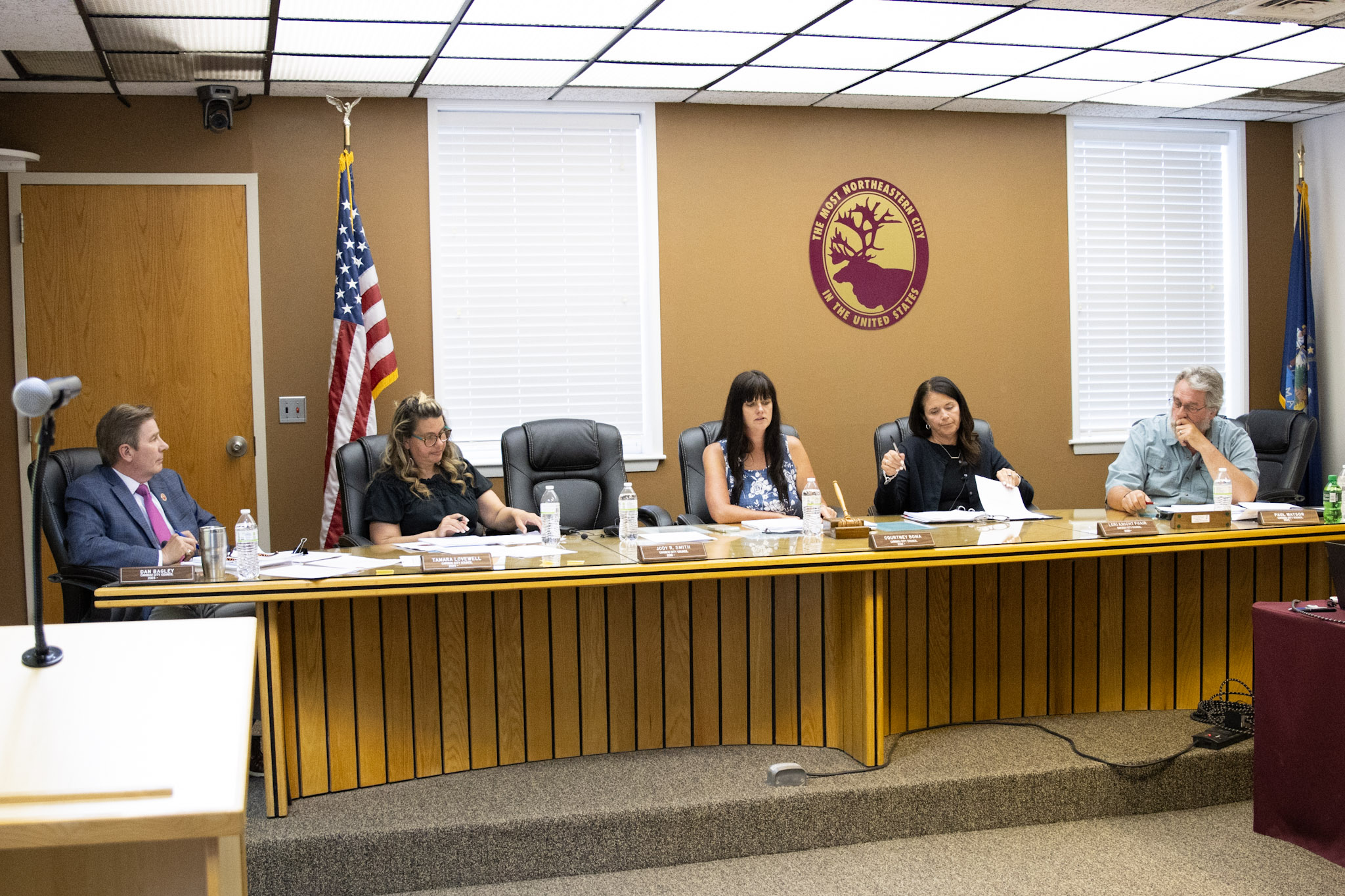
The Caribou City Council on Monday night voted to approve a $15 million municipal budget — up $2.3 million from what it spent a year previous — that is set to raise local property taxes by upwards of 6%.
The council approved the $13.5 million expense budget by a 5-0 vote, with two members, Deputy Mayor Jody Smith and Councilor Jennifer Kelley, absent.
The city’s capital expense budget, which totals $1.5 million, brought more discussion. Councilor Dan Bagley challenged what he described as “big balances” in the capital reserve accounts of several departments, including police and fire and ambulance, that the chiefs of each have argued are necessary to fund future projects.
At several points, the council considered delaying a vote on the capital budget until July, which would have pushed its tax commitment to August because of statutory guidelines. It ultimately approved the budget by a 4-1 vote, with Bagley opposed.
Altogether, the budget raises the total the city will ask of its taxpayers by just shy of $700,000. That figure, along with a combined $433,000 increase from its share of school district and county budgets, is predicted to increase Caribou’s mill rate — the tax owed per $1,000 of a property’s assessed value — from 22 to 24.25.
That means on a $100,000 home, what was a $2,200 tax bill in 2025 would be a $2,425 bill this fall.
The mill rate is likely to change before the city sets its tax commitment next month as a result of property valuations, exemptions, reimbursements and other fluctuating figures that factor into the equation, Caribou City Manager Penny Thompson said.
In March 2025, Caribou approved expense and capital budgets that totaled $13.9 million. It ultimately only spent $12.7 million after the council sheared more than $1 million from the budget in June to avoid a substantial shortfall that would have skyrocketed the mill rate.
Some of the largest single department increases in this year’s budgets, including more than half a million attributable to the police department, are comparable to what the council first approved last spring, but dramatically higher than what was actually spent after later budget cuts.
Both the police and fire and ambulance departments are juggling large equipment upgrade projects. The police department is working to replace its cruisers with a fleet of leased vehicles its senior officers hope will be more reliable its current fleet. The department currently only has two cruisers in service as a result of maintenance issues, Chief Corey Saucier said at Monday’s meeting.
The fire department is aiming to replace its ladder truck. Its current truck was purchased in 2002, and while still operational, has outlived the typical 20-year lifespan of the vehicles. It could take upwards of four years after the truck is ordered for the department to receive it, Fire Chief Brian Lajoie has said.
said.
Thompson warned the council in mid-June that the Caribou is facing a “critical financial challenge” because of hikes in the city’s share of school and county budgets.
The city had a choice, Thompson said. It could make deep cuts to its municipal budget to offset higher county and school appropriations, or maintain services and push property taxes higher on an aging population already feeling the impact of an affordability crisis hitting households across Maine.
The council, which had already cut half a million from its capital expense budget, chose the latter, as a councilor again pointed to RSU 39 — Caribou’s school district — as the organization largely responsible for tax increases.
The district’s budget has risen more than $900,000 in each of its last four fiscal years. Its leaders have attributed the hikes largely to fixed costs, including salary and benefits negotiated in collective bargaining agreements. But members of the council have consistently argued the district is not doing enough to reduce costs.
“If we’re going to consistently fight with the school system, and they’re not going to pay attention to the citizens of the community, it might be time for somebody out there to do the research to think about disbanding the RSU [Regional School Unit] and putting us into an SAD [School Administrative District], where the community has more control over the budget,” Councilor Paul Watson said.
“We have beat ourselves to death trying to do a great job, but it doesn’t make a difference how hard we hold the line if a certain group — in this case the RSU, as well as the county — does not care about that line.”