
Staff Writer
PRESQUE ISLE, Maine — City Hall, located on Second St., has seen many changes over the years. The one-time hospital now serves as the heart of the community, functioning as home to the city manager, City Council and various city departments. “City Hall has changed in many ways. Located in the former hospital, the building was built in 1919. As such, it has larger-than-average hallways that accommodated moving patients and smaller-than-average offices, which were recovery rooms,” said Tom Stevens, who’s managed the city for 17 years.
To meet the needs of city staff, the facility has undergone many changes in 90 years.
“Over the years, the city has made numerous renovations to the building. Many years ago, the hospital moved to its present location on Academy St. and the nurses’ quarters, adjacent to the building on its north side, were demolished,” Stevens said.
From top to bottom the structure is now utilized for municipal purposes.
“The third floor of City Hall — the former operating room — was used for many years as the home of the (Presque Isle) District Court. The District Court moved from City Hall about 1991, after a new facility was constructed on Riverside Dr. At that time, the city renovated the third floor for municipal office space. Administration, finance and resources are now located on the third floor; solid waste, planning and development, code enforcement, the city planner and the Water and Sewer District are on the second floor; and tax collection/clerks, general assistance and assessing are on the first floor,” explained Stevens.
Over the years, Stevens said, the city has discontinued office use in the basement of the building due to poor accessibility and no access to windows.
“The basement is now used for storage. The first floor lobby was expanded about 10 years ago to accommodate the number of people who transact business in the collector/clerk’s office,” he said.
One of the interesting aspects of being a former hospital, according to Stevens, is that people still visit the building to see where they were born.
“It’s not uncommon for a person to be simply wandering the third floor of the building and when they are asked if someone can help them, they reply, ‘Thanks, but I’m just here to see where I was born and how things have changed,’” said Stevens.
The other change has to do with technology, said the city manager.
“Twenty-five years ago the city used carbon paper, mimeograph machines, typewriters and rotary phones. Today, the office is alive with computers, colored photocopiers, fax machines and state-of-the-art phones,” Stevens said.
Stevens sees continued technological advances on the horizon.
“The biggest change in the future will be in technology. Who knows where this will take us (City Hall)? Wireless connectivity will be the norm and interactive conferencing may replace travel needs,” he said.
Advancements over the years has allowed city officials to bring information into homes, via the use of television.
“One of the biggest impacts on our department is the ability to live broadcast meetings. While this has increased the transparency of what we do in providing services, it has also decreased direct citizen involvement in government. We often hear that people watched a meeting on our local origination channel, so we know people are interested in local government,” said Stevens.
He said the positive side is that more people are watching meetings. The negative side is that fewer citizens are showing up to participate.
“We (city officials) often get the feeling that by watching, they (citizens) have fulfilled their civic duty. While we appreciate those who watch, we still need citizens to attend meetings and interact with municipal officials,” Stevens said.
Asked if there’s anything about City Hall that might not be well-known to the public, Stevens said one thing came immediately to mind.
“We believe that there is an old time capsule in front of City Hall. Around 1971 or 1972, the Boy Scouts, with the help of the Future Farmers of America, planted a time capsule in the roots of a Norway maple tree on the southerly side of the walkway leading into City Hall,” said Stevens.
Plans are to retrieve the capsule when the tree dies, he added.
“We have a picture of the event at City Hall. We can identify Linda Lynch, Randy Martin, Greg Smith, Roberta Griffiths, Calvin Shaw and Scott Williams in the picture. Unfortunately, several others pictured have not been identified,” said Stevens.
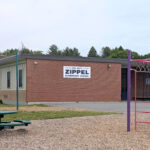
A similar event took place in 2003, with students from Pine Street and Zippel elementary schools burying their own time capsules at City Hall.
“In 2003, the kindergarten classes from Pine Street and Zippel placed two time capsules in the ground in front of City Hall. The capsules included the students’ pictures, as well as ‘2003’ memorabilia,” said Stevens.
Stevens said it would be interesting to have another group or organization continue the “tradition.”
“It would be nice if we kept this going, as a way of showing future generations what was important to us at the time the capsule’s buried,” said Stevens.
For more information about City Hall or any of the departments, call 764-4485 or visit presqueisle.govoffice2.com.