



While picking up mail at the post office recently, I crossed paths with a local fly fishing acquaintance and stopped to chat. Every Aroostook angler understands the local spring fishing conditions are at least a month behind the rest of the state, and we deal with the situation.
This fellow was frustrated with the consistently poor weather plaguing early season outings the last couple of years. Global warming has certainly altered winter conditions in The County, but less snow and milder temperatures have been a relief for most residents. But the holdover effects haven’t been beneficial for regional anglers when ice-out fishing has arrived.
We both agreed that the consistent rain and heavy wind plaguing fishing ventures multiple days, week after week, during late April and early May were aggravating. Weather kept waterways high, wading nearly impossible and boat fishing uncomfortable, often dangerous and sometimes impossible. Now that it’s June, streamer trolling season is at an end and consistent dry fly action well over a month away.
The man wanted my recommendation for dependable trout fishing. My advice was what my dad practiced and taught me over six decades ago: try a wet fly.
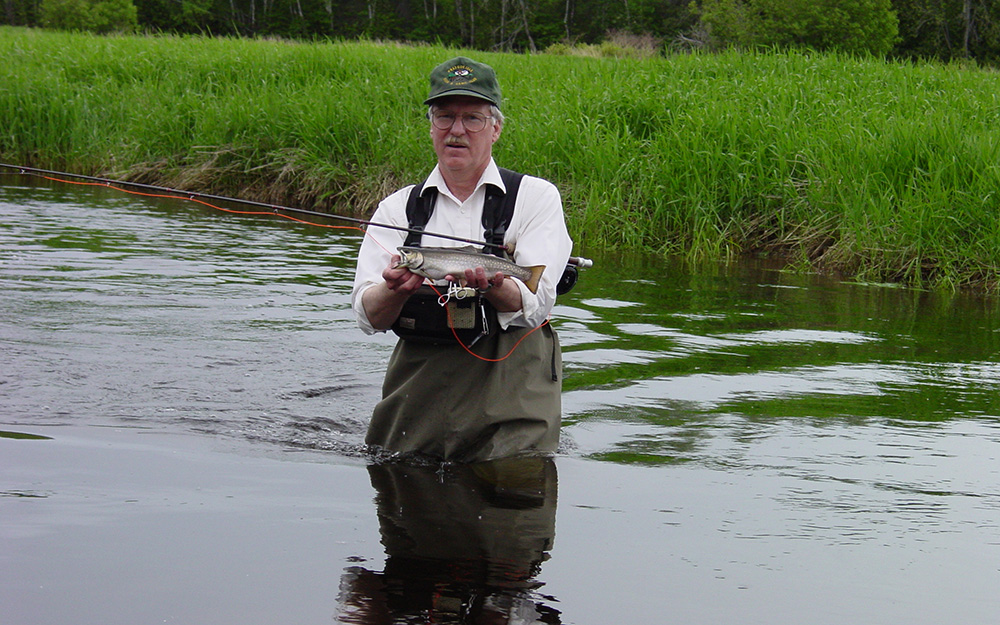
(Courtesy of Bill Graves)
Just in case you’re wondering, the true definition of a “wet” fly is not one which has just been cast into the water.
Larger and sleeker than dry flies, yet smaller and more intricately colored than many streamer flies, this style of trout fly comes from a fishing heritage that is centuries old. The first wet flies were chicken or duck feathers roughly attached to hooks with little form or fashion, yet they would take fish when natural baits would not. As the fish have become more “lure educated” over the decades, the fly there and fly casters, have kept changing and updating wet fly patterns and fishing methods.
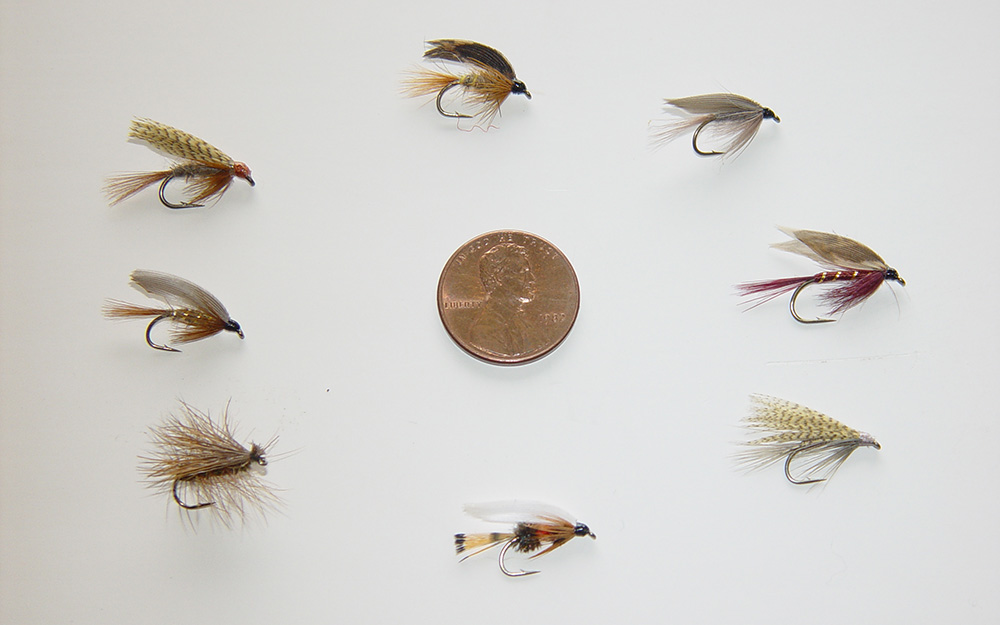
Unfortunately, throughout Maine, the style and tradition of angling with wet flies has taken a backseat to trolling streamers and dabbing dry flies. It’s likely that a true wet fly pattern in only one of 25 tackle boxes. Streamers, nymphs, terrestrials, matukas and woolly buggers, though fished at various depths below the water surface, are not true wet flies.
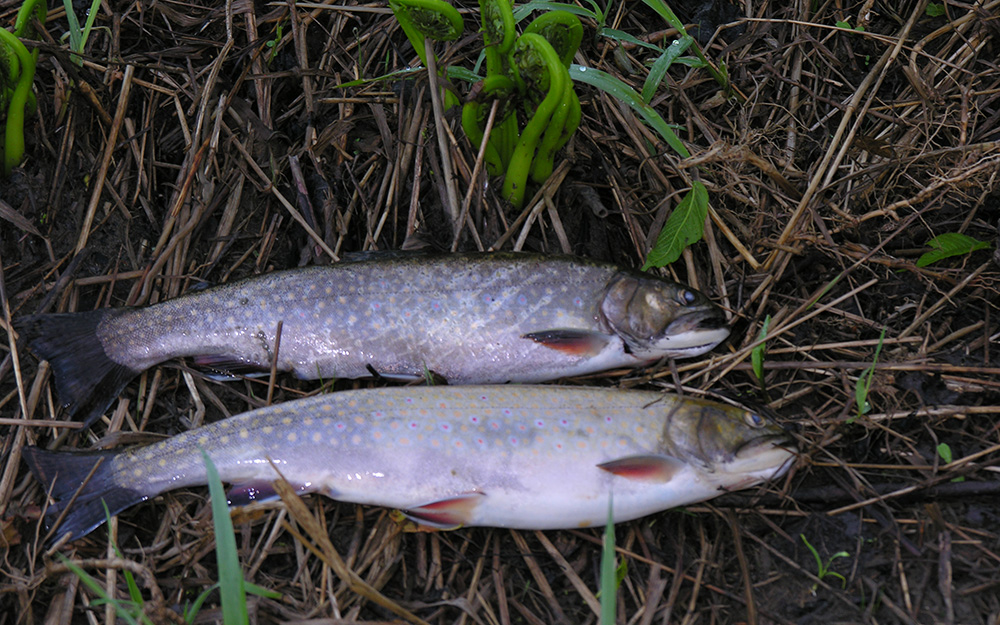
During June, early July and September, the vibrant colors of a well presented and retrieved wet fly will take larger trout than other types of flies. Many of the flies have vivid reds, blues, yellows and greens that resemble no insect or aquatic bait, yet the trout strike them readily. Perhaps the bright colors are like a red cape to a bull, making the swimming form, a colorful, taunting irritation that can’t be resisted.
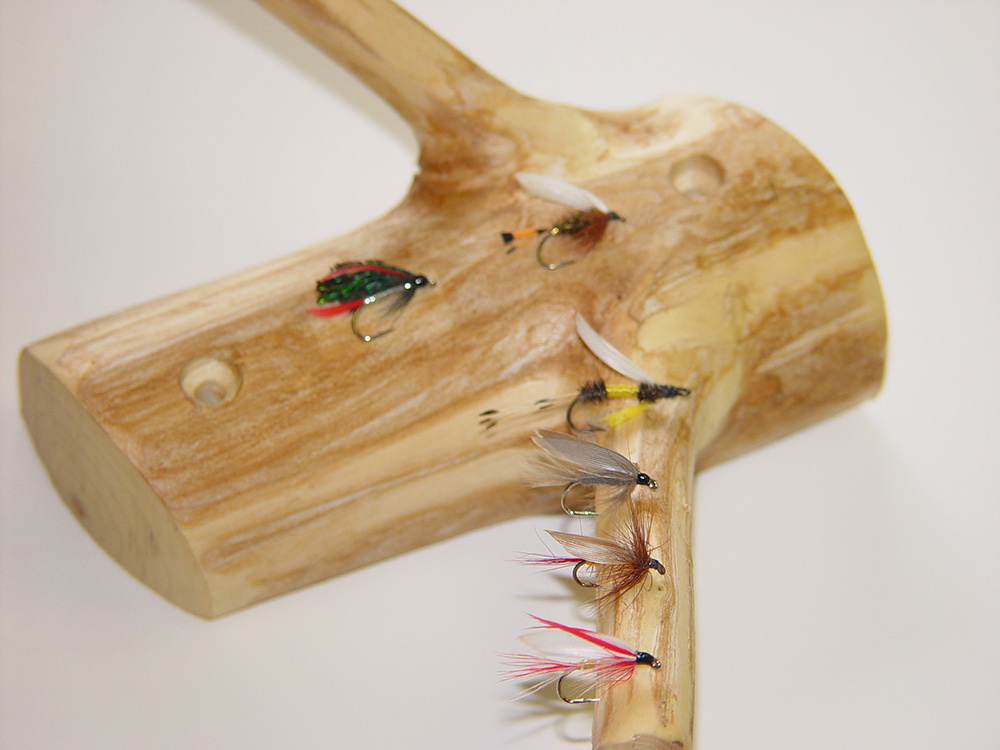
There is an old wet fly pattern called a trout fin, whose red and white swept-back wing style came from an actual trout fin. More than a century ago, anglers would often cut a fin from a trout that they had just caught and attach it to a hook, and then someone finally tied a fly that resembled that fin. The trout fin pattern was and is a very productive fly and should be among your selection.
(Courtesy of Bill Graves)
The red and white of a parmachene belle and royal coachman, yellow and red of a professor, green and red of a grizzly king, and the blue, red and yellow of a silver doctor are other rainbow-colored wet fly patterns that always seem to catch fish.
Among the more subdued hues in wet flies that should be at hand are the Hornberg, hare’s ear, Montreal and muddler patterns. The most common size wet fly hooks for our local waters are 8s, 10s and 12s. Wet flies will take fish on rivers with larger holding pools such as the Aroostook, St. John, and Fish rivers, but are just as effective on medium sized waters, like the Presque Isle, Prestile, Little Madawaska and Meduxnekeag streams.
Wet flies will regularly take trout from deep holding pools and from cold spring inlets, but they work best when fished through moderate depth riffles and currents. These spots are easy to locate when they are on straight stretches of water, but don’t overlook U and S curves with shade from overhanging foliage along the brook flowage, and always cast along bank undercuts.
During June and September, rivers and brooks tend to have higher water levels, yet can still be waded with hip or chest boots; rain can often tint the water to a tea color and debris from trees lining the shore is common. Perhaps visibility is another reason that colorful wet flies are so effective during these water conditions.
On narrow stretches where backcasts are limited, a wet fly can be roll cast and drawn back directly upstream, but if possible, an angled cross-current cast and retrieval with a crossing downstream angle will always look better to the fish. Striking fish are more solidly hooked, and less likely to pull free on cross-current retrievals compared to directly upstream retrievals.
(Courtesy of Bill Graves)
The nice thing about wet fly fishing is that it doesn’t require the training, concentration and finesse of dry fly techniques. Novice casters can usually present a wet fly well enough to attract strikes.
Since wet fly patterns have diminished in use, anglers may have to tie their own or find a local fly tier to create a few basic patterns.
Along with the patterns mentioned previously, I’ve discovered some effective, but rare wet fly patterns. Materials and construction directions may be found in dozens of older fly tying books or online sites.
During bright sun overhead, I prefer a brightly hued wet fly such as a professor, Colonel Fuller or a Belgrade. Just after dawn and once the sun sets, a drab color pattern like a blue dun, ginger quill or a March brown often provide consistent trout action.
At certain times of the season, wet flies outperform most other styles of baits. Now is one of those times.
Give wet fly fishing a try and not only will you keep a bit of heritage alive, but your trout action will pick up as well. It’s a fun way to fish local streams, and larger trout will be one of the rewards.
Pick your lure carefully. Remember, just because it’s in the water doesn’t make it a wet fly.