


I used my paddle to push the 21-foot Maine Freighter canoe away from the meager dock and motored around the end to begin a trolling run along the shoreline of the small lake. Ice had been out for a week, but dollops of snow remained in shaded locations and temperatures hovered in the low 50s. My boat buddy in the bow cast out a favorite minnow imitation streamer while the midshipsman tossed a small lure out to troll the opposite side.
I made a couple of false casts with my Leonard’s fly rod and sailed a vividly hued fly 30 feet or so into the wake behind the canoe. Bringing my rod tip down level and giving a couple of wrist flips to transmit a bit of action to the line, the fly was immediately met with a solid strike. Raising the rod tip that the fish was trying to yank into the water, I set the hook and put the motor into neutral with the other hand.
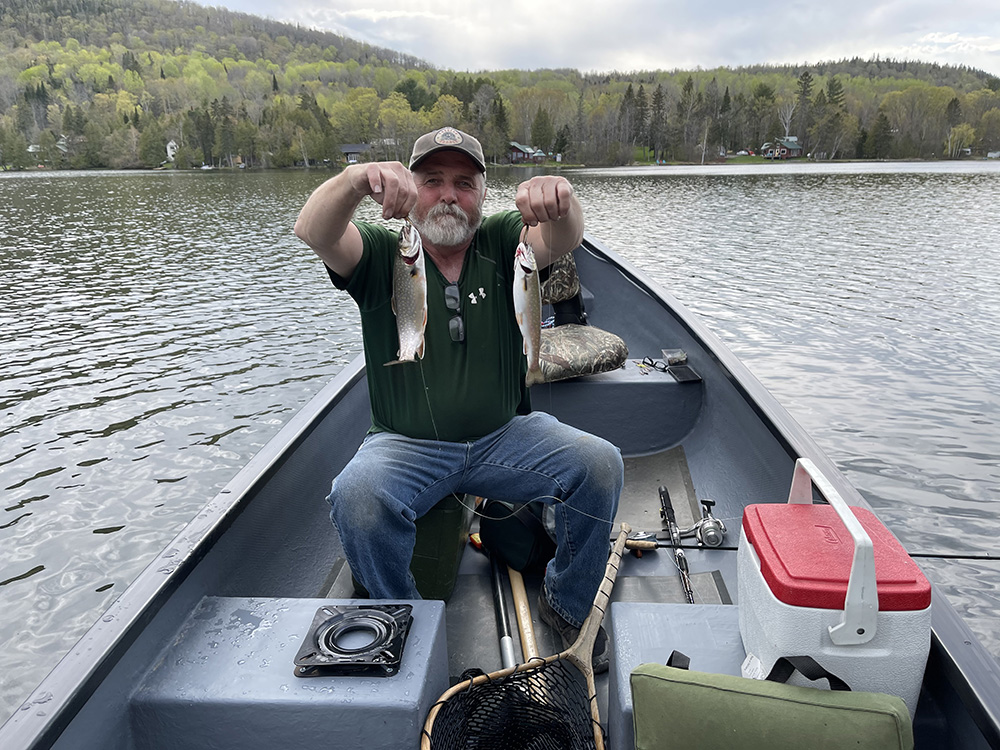
A few minutes later, after a wonderful tug-of-war on the lightweight rod and reel, the net slipped under a brightly spotted 13-inch brook trout.
As I quickly unhooked and released the fish I looked back and realized we had only traveled about 50 yards from the dock. Roughly 45 minutes later we had made a complete loop trolling and casting around the pond. I had caught and released eight trout and had two other strikes, while my friend in the bow caught two and the center man only one on his lure.
(Courtesy of Bill Graves)
I convinced my friend in the middle to use my backup fly rod, already set with a colorful streamer, and the bow man to tie on a brighter fly. During our second trip around, they both enjoyed more strikes and more trout to the net.
A week later on a different waterway, I was in the same canoe, with one boat buddy the same and the second another old fishing friend but new to the center seat. Doubtful of the previous week’s events that I’d recounted, one tied on a Magog smelt and the other a black-nosed dace, and I cast another bright attractor pattern, but different from the last trip. Once again my colorful streamer produced notably more action, and when each of my companions were finally convinced to change flies, so did their efforts.
While folks in most of the lower two-thirds of Maine are enjoying the first harbingers of spring, Aroostook remains in winter mode. Temperatures are trending higher, snow levels lower and daylight a few minutes longer each week. With snow arriving this year the first week of November, and staying, along with weeks of the most frigid temperatures for several years, I’d had enough hare hunting and ice fishing and was spending a few hours here and there each week at my fly tying vice to stave off severe cabin fever and help maintain sanity.
As I repair, rebuild and construct, I envision new ventures for the upcoming year. My goal is to be fully stocked for springtime ice-out trolling and casting. In my opinion, it promises the most consistent action and often the largest fish of the open water season.

(Courtesy of Bill Graves)
The last several springs have provided extraordinary fly rod action, but not because I’ve changed locations, altered techniques or just been lucky. The reason? I’ve changed fly patterns.
After sharing a canoe or wading the same stream trip after trip with old friends and new acquaintances, it became apparent that 90% of us tied on the same old tried and true streamer patterns. I’ll bet many veteran fly casters would list their top 10 favorites and then find out most of the choices would be identical.
Over the years, I heard my dad pose the same question to other anglers dozens of times: do you know what the best, most productive fly pattern is? There were always varying answers, but his response was the real truth most folks don’t often think about. It’s the fly you tie on and use the most, trip after trip.
Relying on old favored patterns like a gray ghost, black-nosed dace, nine three, or a warden’s worry, all of which resemble some sort of bait fish, becomes a habit, and while they catch fish, it’s likely there are better options. Let me tell you what I’ve been tying and trying and perhaps what you should be giving a chance.
(Courtesy of Bill Graves)
Bright is Right
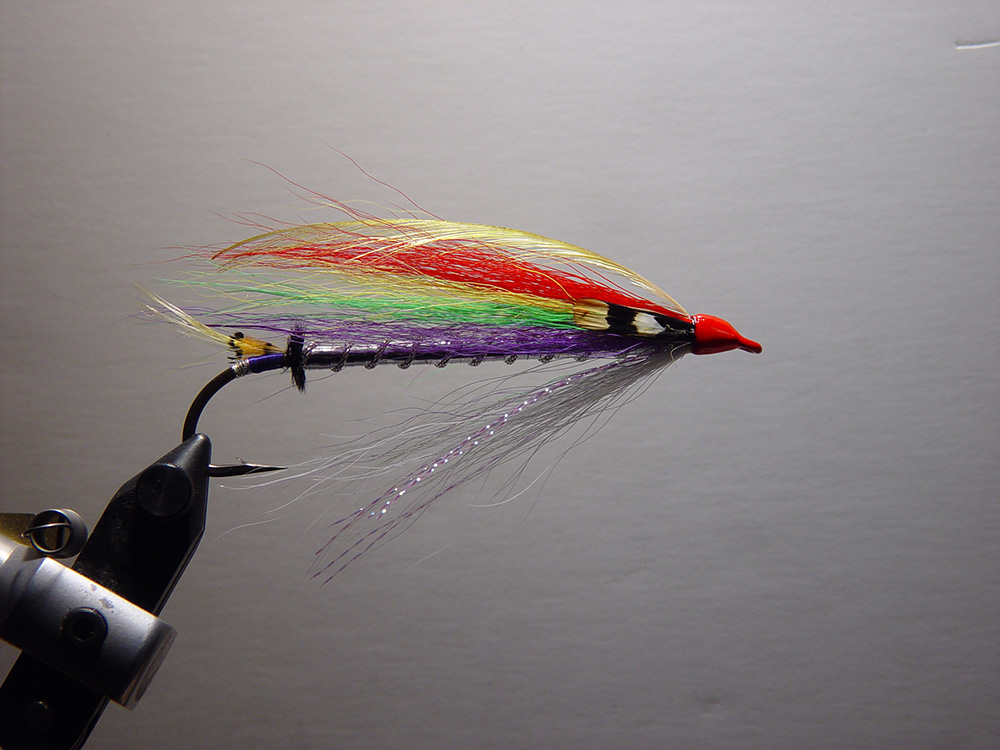
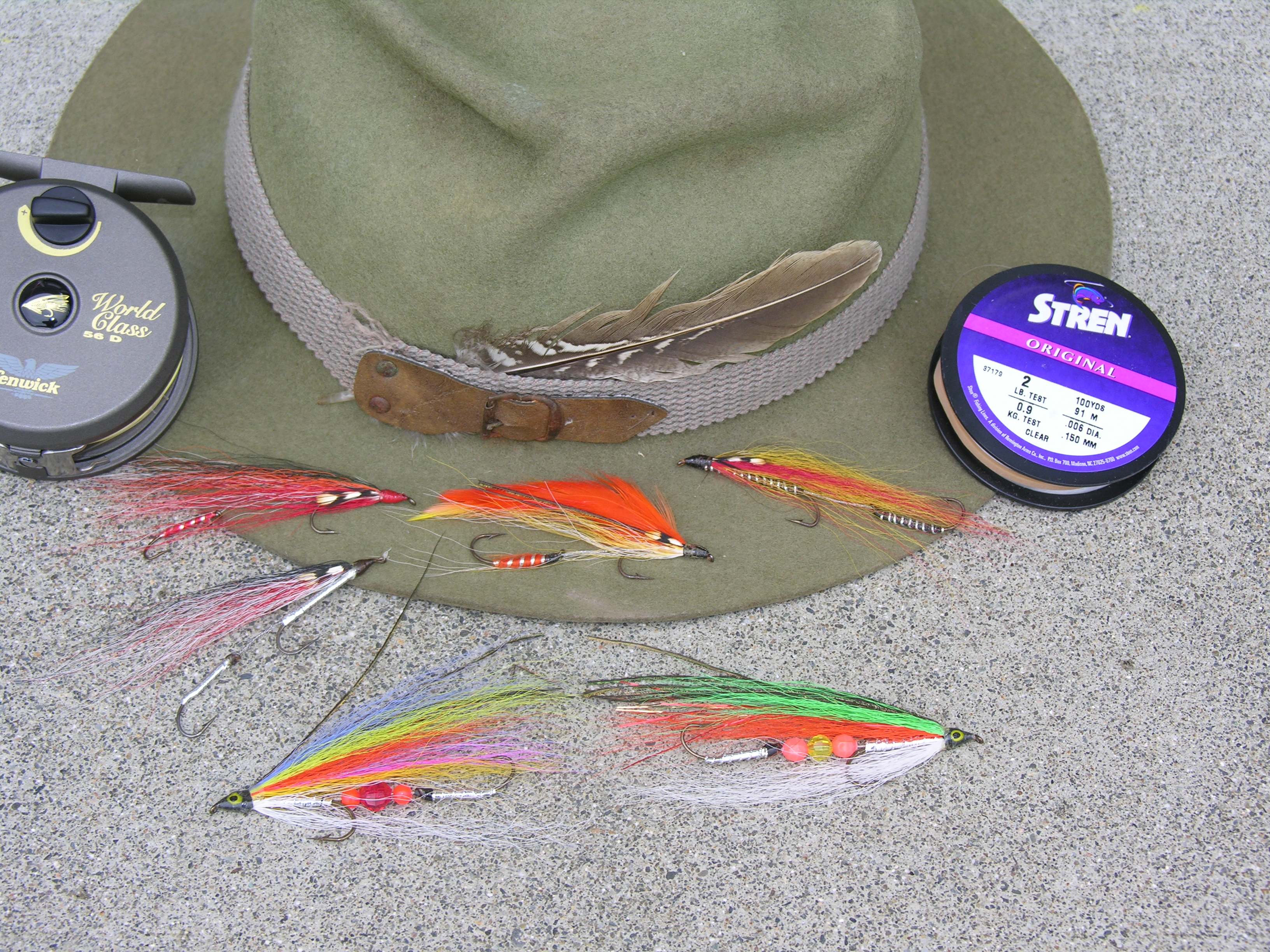
Unless I’m fishing on a waterway that has a spring smelt run, and it’s in progress, I steer away from bait fish Imitations in favor of bright, flashy attractor patterns. My top triad include a little brook trout, Ouananiche sunset and a blue devil. Seldom do any of my boat buddies own even one of these patterns.
On my second string are a parma belle, red and white special, morning glory and a chief Needahbeh, a pattern created in Greenville yet unknown by most anglers. Occasionally someone fishing with me will have at least one of these in their flybox, much to my surprise.
Time after time one of my top trio will outproduce by 4:1 or 5:1 the more familiar and popular streamers trolled or cast on a friend’s rod from the same canoe over the same water. When I can convince a fishing partner to change patterns and tie on one of my favorites, their results almost always improve.
(Courtesy of Bill Graves)
I’d be remiss not to mention that during April and May outings, wading or trolling streamers, I always use a sinking tip fly line. This tactic invariably increases success — a result also proven over time and on many trips with dozens of fishing companions. Ice-out trolling conditions often consist of dingy water and a fair amount of debris, so the bright flies show up better to feeding fish and in the fall spawning season, trout and salmon are far more aggressive and attack bright flies much quicker than drab patterns.
Unless you tie your own flies, or know someone who does, finding original, correctly constructed copies of my top brightly hued streamers may be a chore. I’d recommend a variety tied on size 6, 8 and 10, 2X or 3X hooks, for use on small ponds or brooks. These same patterns can be tied as tandem streamers for lakes and rivers.
Acquiring at least one will be well worth the effort, and even for novice fly tiers the patterns are not that difficult. This month is a perfect time to spend a few evenings at the fly tying bench to forget winter and prepare for spring.

(Courtesy of Bill Graves)
Don’t take my word for how effective attractor patterns can be for spring and fall fly fishing. Even my closest friends had to be convinced. Prove it to yourself and I think you will be pleasantly surprised.
By the way, any fly that doesn’t take a fish within 30 minutes should be changed.