

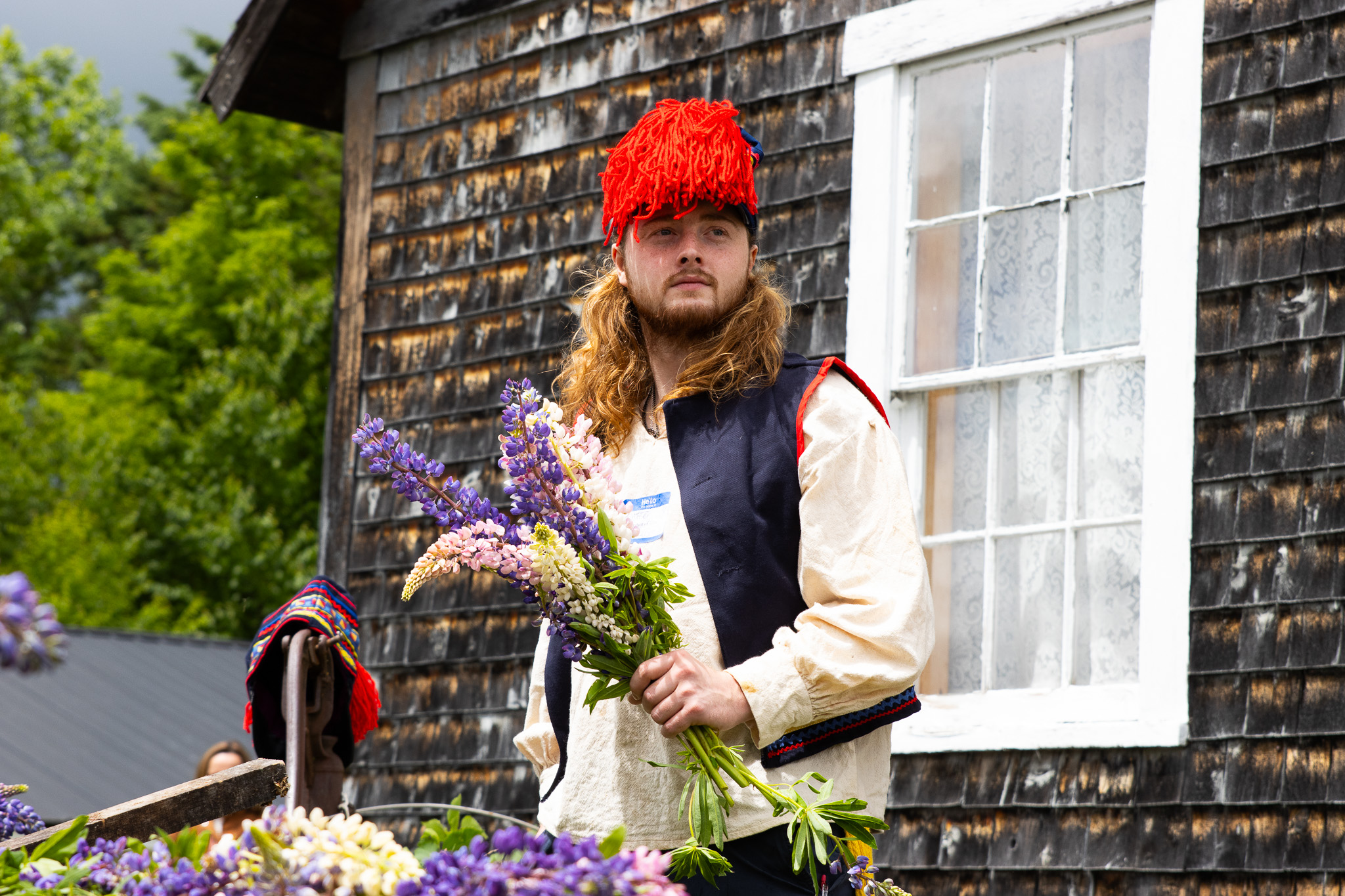
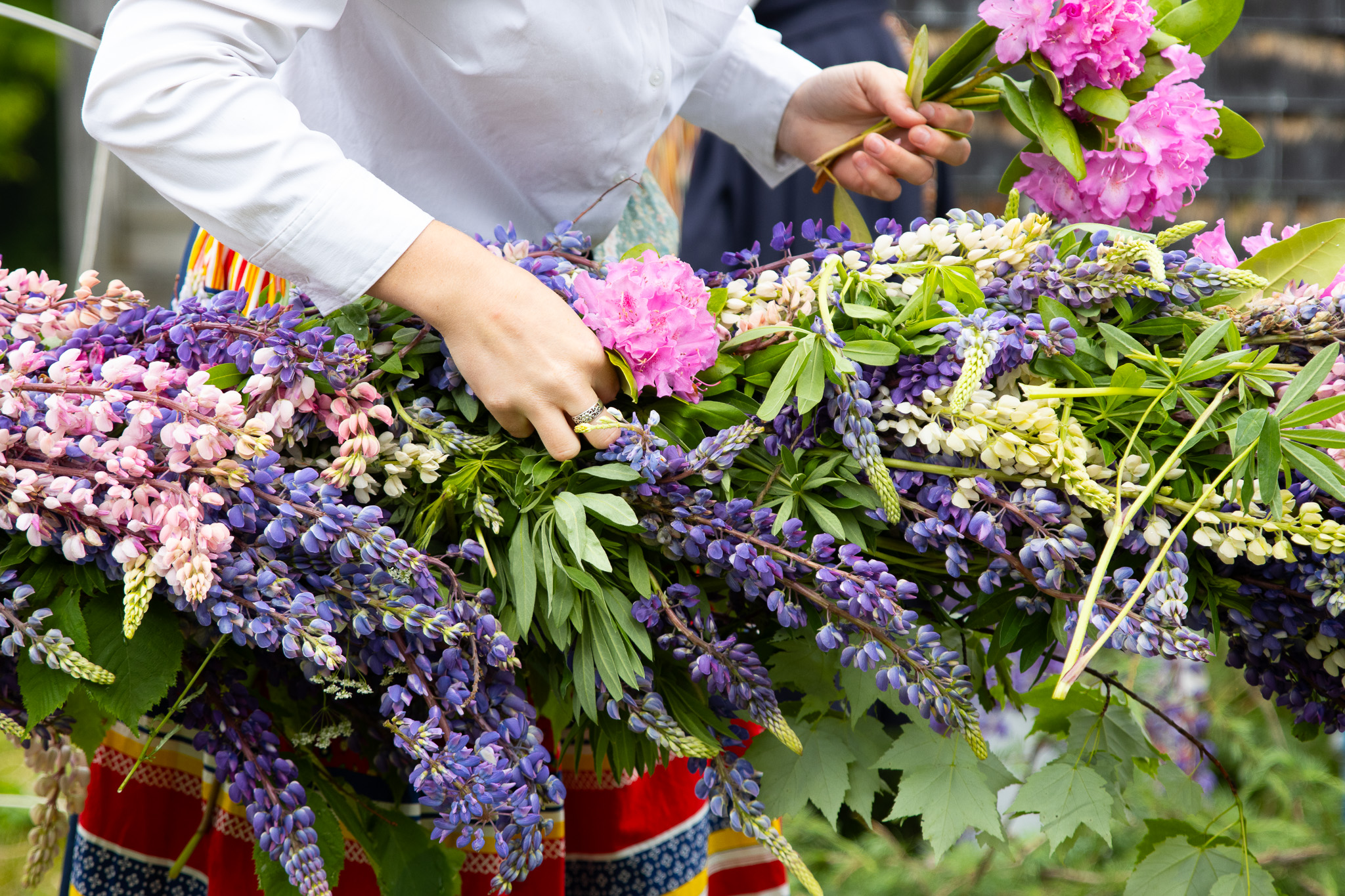
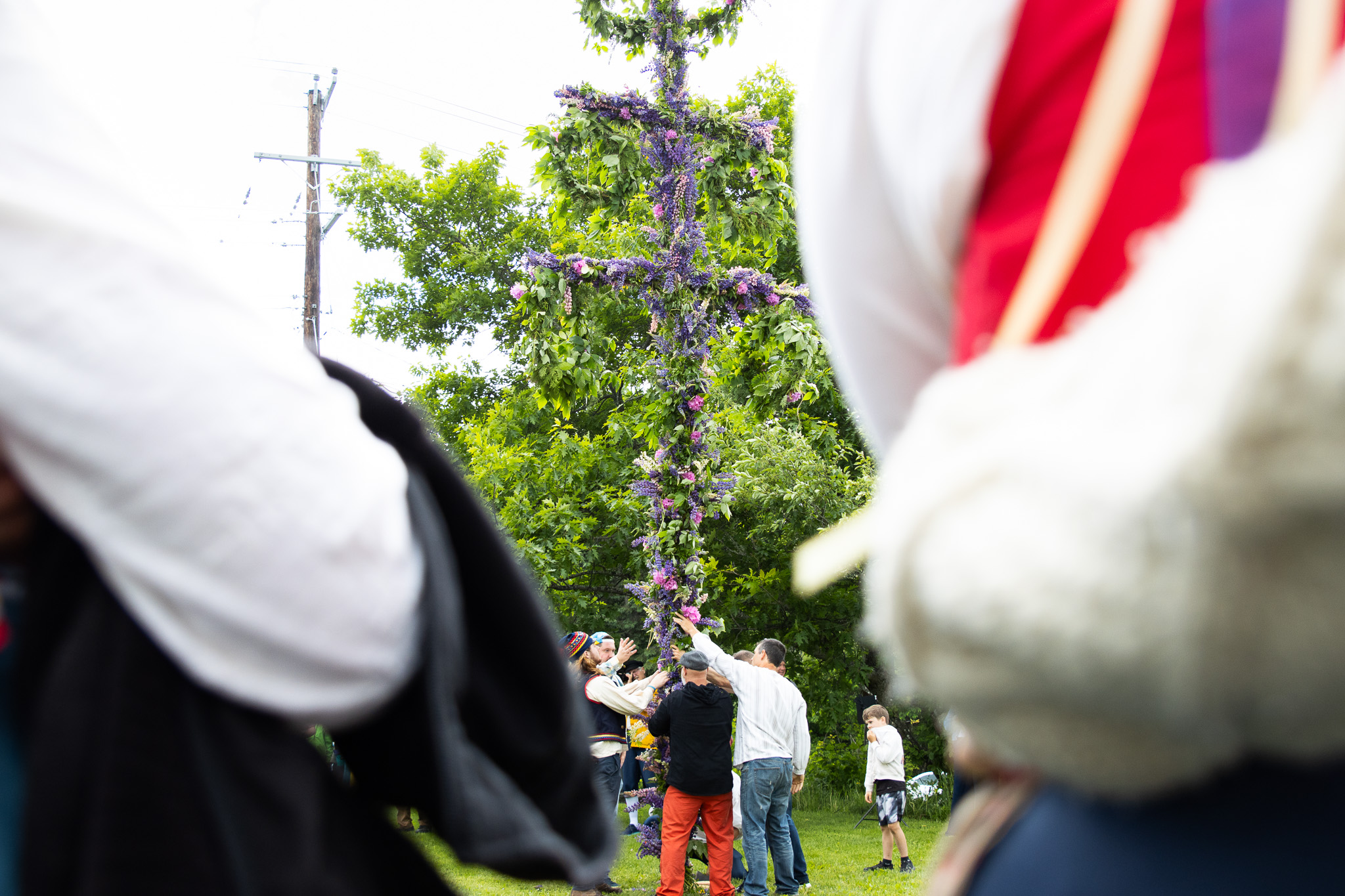
In the early afternoon on the eve of the longest day of the year, Sven Bondeson is hunched over a poplar pole. Twine in one hand, a bundle of lupines in the other, he sets down the flowers, ties them around the pole, and repeats, until the more than 20-foot-tall mast is covered in pinks and purples and greens.
“The brightest flowers you can find,” Bondeson says.
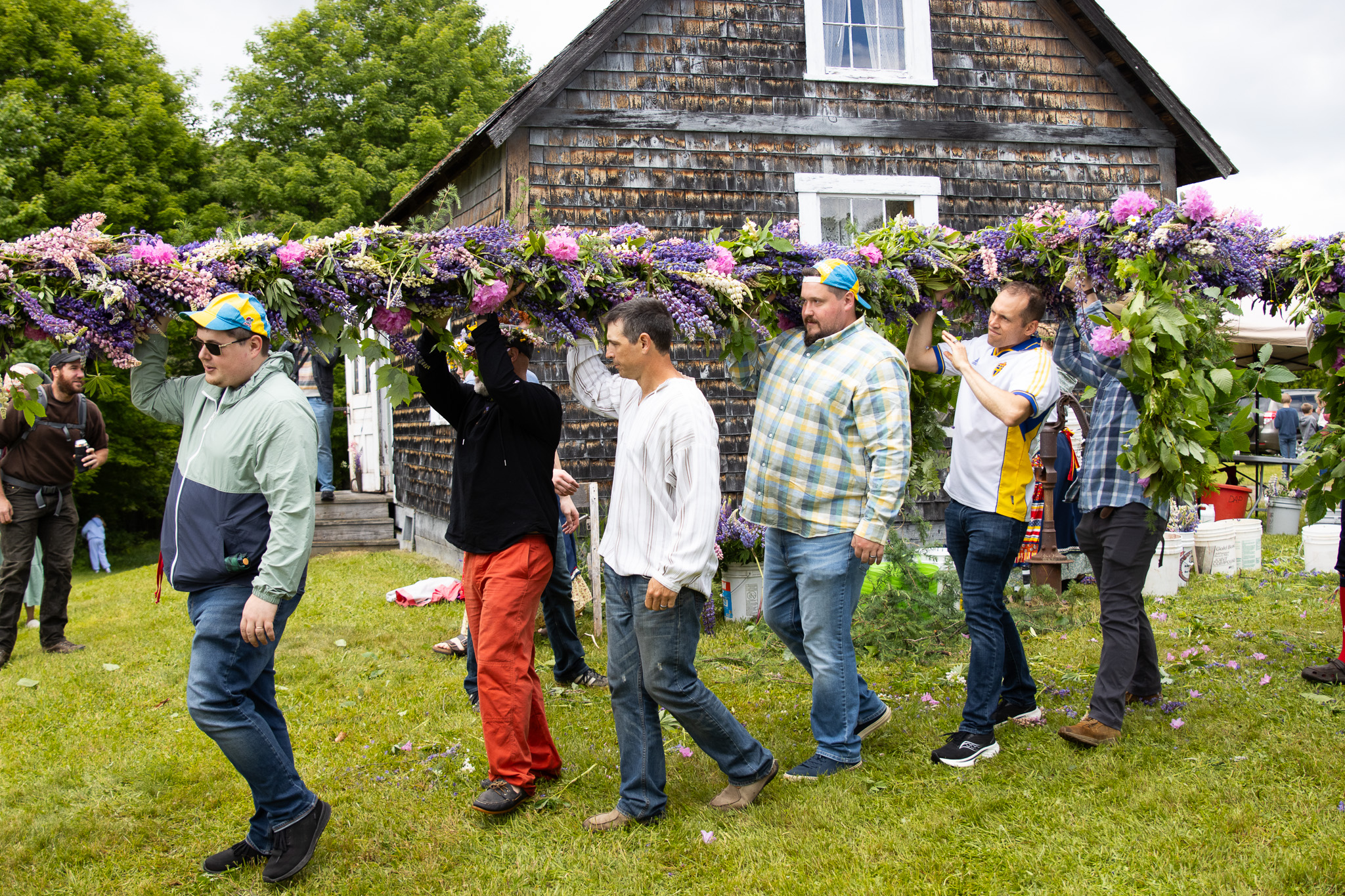
Around him, half a dozen others do the same, all dressed in their best amalgamation of traditional Swedish clothing. Then a group of men hoist the maypole and drive it into the ground, where it becomes the centerpiece for hours of dancing and singing as Maine’s oldest Swedish Colony celebrates Midsommar.
This is the most important weekend of the year in New Sweden. More than a thousand people annually descend on the Aroostook County town of less than 600 for three days of reveling in Scandinavian traditions.
Some 156 years ago at the behest of the state’s government, 50 Swedish immigrants crossed the Atlantic Ocean and settled in a forest north of Caribou. A century and a half later, much of that heritage remains. And for a few days, it comes to life.
“We’re not a Fourth of July town,” said Bondeson, whose great-great-great-grandmother was among the first 50 settlers. “We have Midsommar.”
Midsommar has been celebrated in some form in New Sweden since 1871, the year after the settlers arrived. It’s among the oldest, continuous observances of the holiday in America.
The festival is an ancient pagan tradition co-opted by the Swedish that celebrates the summer solstice. The maypole, around which festivalgoers dance in circles, represents fertility and rebirth, and symbolizes a bountiful harvest.
New Sweden’s festival is two parts Swedish, one part Maine. Visitors line up by the dozen to buy red snappers — Maine’s dazzlingly red hot dogs — for lunch, then stick around for the evening smorgasbord.
The flowers adorning the maypole are regionally distinct. So is the festival as a whole, which little resembles the modern celebrations in Sweden.
“It probably looks a lot more like a Midsommar from the 1870s than what you would find in Sweden,” Lukas Lagasse, a festival committee member and former historical society president said. “Because our Swedishness didn’t evolve. It’s just the same as it was.”
The influx of Swedish immigrants to northern Maine helped establish the population base in central Aroostook County in the years that followed the Civil War.
The settlers built roads, started farms and sold goods. The colony loosely encompasses parts of eight towns, including nearby Stockholm — fittingly named after the Swedish capital. Caribou’s downtown runs along Sweden Street.
Without them, “Caribou would look vastly different,” Legasse said.
A monument in the woods behind the New Sweden Historical Museum lists some of the colony’s first known residents. A walking quiz in Swedish history, with questions stapled to tree trunks, draws visitors down the path towards it.
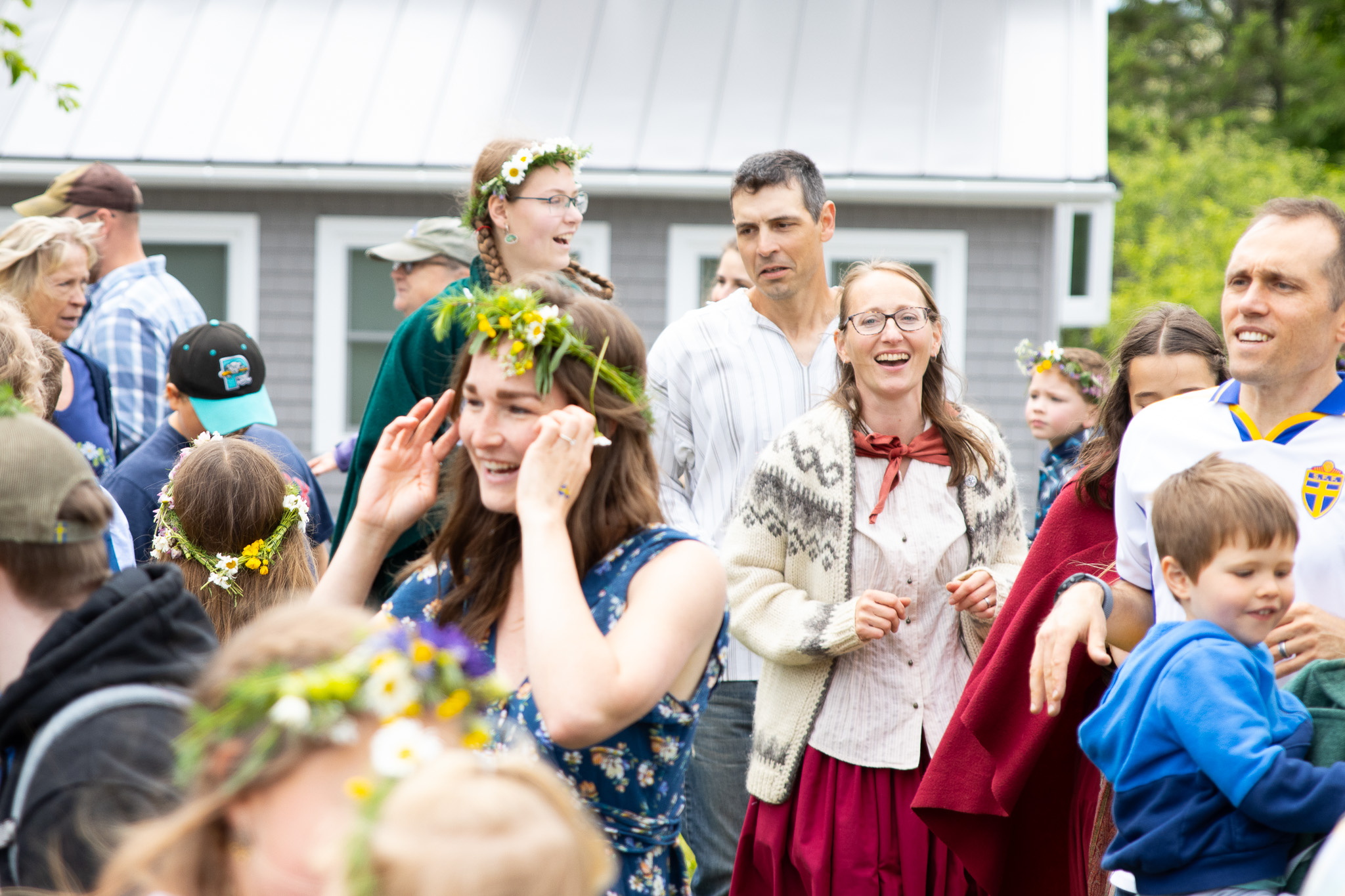
It’s an example of how festival organizers try to blend the past with the present. There are also booths to paint dala horses and make hair wreaths. Traditional games dot the lawn around the building. Wearing yellow and blue hats and soccer kits, people file in and out of the Capitol School Museum, a preserved one-room schoolhouse next door.
“We put on funny clothes, we try to be Swedish. We’re not authentic in our dress, but we try to do our best,” Karen Espling Erickson said. “It’s just a memory of what it was here and how it began. The first people who came were incredibly brave to do this.”
Espling Erickson grew up in New Sweden, but now lives in Florida. She is among the many that make the pilgrimage back for the festival every year and calls it a “homecoming.”

The people are what make the celebration special, historical society president Jessica Ciszewski said.
“You see everyone that you may not have seen over the winter,” Ciszewski said. “It is that celebration of light and summer and us all coming out and coming together. That’s what makes it beautiful to me.”
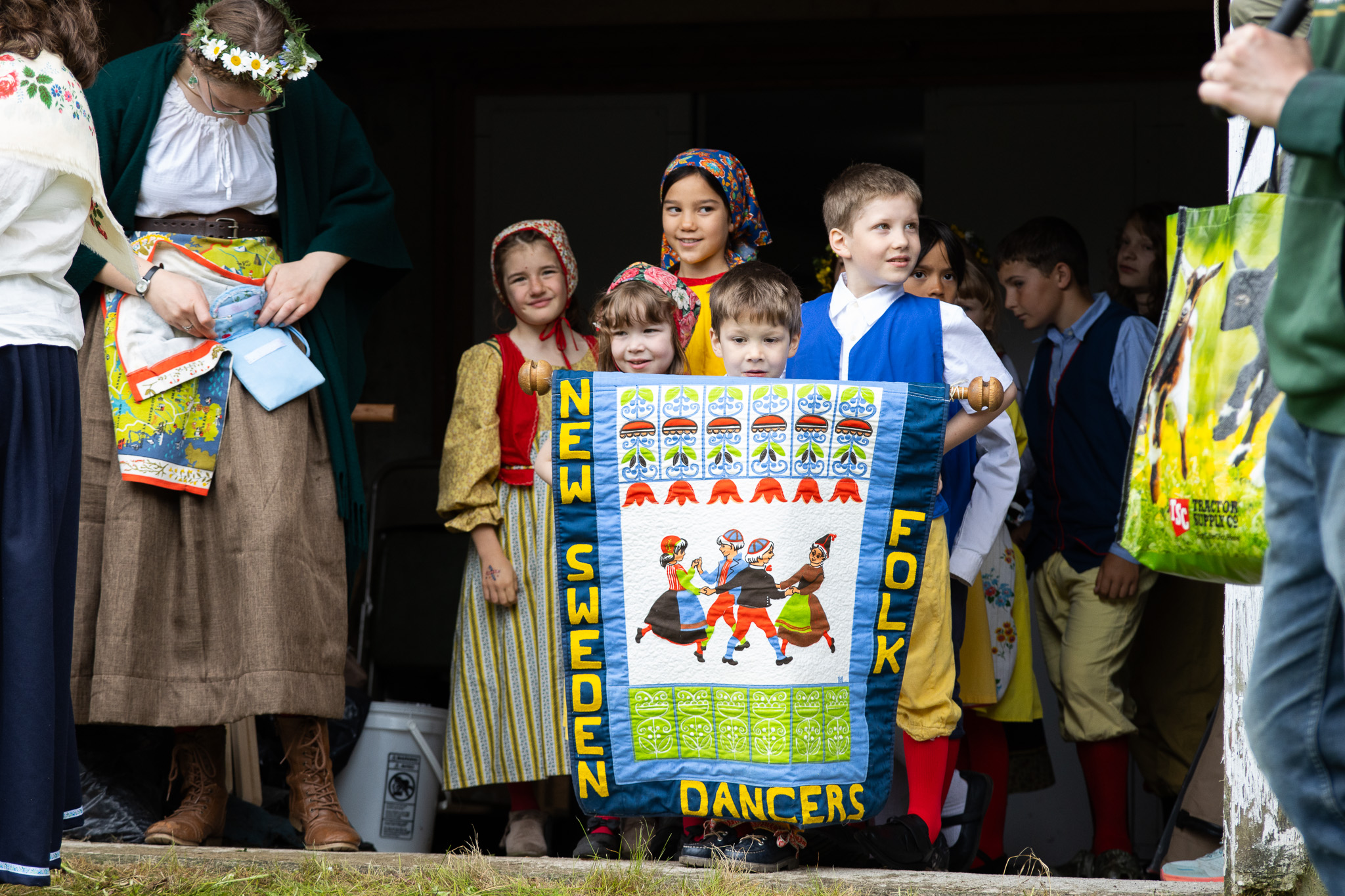
With a crowd gathered around the maypole in midafternoon, a troupe of children called the New Sweden Folk Dancers march into the circle and interlock hands. They sing Swedish folk songs about little frogs and mime playing musical instruments. They hop clockwise, then dance in the opposite direction around the pole. They get confused and run into each other. Soon the adults join in. They do the same. Everyone is smiling and laughing. There’s an air of contentedness.
“There’s this Swedish word, it’s called ‘lagom,’ and it [means] just right,” Legasse said. “It’s not too much, it’s not too little. It’s just like this sense of comfort … It’s kind of unexplainable. It’s kind of magical.”