


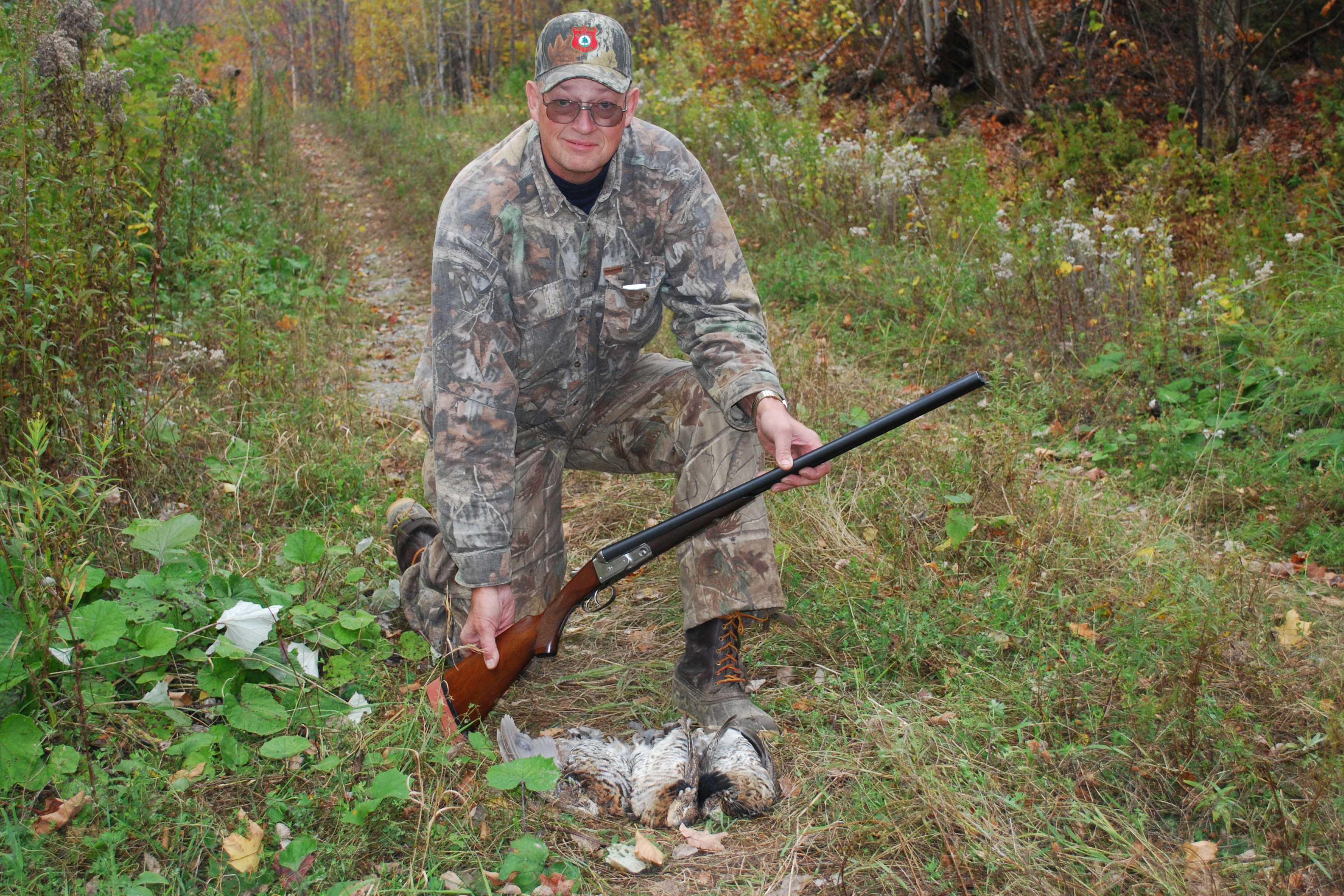
If you’re high-stepping through brush and second-growth bushes following a birdie pointer, listening to an electronic caller beep and with an expensive double-barrel 20-gauge at port arms, you are likely hunting grouse.
If you are slowly driving a backwoods road or stealthily stalking an old skidder trail lugging a well worn single-shot or your grandfather’s rattling corn-shucker pump, watching for a bird on a stump or sunning on a bank, then you’re partridge hunting.
Veteran upland bird gunners would pose that the difference between grouse and partridge, for the most part, depends on your location: Aroostook County or southern Maine.
Quite a number of waterfowl and upland enthusiasts won’t fire their scattergun unless the target is in the air. I’ve hunted several decades and shot Ol’ Pat sitting, running and flying; I guarantee you can’t tell the difference once the bird is in a savory stew or frying pan.
That said, ruffed grouse populations are very cyclic and often weather-dependent during the spring hatching. Some years a hunter can drive or walk all morning and spot only a bird or two, but occasional autumns a limit can be bagged in an hour or so. During these years of plenty, I like to add a bit of challenge to my hunts, so I occasionally use my Thompson Contender .410 single-shot handgun.

Greg Palm of Presque Isle, a longtime hunting companion and recently touted for accomplishing a rare big game grand slam two years in a row, ups his difficulty level by using a five-shot .410 Ruger Judge revolver to make his outing more interesting.
Over the years I’ve encountered dozens of bird hunters who favor a .22 rifle with a low-power, variable scope. Their theory is that a headshot ruins no meat, and regardless of the higher odds of a miss, there’s likely to be another partridge just down the road. Veteran sportsmen who have harvested plenty of upland birds, waterfowl and big-game animals often turn to different weapons to increase the challenge. When birds are plentiful, this evens the odds a bit, so to speak.
Another common practice is to replace semi-auto or pump shotguns with double-barrel or even single-shot models. I often carry my aging break-action Stevens over-and-under .22 and 20-gauge combo that dates back to my early teens. It limits my range a bit, and I figure one bird at a time is fine during plentiful years, so accuracy becomes a bit more important.

There’s an elite cadre of grouse gunners who raise the odds a bit more by using only a .410 or the more unique 28 gauge. Many of these aficionados utilize a well trained dog to locate and hold their feathered quarry for a flush, which further boosts the challenge by only shooting at flying birds. Every flush is an adventure. Add uneven ground, thick cover and fewer pellets in the small-gauge shell, and each opportunity boosts the adrenaline level.
Last fall I chanced to meet two grouse hunters who had really peaked their tactics to bag a brush chicken. One was armed with a compound bow, and later a second hunter was using a crossbow. Each had birds in their vests and had missed a couple of chances. Other than a boomerang, slingshot or a rock and sling, all of which I’m sure don’t fit current regulations, archery precision is a tough endeavor. But for many longtime hunters, the changes in tactics, techniques, weapons and ammunition keep each outing more exciting and adventurous.
Thus far this partridge season has yielded above average results and we have until the end of December to enjoy more action. Hopefully, a number of the more experienced hunters will be inclined to up the challenge a bit; understanding for most that the “how” is far more important than the “how many.”
Just a few alterations in gear and techniques can shine a whole new light on the enjoyment and excitement of an old, treasured pastime. There’s still lots of time to perk up your outings for partridge — or “grouse,” if you prefer. On the ground or in the air, it’s all fair, so gear up and get out there soon and often.