


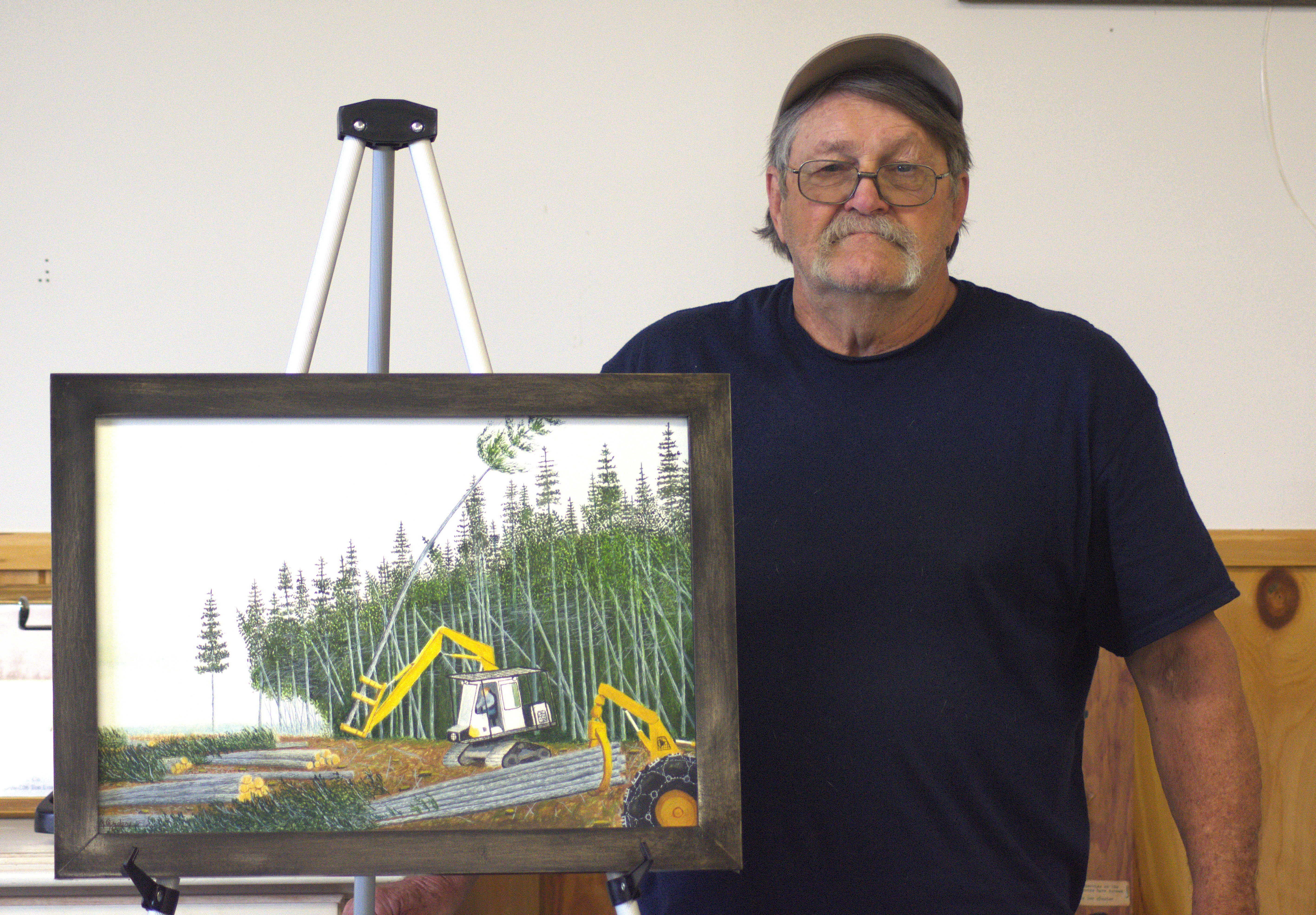
A series of eight donated watercolors will take one of Maine’s most popular lumber museums into a new era.
“In order to grow we need to branch out and we are testing the waters,” said Dottie Tucker, the Patten Lumbermen’s Museum’s new executive director.
The lumbermen’s story during a tumultuous time comes to life in artist and former logger Roger Ryder’s paintings, reflecting his days of living in the woods at Telos Camp near Chamberlain Lake in the early 1970s as a Great Northern Paper foreman.
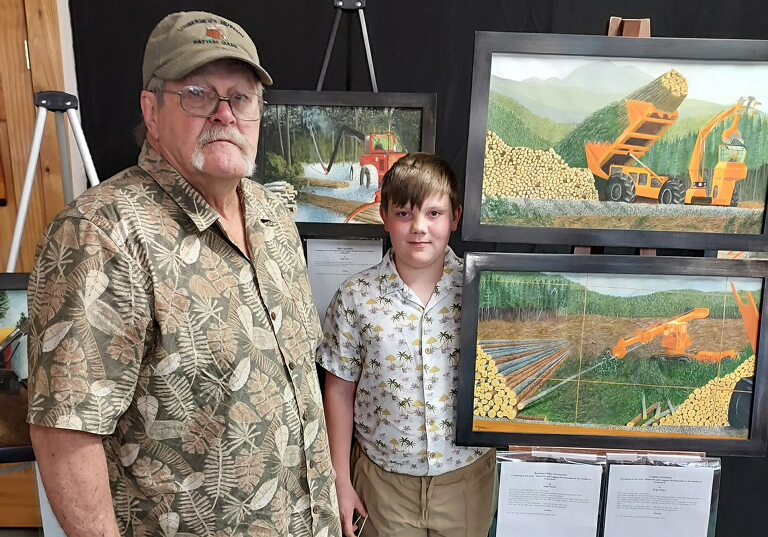
This recent donation, made by his grandson, Vance Tompkins, 11, not only portrays the end of Maine’s river driving era, but marks the museum’s first steps to expand into the history of mechanized logging. The vibrant paintings detail the new equipment, night logging and the devastating spruce budworm that threatened Maine’s timber economy.
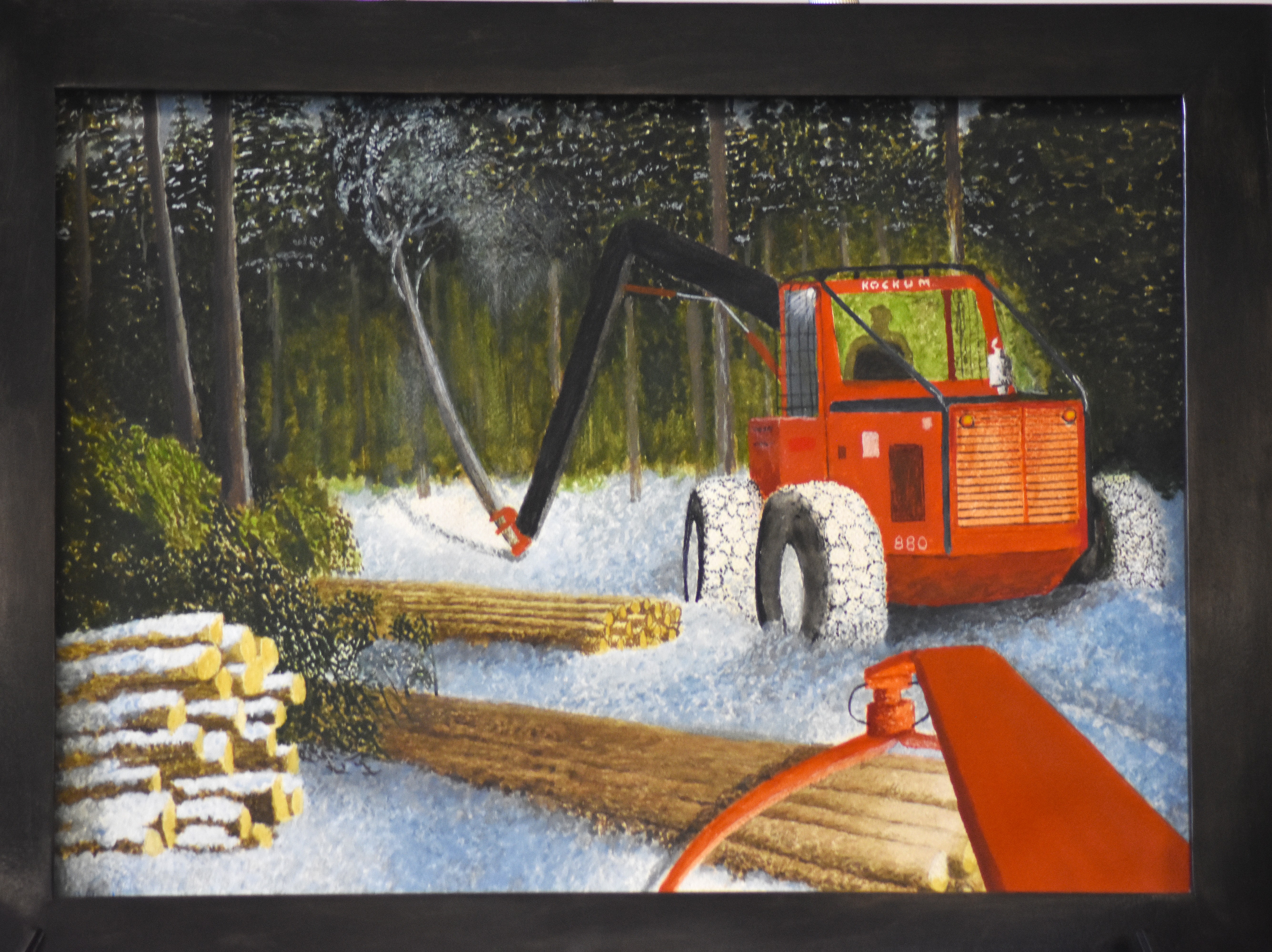
It was the spruce budworm outbreak in 1971 that pushed the earliest mechanization, according to Ryder.
“The wood was dying and we had to go mechanical. For four days we were cutting wood 22 hours a day and building roads for five to six days,” he said. “The companies had to build miles and miles of road to move it out. It was not safe, everything was falling down and people were actually getting killed in the woods.”
Spruce budworm is an insect that defoliates spruce and balsam fir. An outbreak in the early 1970s was so severe it basically defoliated a third of the state, killing between 20 million and 25 million cords of spruce and fir, according to state reports.
Great Northern led mechanization efforts with equipment to replace hand-cutting river drivers and horses, Ryder said.
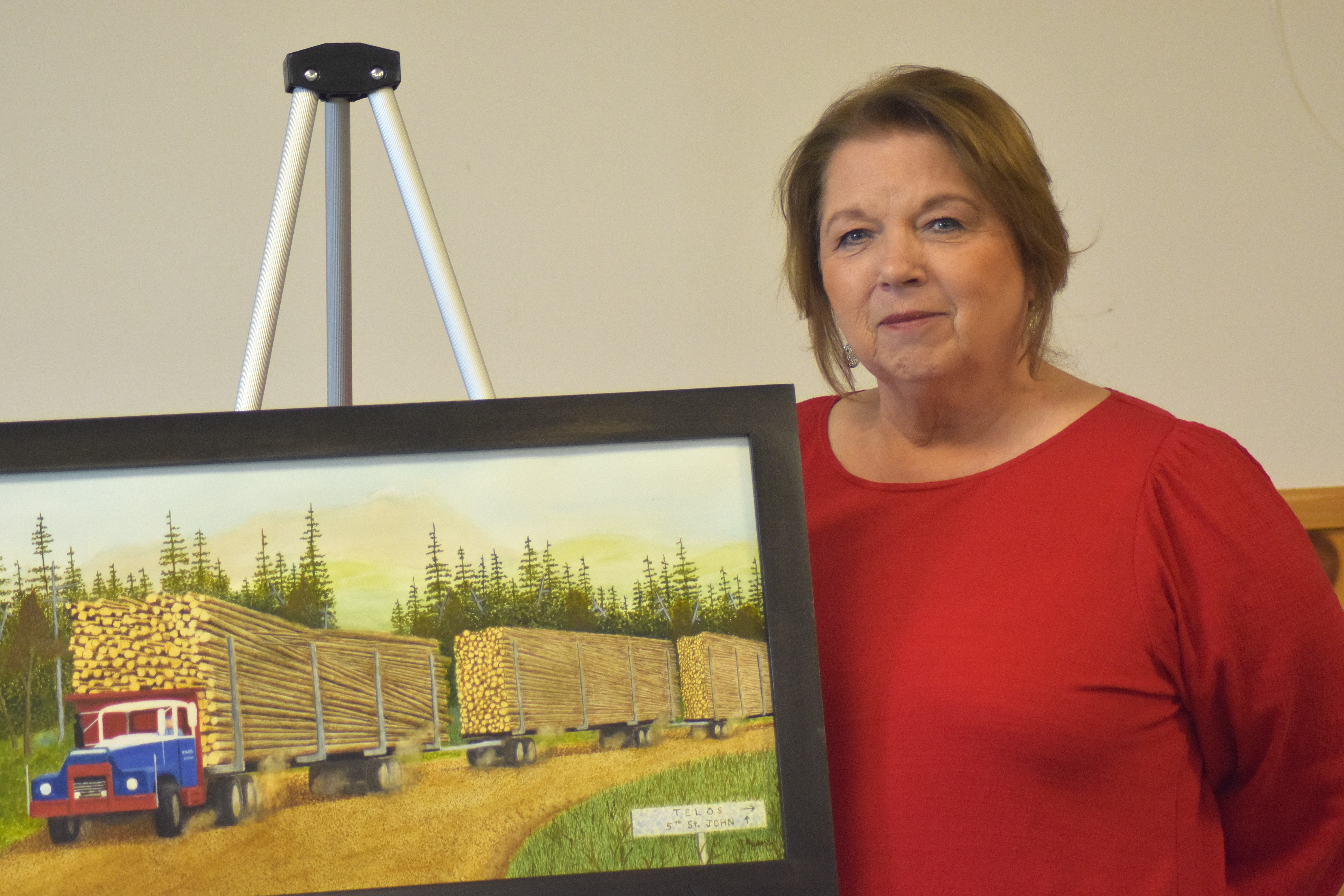
The iconic 96-mile Golden Road was completed and instead of waiting for the spring river drives, tractor-trailers hauled wood directly to the mills 24 hours a day.
Ryder uses dramatic lighting in his paintings to evoke the narrative of the time and the uncertainty of logging on cold, dark nights.
“So here you are in the middle of the forest and it’s black outside,” Ryder said. “Some of these machines are huge and that was what I was trying to depict. It was a strange time.”
Famed artist Edward Hopper’s “Nighthawks” was actually Ryder’s inspiration.
In one of the donated works, Ryder included Lynne Porter operating a Koering Feller Forwarder. She was the first woman to work for Ryder in the North Maine Woods camps at about age 19.
“If a man could do it, she thought she could do it better,” said museum director Tucker, who was friends with Porter.
Ryder agreed, adding that the women always outperformed the men on the machines in the camps.
The artist worked for three years in Great Northern’s woods camps and then for Diamond International. He moved on to soil and water engineering, and then contracted with the Department of Defense. He traveled the world creating roads, including seven years living in Hawaii.
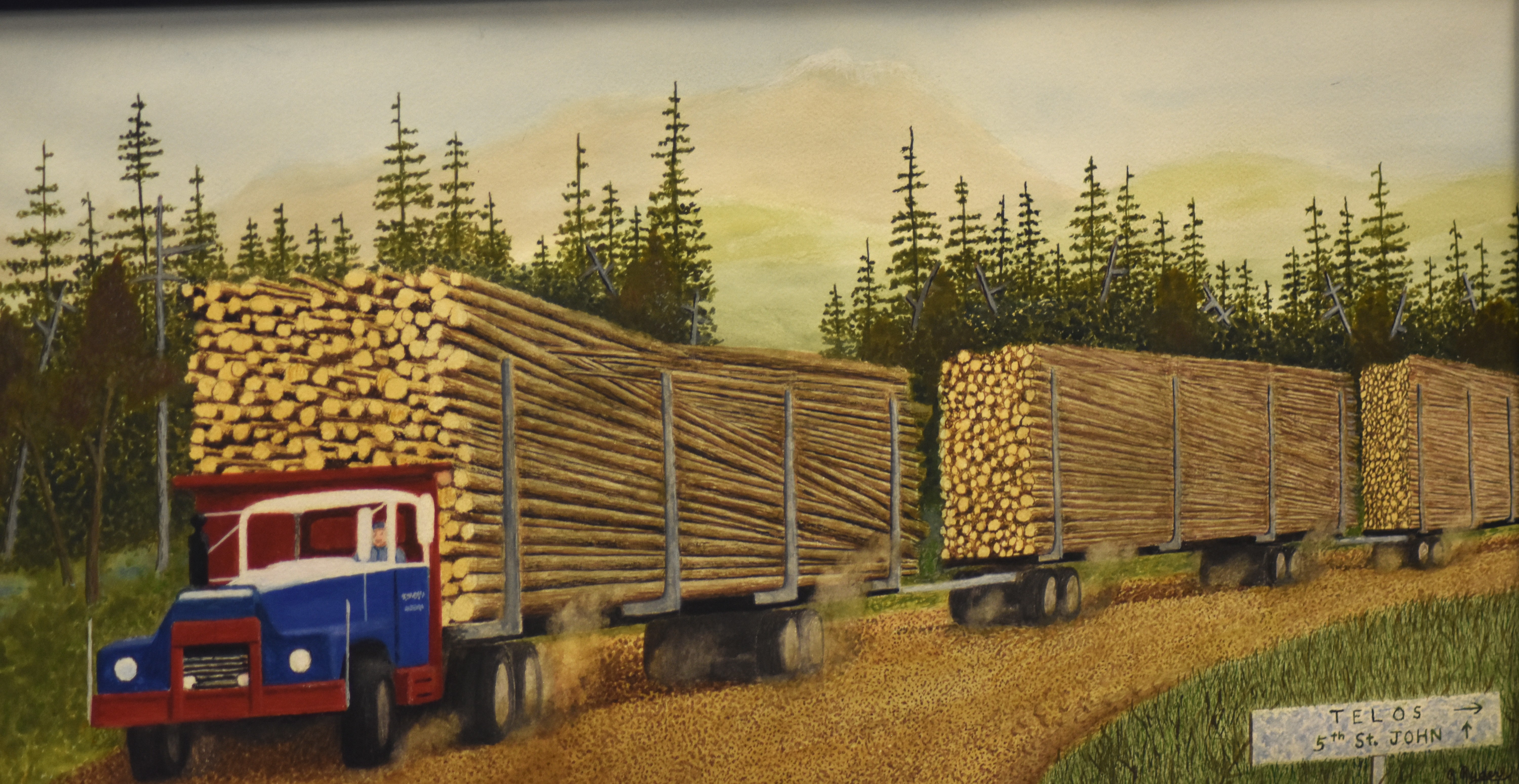
After he retired, Ryder started building canoes, making paddles and adding pyrography on paddles which he still teaches at Region Three. Three years ago he started painting and his watercolors have evolved, he said.
“I’m just having one grand time meeting people,” Ryder said.
As the museum moves toward expansion, Tucker has reorganized the current exhibit. There is a new display building under construction to hold more artifacts and Tucker is trying to include more hands-on exhibits for children.
“This was life in Maine, “ Tucker said.